All Articles

Electrical Machines

By
Gaurav Joshi
Auto Transformer vs Regular Transformer: Where is Each Used?
An auto transformer saves copper only near a 1:1 ratio and lacks isolation, which is why regular transformers still handle most voltage changes.
Oct 5, 2026

Power System
By
Gaurav Joshi
Radial vs Ring Main Distribution: Which is Better?
Radial distribution is the simplest and cheapest system but has poor reliability; ring main distribution costs more but delivers continuous supply.
Oct 1, 2026
Switchgear
By
Gaurav Joshi
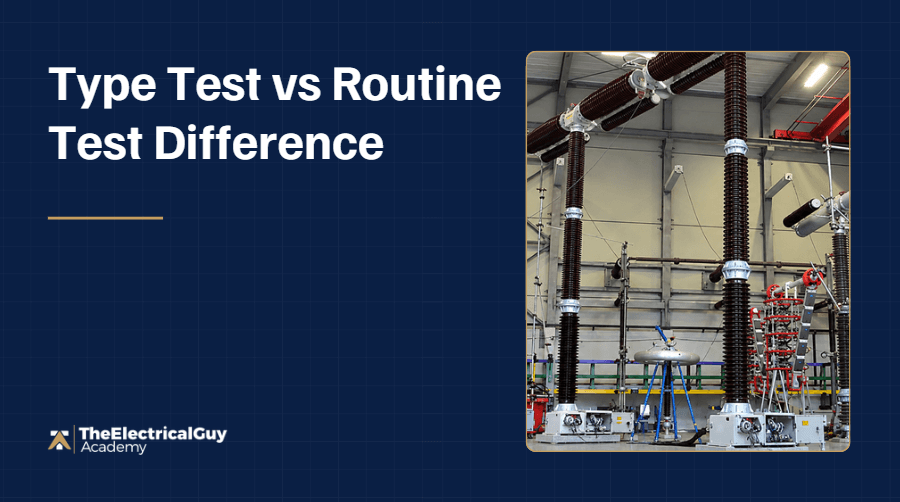
Type Test vs Routine Test: What is the Difference?
A type test validates a new product design once at a certified third-party lab, while a routine test checks manufacturing quality on every unit.
Sep 30, 2026

Switchgear
By
Gaurav Joshi
What Are the Components of a Vacuum Circuit Breaker?
A vacuum circuit breaker is built from a vacuum interrupter, operating mechanism, and support structure, with fixed and withdrawable variants.
Sep 28, 2026
Switchgear
By
Gaurav Joshi
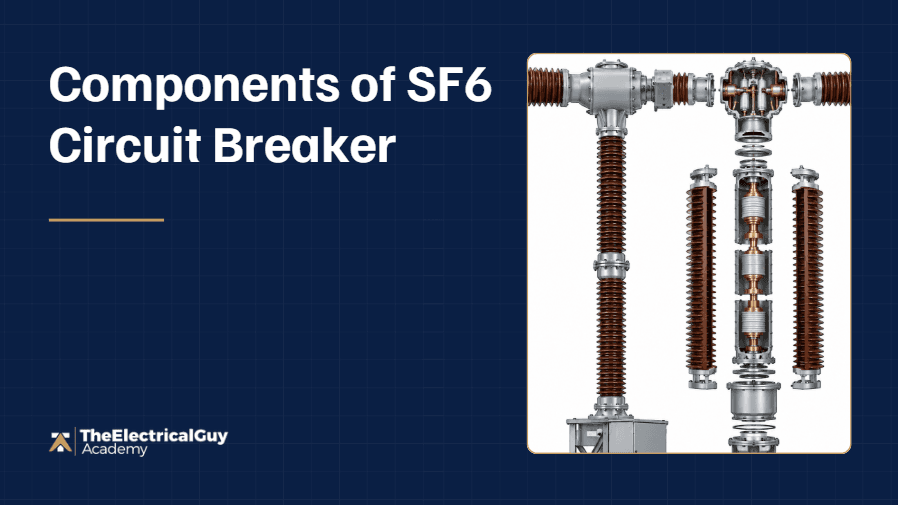
What are the Components of an SF6 Circuit Breaker?
An SF6 circuit breaker is built from four main parts: the interrupter, support insulator, operating mechanism, and support structure explained.
Sep 22, 2026
Power System
By
Gaurav Joshi
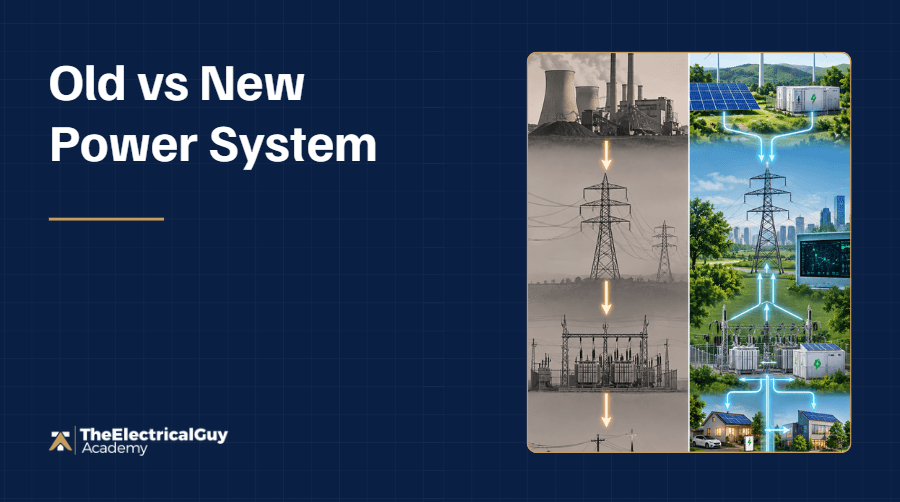
Old vs New Power System: What Changed?
The power system has grown a fourth pillar beyond generation, transmission, and distribution: energy storage, driven by the shift to renewables.
Sep 21, 2026

Electrical Machines
By
Gaurav Joshi
Auto-Transformer vs Transformer: What's Actually Different?
An auto transformer saves up to 50% of the copper used in a regular transformer, but loses electrical isolation, which limits where it can be used.
Sep 17, 2026

Switchgear
By
Gaurav Joshi
How to Read Electrical Schematics: 5 Simple Steps
Reading electrical schematics gets easier with 5 steps: learn the components, symbols, designer assumptions, drawing structure, and power flow.
Sep 15, 2026

Electrical Machines
By
Gaurav Joshi
Induction Motor Nameplate Decoded | 15+ Parameters
An induction motor nameplate lists 15+ parameters: output power, speed, voltage, current, thermal class, efficiency, duty, and IP rating explained.
Sep 11, 2026

Power System
By
Gaurav Joshi
STATCOM vs SVC: What is the Real Difference?
STATCOM uses a voltage source converter to generate its own voltage, while SVC depends on grid voltage, making STATCOM faster and more resilient.
Sep 7, 2026

Switchgear
By
Gaurav Joshi
Disconnector vs Load Break Switch vs Circuit Breaker
Disconnector, load break switch, and circuit breaker differ across voltage rating, fault-breaking capacity, and 8+ other parameters, compared here.
Aug 31, 2026

Switchgear
By
Gaurav Joshi
What is a Load Break Switch (LBS)?
A load break switch makes, breaks, and carries normal current, and isolates like a disconnector, but unlike a breaker, cannot interrupt a fault.
Aug 26, 2026

Switchgear
By
Gaurav Joshi
What is the Purpose of a Grading Capacitor in a Circuit Breaker?
A grading capacitor equalizes voltage distribution across multi-break circuit breaker interrupters, preventing overstress and pre-arcing damage.
Aug 24, 2026

Substation
By
Gaurav Joshi
What is a Substation Bus Bar Arrangement?
A substation bus bar arrangement creates alternate power paths for supply continuity, protection, and switching. Learn the common schemes by voltage.
Aug 19, 2026

Switchgear
By
Gaurav Joshi
What is an Automatic Circuit Recloser and How Does It Work?
An automatic circuit recloser senses a distribution fault, opens the circuit, and recloses automatically, clearing most faults without manual work.
Aug 15, 2026
0K+
0K+
Global Community
0+
0+
Total Learners
0%
0%
Course Completion Rate
0+
0+
Countries Reached