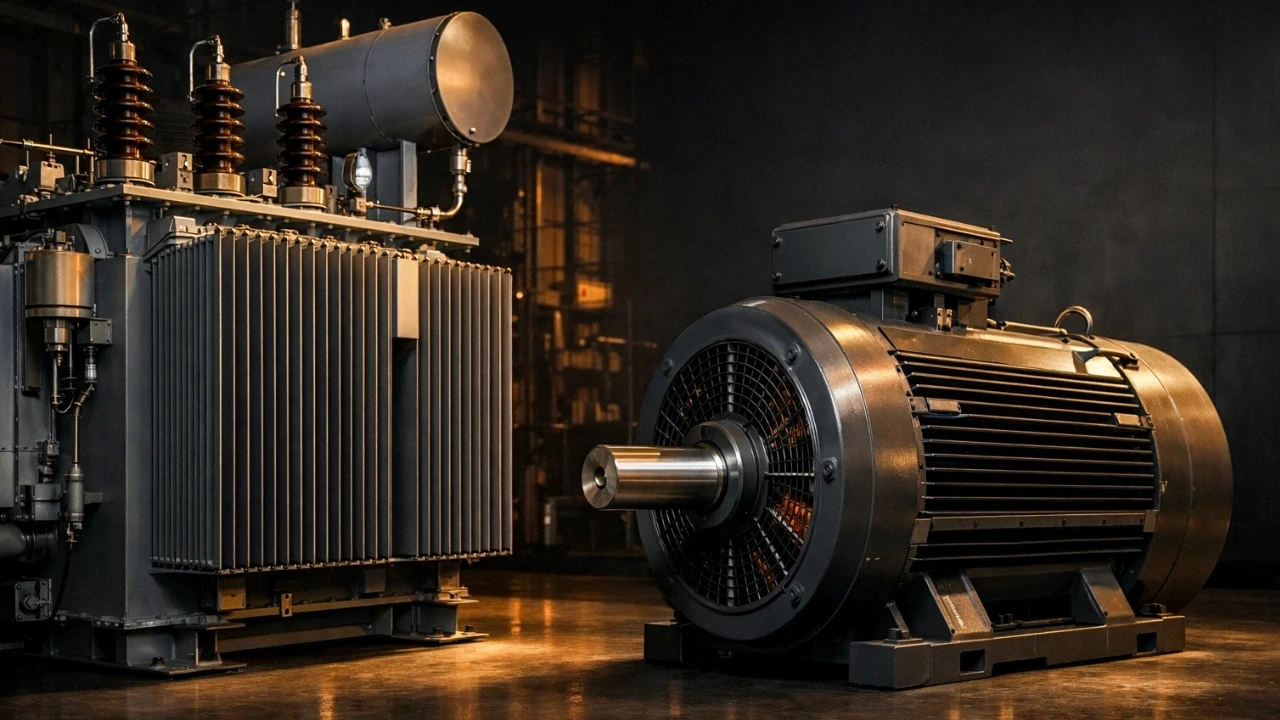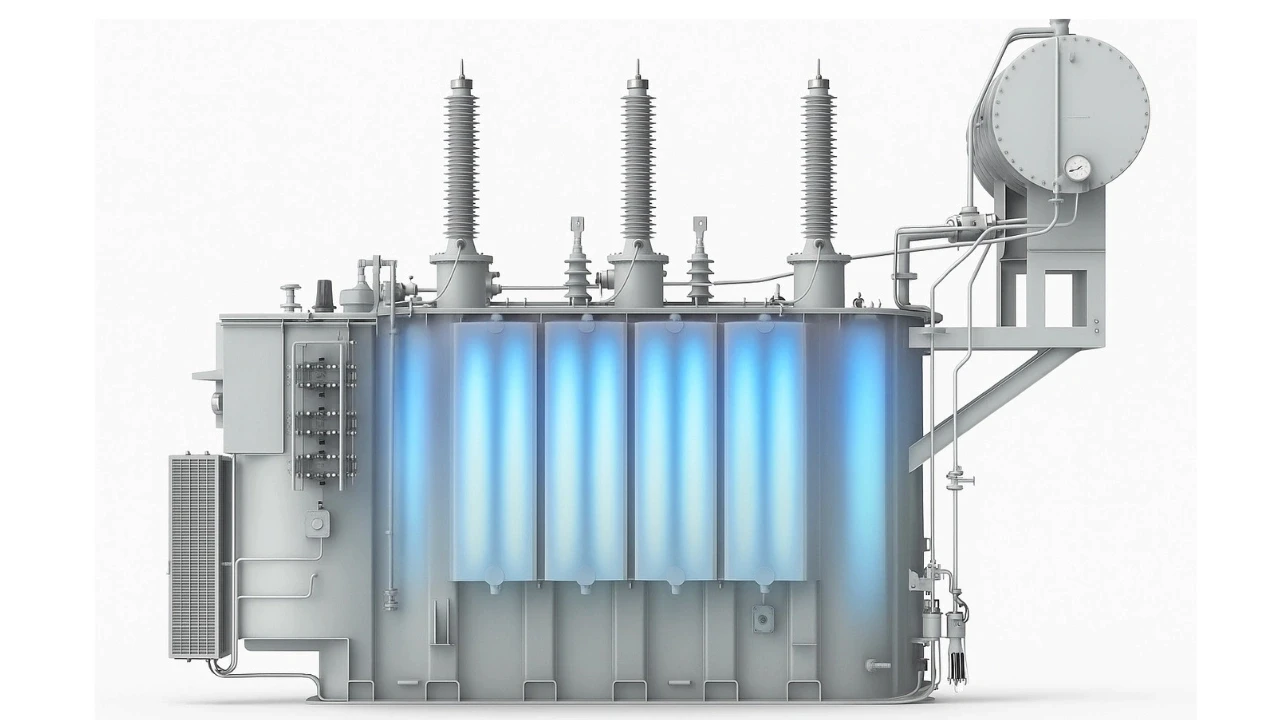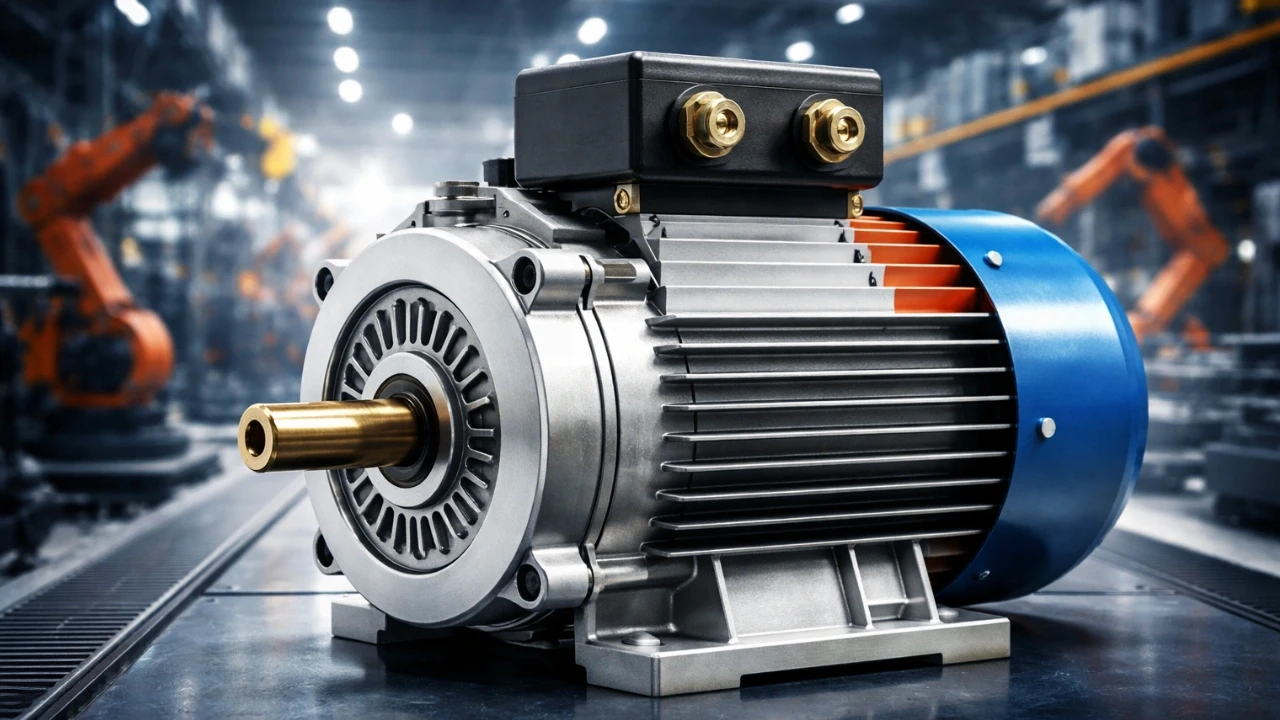

An auto transformer saves copper and improves efficiency compared to a regular transformer, but only when the transformation ratio is close to 1:1; that advantage disappears entirely for larger voltage changes. It also lacks the electrical isolation a regular transformer provides, which is exactly why regular (two-winding) transformers still handle most significant voltage transformation, while auto transformers are reserved for small-ratio applications like voltage boosting, motor starting, and variable AC supplies.
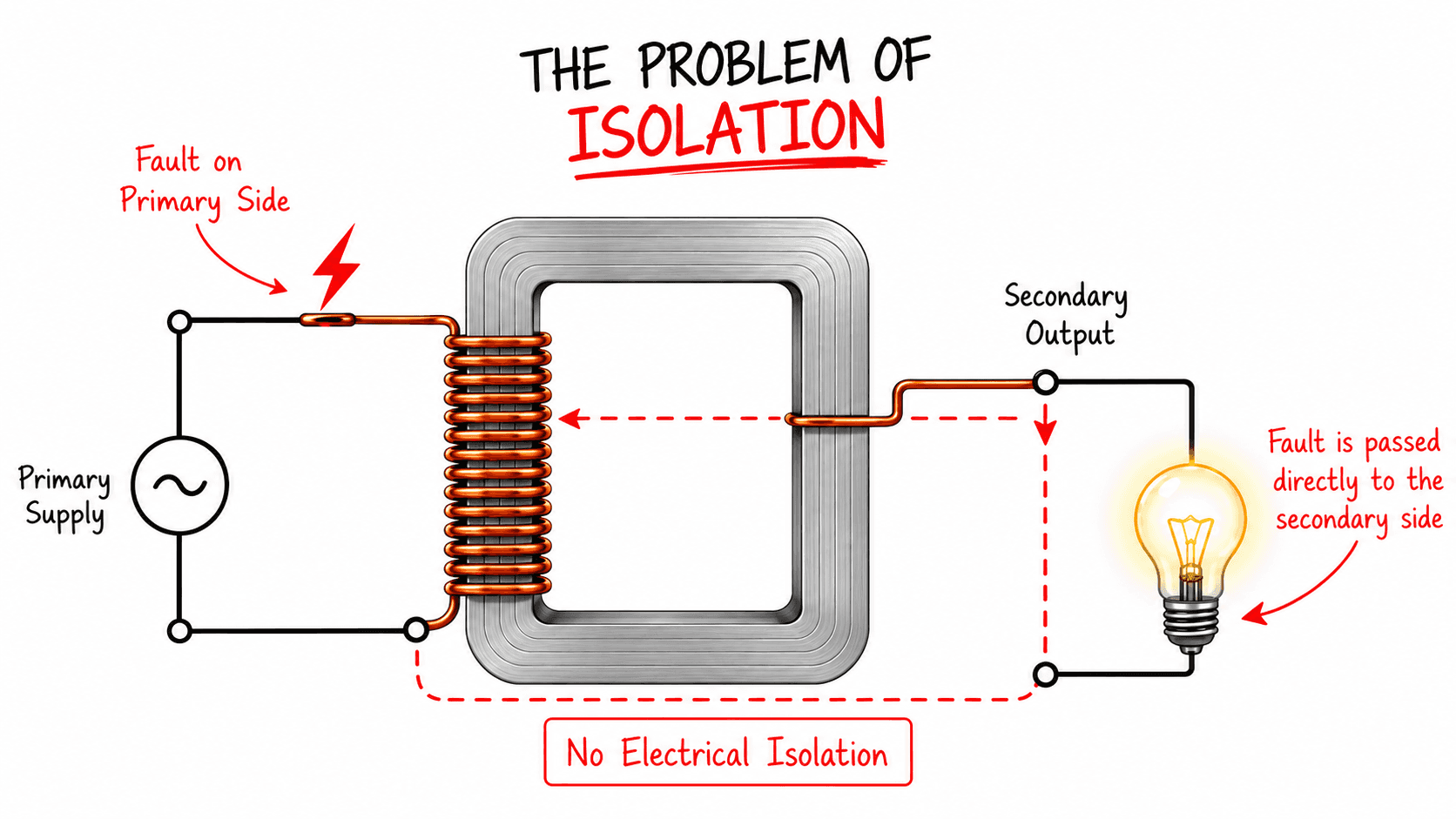
If an auto transformer saves copper and improves efficiency, why do we still manufacture regular transformers at all? The isolation problem, covered in the previous article, is only half the answer. The other half comes down to exactly when those copper and efficiency advantages hold up, and where each transformer type actually gets used in practice.
What's the Core Construction Difference, Briefly?
A regular transformer uses two separate, dedicated windings (primary and secondary) with no physical connection between them. An auto transformer connects primary and secondary in series as a single winding with a tap, eliminating the need for a dedicated secondary winding.

That single eliminated winding is the source of every advantage and every drawback discussed below.
When Does an Auto Transformer Actually Save Copper?
An auto transformer's copper savings only materialize when the transformation ratio is close to 1:1, meaning input and output voltage are relatively similar; for larger voltage changes, that advantage disappears.

The transformation ratio is simply the ratio of input voltage to output voltage. Stepping 10 kV down to 8 kV, or up to 12 kV, is close to a 1:1 ratio, and there the auto transformer's reduced winding requirement genuinely saves significant copper.
Stepping 10 kV up to 40 kV, a 1:4 ratio, needs substantially more winding, and the copper savings vanish. This is exactly why you won't find auto transformers handling large voltage changes like 36 kV to 400 kV; the copper advantage simply isn't there at that ratio.

Manufacturers report footprint reductions in the range of 10% to 50% compared to an equivalent regular transformer, though that range depends directly on how close the transformation ratio is to 1:1
When Does an Auto Transformer Offer Better Efficiency?
An auto transformer's efficiency advantage, driven by lower copper losses from less winding, only holds up under the same condition: a transformation ratio close to 1:1.

Regular (power) transformers have standard, well-established efficiency and loss figures. Compared against those, an auto transformer can edge ahead specifically when it's operating near a 1:1 ratio.

Move away from that ratio, and the efficiency advantage fades along with the copper savings.
Why Does an Auto Transformer Lack Electrical Isolation?
A regular transformer's primary and secondary windings are physically unconnected, transferring voltage only through electromagnetic induction, which isolates faults on one side from directly affecting the other. An auto transformer's primary and secondary share a physical electrical connection, so a fault on one side can transfer directly to the other.
An 11 kV-to-220V auto transformer with an open-circuit fault on the primary side, for example, can expose the full 11 kV directly on the secondary side, where connected equipment is only rated for 220V, a serious safety risk to both equipment and people. This is the core reason auto transformers aren't used in general electricity distribution.
Auto Transformer vs Regular Transformer — Quick Comparison
Parameter | Regular (Two-Winding) Transformer | Auto Transformer |
Winding construction | Two separate, dedicated windings | Single tapped winding (series-connected) |
Copper requirement | Higher | Lower, but only near a 1:1 ratio |
Efficiency | Standard | Higher near a 1:1 ratio, no advantage otherwise |
Footprint | Larger | Smaller (reported 10–50% reduction), ratio-dependent |
Electrical isolation | Full isolation | None |
Safety on fault | Fault generally stays isolated to one side | Fault voltage can transfer directly to the other side |
Typical use case | Significant voltage change (e.g. 36 kV to 400 kV) | Small voltage adjustments near 1:1 |
Where is an Auto Transformer Actually Used?
Auto transformers are used specifically where the transformation ratio needs to stay close to 1:1, including voltage adjustment for equipment, motor starting, and variable AC supply in test labs.
Equipment voltage matching — for example, an induction motor rated for 480V running on a 400V supply; the transformation ratio is small enough that even a fault would still leave the motor receiving an acceptable 400V rather than something dangerous.
Voltage drop compensation (booster transformer) — used in transmission and distribution networks to regulate voltage back to acceptable levels, for example correcting a 245 kV line that's dropped to 200–210 kV. In this role, the auto transformer is specifically called a booster transformer.
Motor starting — used to intentionally reduce starting voltage, limiting an induction motor's high starting current during startup.
Variable AC supply in test labs (Variac) — a continuously variable auto transformer that adjusts output voltage anywhere from 0% to 100% of input, without changing the overall voltage level or ratio significantly.
Where Should You Use a Regular Transformer Instead?
A regular transformer remains the right choice for any significant voltage change, such as stepping between 36 kV and 400 kV, and for any application where electrical isolation is a genuine safety requirement, which covers most general transmission, distribution, and step-up/step-down use cases.
Copper savings and electrical isolation are a direct trade-off: you cannot have both. Whenever isolation matters, or the transformation ratio is far from 1:1, the auto transformer simply isn't the right tool, and the regular transformer remains the default.
FAQ
Why doesn't an auto transformer save copper for large voltage changes?
Because the copper savings depend on the transformation ratio staying close to 1:1. A large voltage change, like 36 kV to 400 kV, requires substantially more winding regardless of the auto transformer's single-winding design, eliminating the copper advantage entirely.
What is a booster transformer, and how does it relate to an auto transformer?
A booster transformer is an auto transformer used specifically to compensate for voltage drop in transmission or distribution networks, regulating a dropped voltage (e.g. 245 kV falling to 200 kV) back to an acceptable level, a classic small-ratio application.
Why is an auto transformer used for motor starting?
It intentionally reduces the voltage supplied during motor startup, limiting the high starting current an induction motor would otherwise draw, with the transformation ratio typically kept near 1:1.
Is a Variac the same thing as an auto transformer?
Yes. A Variac is a continuously variable auto transformer commonly used in test labs to adjust AC output voltage from 0% to 100% of input without changing the overall voltage level significantly.
Why can't you get both copper savings and electrical isolation from the same transformer?
Because copper savings come specifically from eliminating the dedicated secondary winding, and that same elimination is what removes the physical separation responsible for electrical isolation. The two are a direct trade-off, not independent features.
Conclusion
An auto transformer's copper savings and efficiency gains are real, but conditional: they only hold up when the transformation ratio stays close to 1:1, and they come paired with the permanent loss of electrical isolation.
That trade-off is exactly why auto transformers are reserved for specific small-ratio applications, voltage boosting, motor starting, and variable AC test supplies, while regular transformers continue to handle significant voltage transformation and any application where isolation is a genuine safety requirement.
For the full side-by-side comparison, watch the complete video on the TheElectricalGuy YouTube channel.
Watch the Youtube Video


About Author
Gaurav Joshi
Gaurav started his career on the floor of the electrical industry — not in a classroom. Working across Siemens and Schneider Electric, he saw firsthand how wide the gap was between what colleges teach and what the industry actually needs.
So he did something about it.
Today, he's built a global community of 300,000+ engineers and professionals across YouTube and beyond — and TheElectricalGuy Academy is where that knowledge lives in its most structured, practical form.