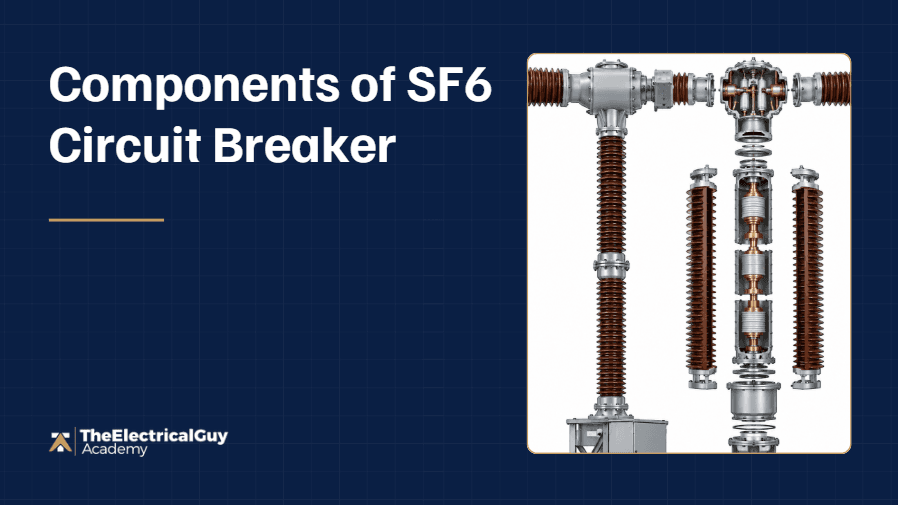

A grading capacitor equalizes voltage distribution across the interrupters of a multi-break circuit breaker, ensuring each interrupter carries its rated share of voltage instead of being overstressed. Without it, uneven voltage sharing can cause pre-arcing and damage the interrupter, which is why grading capacitors appear on higher-voltage breakers that use more than one break per phase.
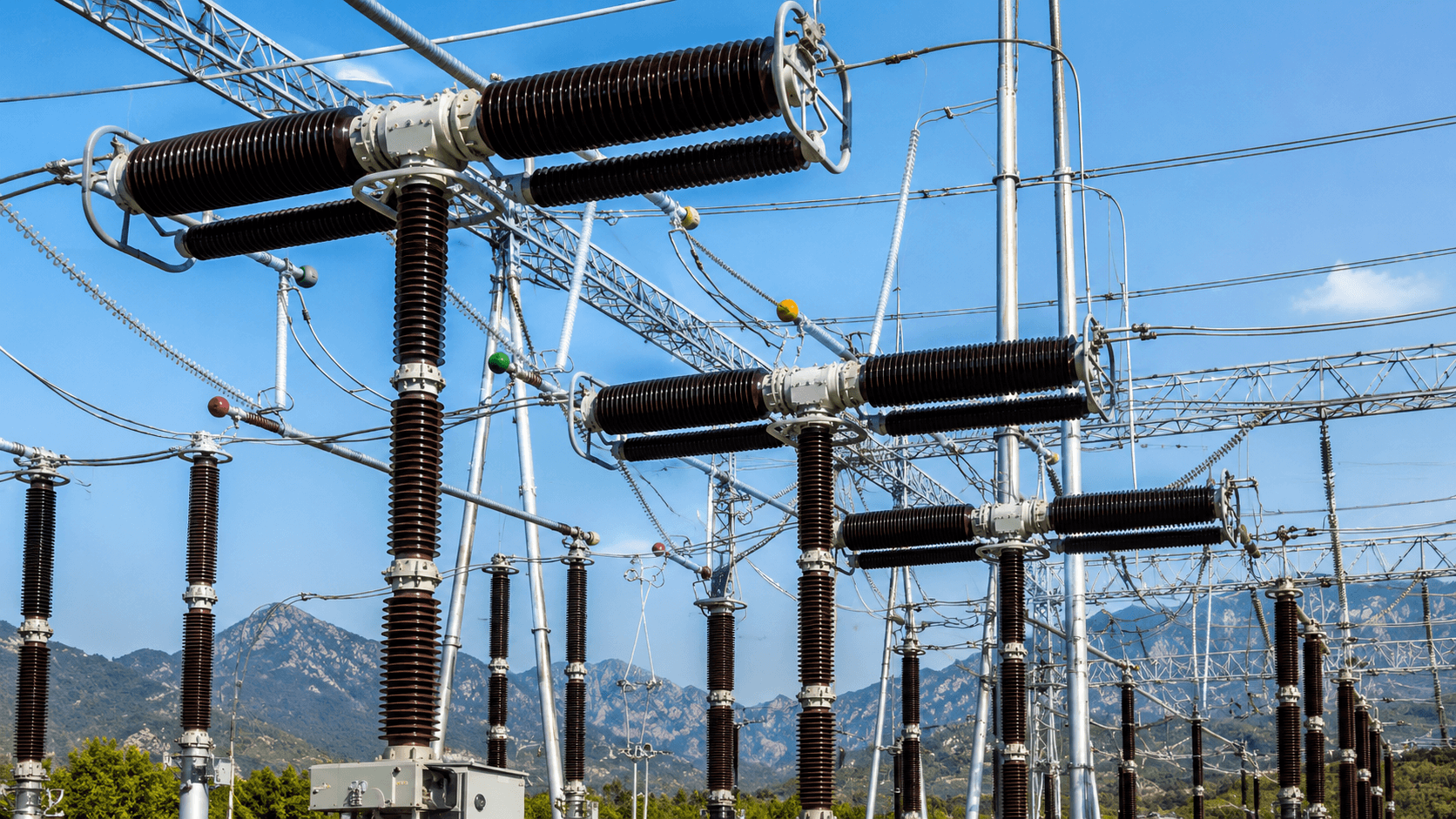
On a 400 kV circuit breaker, you'll typically spot a small device mounted right next to the interrupter, the grading capacitor. It's required specifically when a circuit breaker uses multiple interrupters per phase, and understanding why comes down to a voltage distribution problem that only shows up at higher voltage levels.
Let's walk through what causes that problem and exactly how a grading capacitor solves it.
What's the Difference Between Single-Break and Multi-Break Circuit Breakers?
A single-break circuit breaker uses one interrupter per phase, while a multi-break circuit breaker uses two or more interrupters in series per phase to handle higher voltage levels.
Up to 245 kV, circuit breakers typically use a single interrupter per phase, one break for R phase, one for Y, one for B. At 420 kV, the voltage is high enough that a single break usually isn't sufficient to interrupt it reliably, so the design shifts to two interrupters connected in series per pole. At 800 kV and above, the number of breaks increases further, commonly four interrupters per phase, meaning 12 interrupting units total across all three phases of one breaker.
Why Does Voltage Distribution Become a Problem in Multi-Break Breakers?
Voltage distribution becomes a problem because each interrupter in a multi-break breaker is only designed to carry an equal share of the total voltage, but in practice the voltage doesn't always split evenly between them.
Take a 420 kV breaker with two interrupters in series. Ideally, each interrupter carries 210 kV when the breaker is open. In practice, the interrupter closer to the source side might end up carrying disproportionately more, say 300 kV, leaving only 120 kV across the second interrupter. Since each interrupter is only rated for 210 kV, the one carrying 300 kV is now significantly overstressed.
This uneven distribution isn't just a rating violation on paper. It can cause pre-arcing when the contacts are closing, and that pre-arcing puts real physical stress on the interrupter, risking damage over time.
How Does a Grading Capacitor Fix Voltage Distribution?
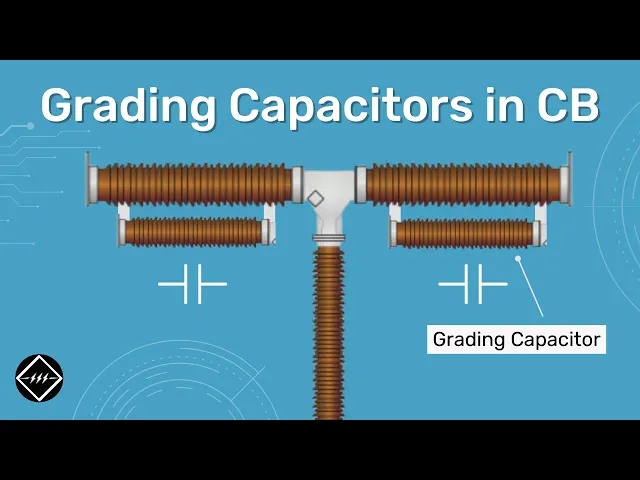
A grading capacitor fixes voltage distribution by being connected in parallel across each interrupter, using the capacitor's natural opposition to voltage change to force equal voltage sharing between breaks.
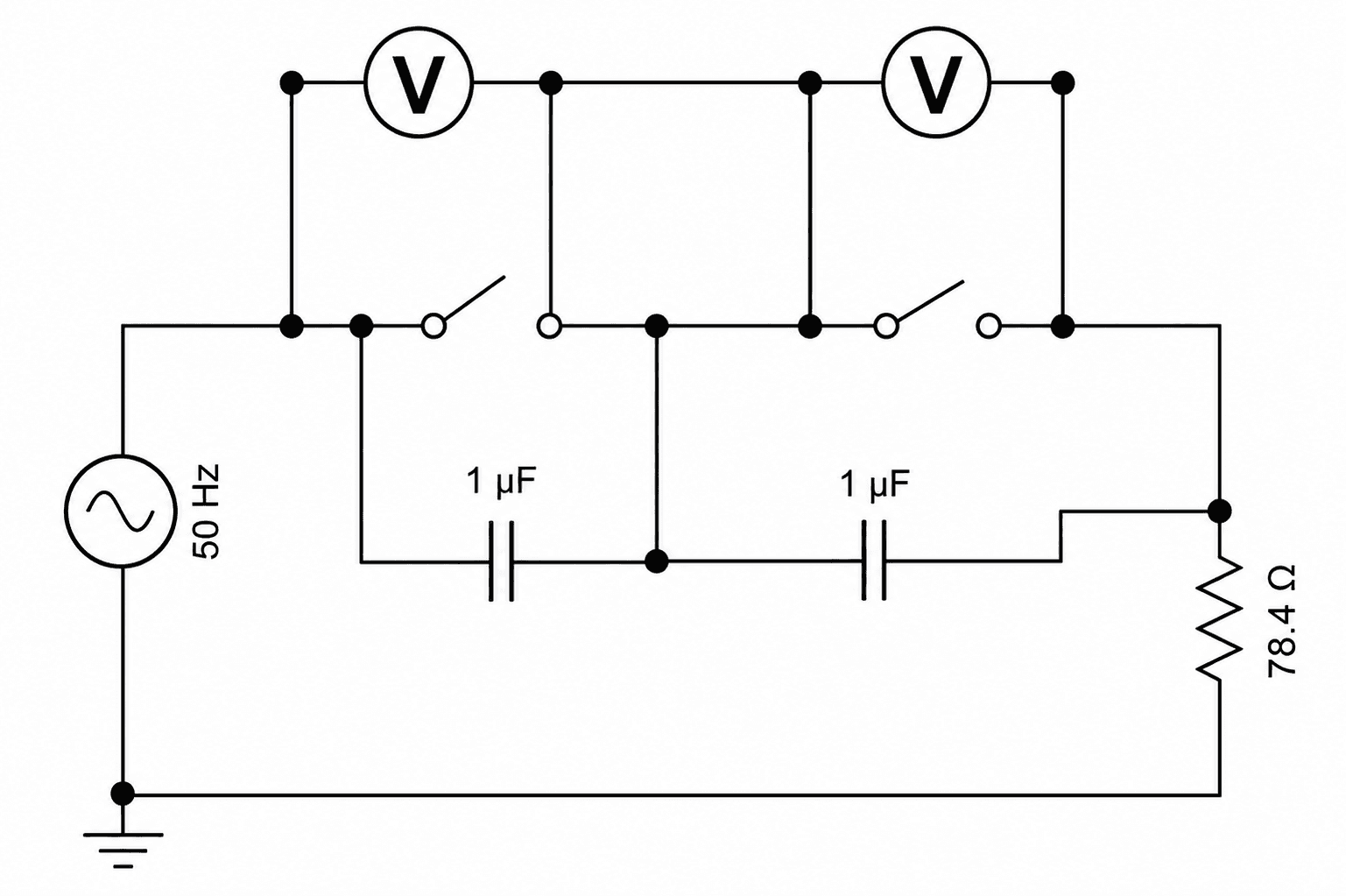
Since a capacitor resists sudden changes in voltage across it, placing one across each interrupter keeps the voltage on each break close to its intended design value. On a 420 kV breaker with two interrupters, adding matched grading capacitors, typically only in the picofarad range, across each break restores the intended 210 kV split across each interrupter instead of an uneven 300/120 split. That equal distribution is exactly what protects each interrupter from unnecessary voltage stress and extends the breaker's operational life.
What Happens to the Grading Capacitor When the Breaker Closes?
Once the breaker's contacts close, the grading capacitor plays no role at all, since current flows entirely through the closed contact path instead.
Grading capacitors matter specifically when the breaker is in the open condition, where voltage distribution across the series interrupters is the concern. The moment the contacts close, current simply flows through the primary circuit path, and the capacitor carries no current at all. This was confirmed directly in a circuit simulation: with the breaker open, voltage split evenly across both breaks; once both interrupters were closed, current through the capacitor dropped to zero, showing it has no functional role during normal closed operation.
Do All Multi-Break Circuit Breakers Need Grading Capacitors?
No. Most modern 400 kV circuit breakers no longer need grading capacitors, since interrupter design has advanced enough to handle voltage distribution reliably on its own; grading capacitors are more likely to still be needed at 800 kV and above, where the higher number of breaks per phase makes even voltage sharing harder to guarantee without one.
FAQ
Why do grading capacitors only matter when the breaker is open?
Because voltage distribution across the series interrupters is only a concern in the open position. Once the contacts close, current flows through the primary path, and the capacitor carries no current or influence on the circuit.
What happens if voltage isn't evenly distributed across multi-break interrupters?
The interrupter carrying more than its rated voltage share becomes overstressed, which can cause pre-arcing during contact closing and, over time, physical damage to that interrupter.
Do 400 kV circuit breakers still use grading capacitors?
Most modern 400 kV breakers no longer require them, since their interrupter design has advanced enough to manage voltage distribution without additional grading. Grading capacitors are more commonly still needed at 800 kV, where more breaks per phase are used.
How large is a typical grading capacitor?
Grading capacitors used for this purpose are relatively small, typically in the picofarad range, since their job is voltage-sharing rather than handling significant current.
Is a grading capacitor the same as a surge capacitor?
No. A grading capacitor's specific purpose is equalizing voltage distribution across series-connected interrupters in a multi-break breaker; it's a distinct function from surge protection devices, which address transient overvoltage events elsewhere in the system.
Conclusion
A grading capacitor solves a specific problem that appears once circuit breakers move to multiple interrupters per phase: voltage doesn't naturally split evenly across series-connected breaks, and an overstressed interrupter risks pre-arcing and long-term damage.
By connecting a capacitor in parallel across each interrupter, voltage distribution is forced back to its intended equal share, protecting the breaker without affecting normal closed-contact operation at all. While many modern 400 kV breakers no longer need this component, it remains relevant at 800 kV and other high-break-count designs.
For the full circuit simulation and visual walkthrough, watch the complete video on the TheElectricalGuy YouTube channel.
Watch the Youtube Video

About Author
Gaurav Joshi
Gaurav started his career on the floor of the electrical industry — not in a classroom. Working across Siemens and Schneider Electric, he saw firsthand how wide the gap was between what colleges teach and what the industry actually needs.
So he did something about it.
Today, he's built a global community of 300,000+ engineers and professionals across YouTube and beyond — and TheElectricalGuy Academy is where that knowledge lives in its most structured, practical form.