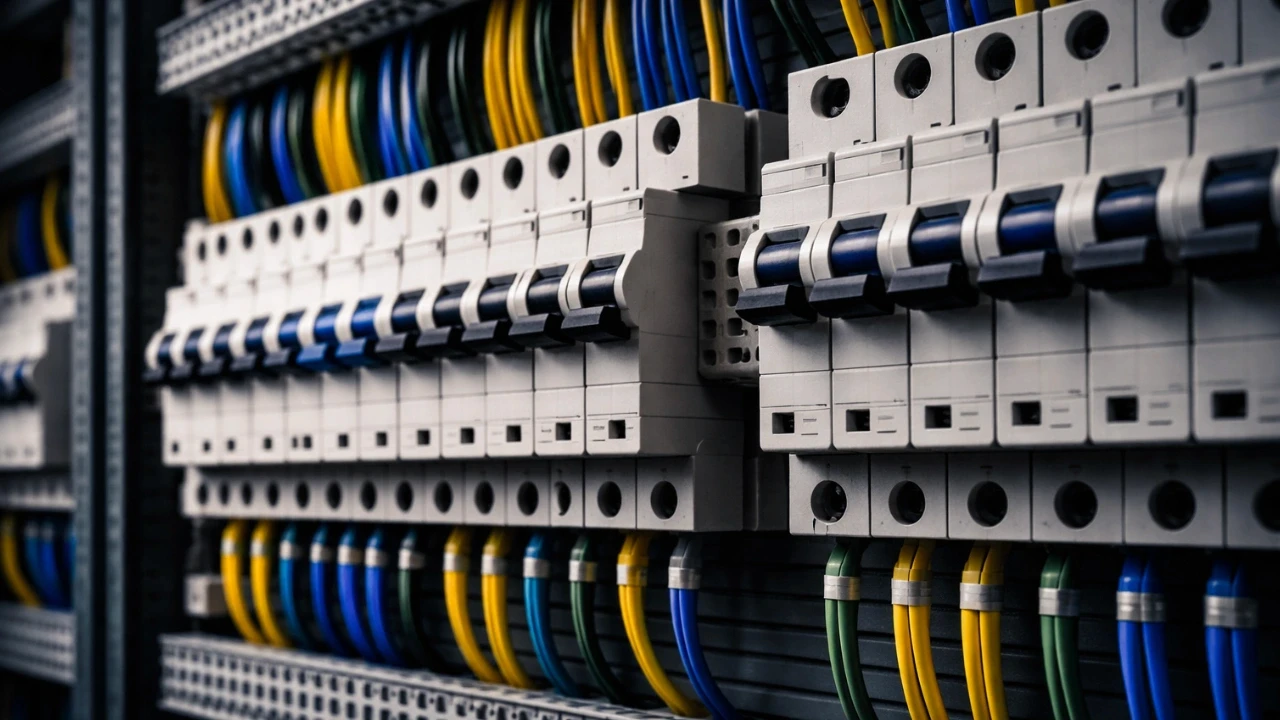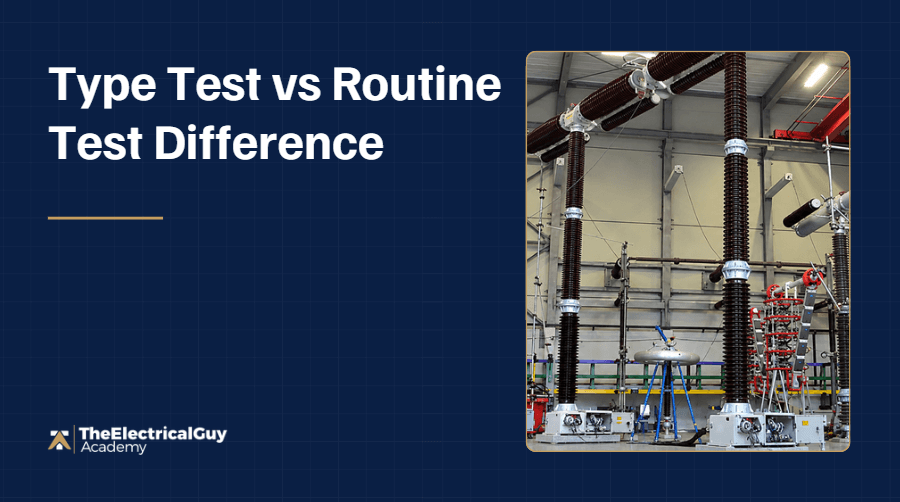

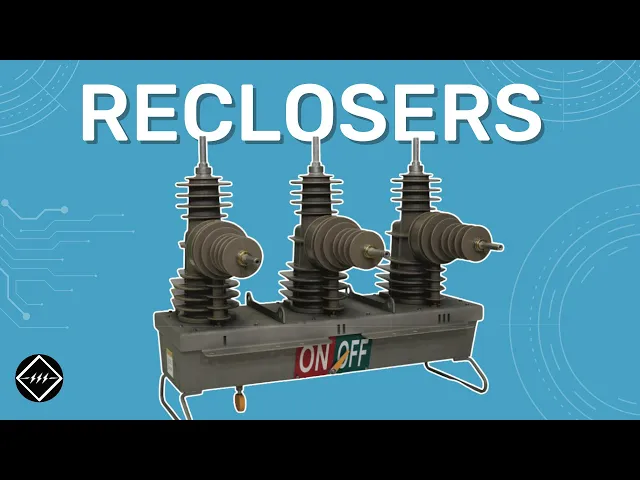
An automatic circuit recloser is a self-controlled distribution protection device that senses an abnormal fault condition, opens the circuit, and automatically recloses in a predetermined sequence, restoring supply without manual intervention if the fault has cleared. It's why power sometimes blinks off and comes back on its own during a storm, rather than staying off until a technician arrives.
You've likely experienced this: electricity goes off, comes back after a few seconds, goes off again, comes back again. This isn't random. It's a fault in the distribution network, and an automatic circuit recloser working exactly as designed.
Reclosers are one of the most important pieces of equipment in a distribution network. Let's look at why they exist, what's inside one, and how the automatic sequence actually works.
Why Do Distribution Networks Need Automatic Reclosers?
Distribution networks need automatic reclosers because the large majority of faults that occur are transient, meaning they clear on their own within seconds, and manually restoring supply for every one of them wastes time and money.
A commonly cited figure in distribution protection is that roughly 80–90% of distribution network faults are transient in nature. That means the fault stays in the system briefly and then vanishes on its own, with no manual intervention required to clear the underlying cause.
Consider a utility with two feeders serving residential, hospital, and commercial loads through standard circuit breakers. A gust of high-speed wind causes two conductors to touch. The system detects the abnormal condition, and the breaker opens, cutting power to the residential zone.
To restore supply, the utility has to send engineers to the site, inspect it, and manually close the breaker, even though the fault, the wind-blown conductors, may have already cleared itself seconds earlier. That round trip costs real time and money, for a fault that didn't need a technician at all.
What Causes Temporary Faults in a Distribution Network?
Temporary faults are commonly caused by high winds momentarily touching conductors together, lightning strokes, animals or birds bridging a gap between conductors, falling tree branches, or brief switching surges, all conditions that resolve themselves within seconds or milliseconds.
In every one of these cases, the underlying cause disappears on its own, but a standard circuit breaker still requires a person to manually reset it, even though the system voltage has already returned to normal. That gap, between a fault clearing itself and someone physically restoring the breaker, is exactly the problem an automatic recloser solves.
What is an Automatic Circuit Recloser, Formally?
An automatic circuit recloser is a self-controlled device capable of making, carrying, and automatically interrupting and reclosing an alternating current circuit in a predetermined sequence, followed by resetting, holding closed, or locking out.
In simpler terms, it's a circuit breaker with the added intelligence to sense an abnormal condition, open automatically, and reclose automatically when appropriate, rather than needing a technician to reset it manually.
What Components Make Up an Automatic Circuit Recloser?
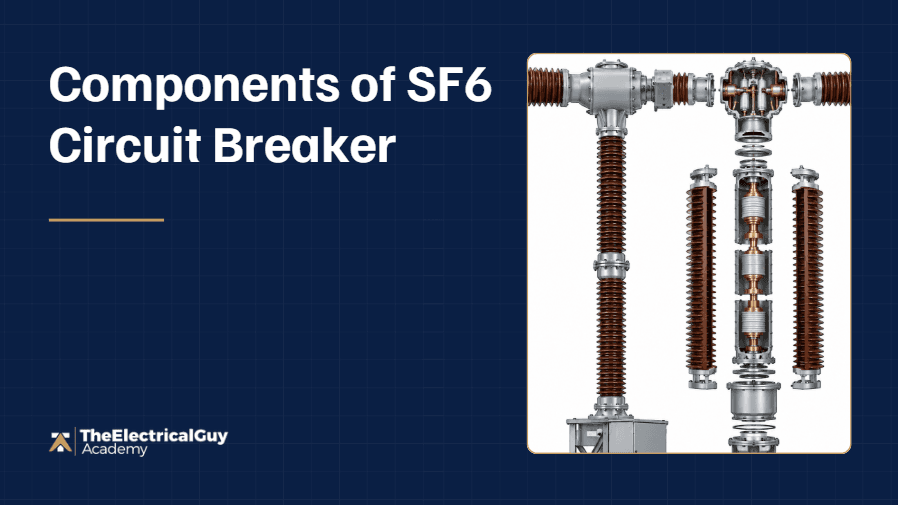
A recloser is built from an interrupting mechanism for each phase, a protection relay, and current and voltage transformers, working together to sense a fault and act on it automatically.
Interrupting mechanism — one per phase (R, Y, B), using vacuum, oil, or SF6 as the interruption and insulation medium, functioning as the actual breaking element.
Protection relay — a circuit breaker can't sense an abnormal condition on its own; the relay detects fault conditions in the system and signals the breaker mechanism to act.
Current transformers and voltage transformers — relays can't take high voltage (12 kV, 24 kV) or high current (800A, 1000A) directly as input, so CTs and VTs step these values down to levels the relay can process.
Put together, these components form the complete automatic circuit recloser, capable of sensing, opening, and reclosing without a person on site.
How Does a Recloser's Operating Sequence Work?
A recloser follows a fixed open-wait-close sequence, giving a fault multiple chances to clear itself before locking out and requiring manual intervention.
Per the standard operating sequence, when the recloser senses an abnormal condition:
Open (O) — the recloser opens immediately upon detecting the fault.
Wait ~0.5 seconds, then close (C) — if the fault has cleared, it stays closed and supply resumes. If not, it opens again immediately.
Wait ~2 seconds, then close again — same logic: stays closed if the fault is gone, opens again if it's still present.
Wait ~5 seconds, then close again — a final attempt. If the fault persists through this attempt, the recloser treats it as a permanent fault and locks out, remaining open.
Once locked out, the recloser requires manual intervention, someone has to go and close it physically, to restore supply. This sequence is what lets the recloser distinguish a temporary fault, which clears within one of these attempts, from a permanent fault, which doesn't, without anyone needing to check on site each time.
What Types of Reclosers Are Available?
Reclosers are available as three-phase gang-operated units, single-phase units, or three single-phase units operating independently, depending on the network configuration they serve.
Three-phase (gang-operated) recloser — all three interrupters are mechanically linked, so a fault on even one phase trips and recloses all three phases together.
Single-phase recloser — operates only a single phase, typically used where a single-phase tap is taken from a three-phase feeder.
Three single-phase reclosers — each phase has its own dedicated mechanism, capable of independent single-phase reclosing as well as coordinated three-phase reclosing.
Reclosers also come in oil or vacuum interruption and insulation medium options, similar to standard circuit breakers.
Where Are Reclosers Used and What Are Their Limits?
Automatic circuit reclosers are used only in distribution networks, not in high or extra-high voltage transmission lines, and are generally available up to 38 kV with current ratings from 630A to 1200A.
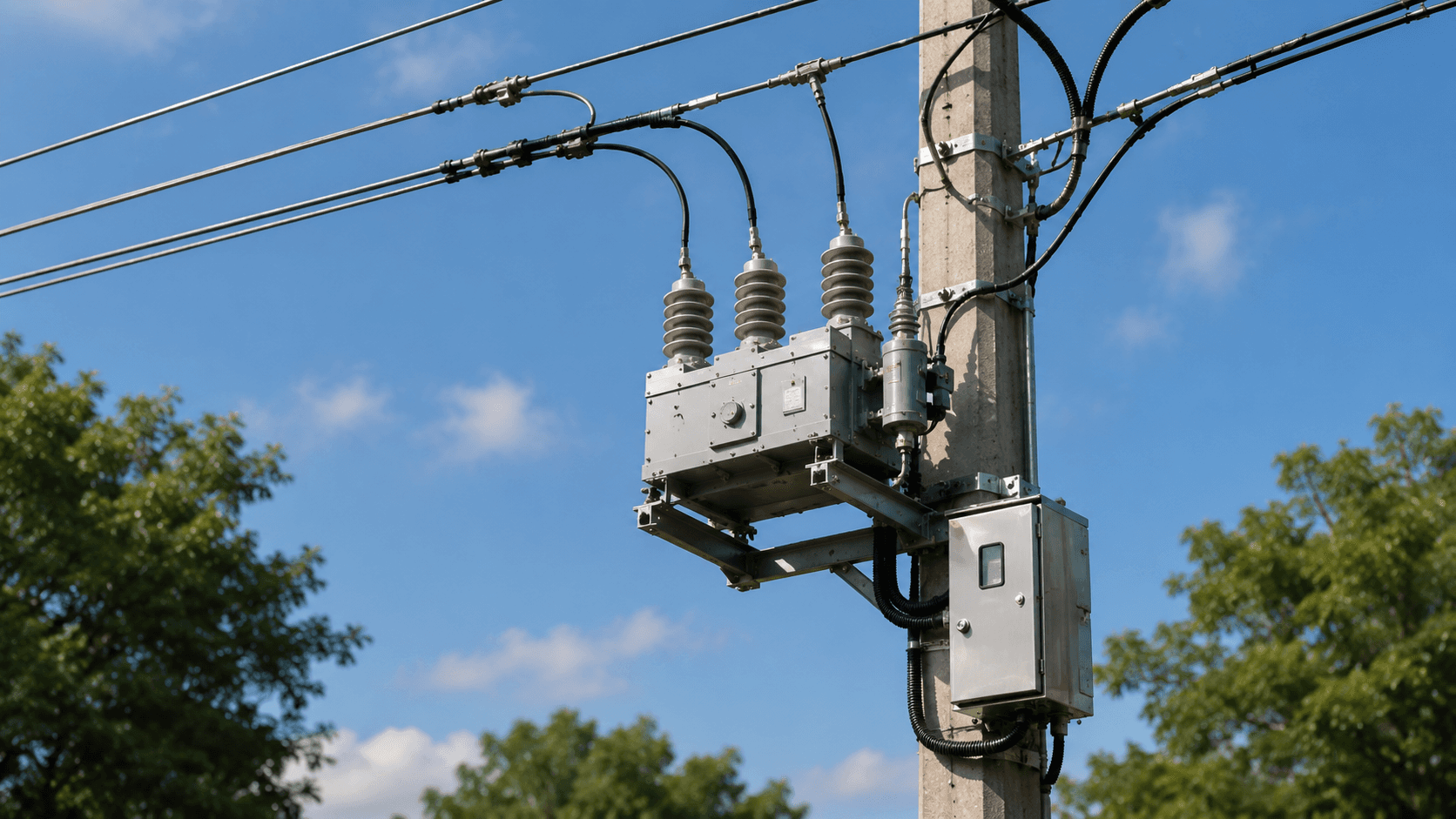
They're not commonly seen in India but are widely deployed in many other countries. One practical advantage is that they can be mounted directly on a distribution pole, with a connected control box housing the relays and control circuitry.
What's the Real-World Advantage of Using a Recloser?
The real-world advantage of a recloser is maintained supply continuity without manual intervention for the vast majority of faults, since temporary faults clear themselves automatically within the recloser's sequence.
Take the earlier wind example again: two conductors touch during a gust, the recloser senses the abnormal condition and opens. Within seconds, as the wind settles and the conductors separate, the fault clears.
The recloser completes its sequence, senses the fault is gone, and stays closed, restoring supply automatically. No engineer dispatched, no manual reset, and customers experience only a brief interruption instead of an extended outage.
FAQ
What percentage of distribution faults are temporary?
A commonly cited figure is that roughly 80–90% of distribution network faults are transient and clear on their own within seconds, which is the core reason automatic reclosing is so valuable in distribution systems.
How is a recloser different from a standard circuit breaker?
A standard circuit breaker opens on a fault and stays open until someone manually resets it. A recloser adds a built-in sequence that automatically attempts to reclose the circuit multiple times before locking out, only requiring manual intervention if the fault turns out to be permanent.
How many times does a recloser try to reclose before locking out?
Per the standard sequence, a recloser typically makes three reclosing attempts, waiting roughly 0.5, 2, and 5 seconds between them, before locking out if the fault is still present on the final attempt.
Why aren't reclosers common on high voltage transmission lines?
Reclosers are designed specifically for distribution networks, generally up to 38 kV, and aren't used on high or extra-high voltage transmission lines, which rely on different protection schemes.
Can a recloser handle a fault on just one phase of a three-phase system?
It depends on the type. A three-phase gang-operated recloser trips and recloses all three phases together even for a single-phase fault, while a three single-phase recloser can isolate and reclose just the affected phase independently.
Conclusion
An automatic circuit recloser exists because most distribution faults are temporary and clear themselves, and sending an engineer to manually reset a breaker for every one of them wastes time, money, and customer goodwill.
By combining an interrupting mechanism, a protection relay, and instrument transformers into a single self-controlled device that follows a defined open-reclose sequence, a recloser restores supply automatically for temporary faults and only requires manual intervention when a fault turns out to be permanent.
For the full walkthrough with real device footage, watch the complete video on the TheElectricalGuy YouTube channel.
Watch the Youtube Video

About Author
Gaurav Joshi
Gaurav started his career on the floor of the electrical industry — not in a classroom. Working across Siemens and Schneider Electric, he saw firsthand how wide the gap was between what colleges teach and what the industry actually needs.
So he did something about it.
Today, he's built a global community of 300,000+ engineers and professionals across YouTube and beyond — and TheElectricalGuy Academy is where that knowledge lives in its most structured, practical form.