
A load break switch (LBS), also called a switch disconnector, is a device that combines the functions of a switch and a disconnector: it can make, break, and carry normal system current, and it satisfies isolating distance requirements when open. Unlike a circuit breaker, it cannot interrupt fault or short-circuit current, which is the single biggest point of confusion between the two.
Load break switches are most commonly found in ring main units and used for distribution transformer protection, and they're frequently confused with circuit breakers. Understanding the difference starts with three separate IEC definitions: switch, disconnector, and load break switch.
Let's build up from the basic definitions to exactly where an LBS fits, and where it doesn't.
What is a Switch, According to IEC?
A switch, per IEC 62271-100 definition, is a mechanical switching device capable of making, carrying, and breaking currents under normal circuit conditions, and carrying, but not necessarily breaking, abnormal currents like short-circuit currents for a specified time.
In practical terms: if your system's normal current is 200A, a switch must be able to make (close onto), carry, and break that 200A. It must also be able to carry short-time fault currents for a defined duration, but breaking that fault current isn't part of its job.
What is a Disconnector?
A disconnector, per IEC 62271-100 definition, is a mechanical switching device that provides an isolating distance in the open position, but cannot make or break normal system current, nor fault current; it can only carry current, not switch it.
This is the key distinction: a disconnector is fundamentally an offload device. What it does provide, that a basic switch doesn't, is a visible, significant isolating distance between live contacts when open, which is why disconnectors are considered more secure for isolation purposes. Switches are generally limited to low and medium voltage applications; disconnectors are used across medium, high, and extra-high voltage.
What is a Load Break Switch, Exactly?
A load break switch (switch-disconnector) is defined by IEC 62271-100 as a switch that, in the open position, also satisfies the isolating requirement specified for a disconnector, effectively combining both devices into one.
It can make, break, and carry normal system current like a switch, and it also provides a proper isolating distance when open, like a disconnector. What it explicitly cannot do is break short-circuit current, only carry it for a specified time. That single limitation is what separates it from a circuit breaker.
How is a Load Break Switch Different From a Circuit Breaker?
The core difference is fault current interruption: a circuit breaker can make, break, and interrupt both normal current and short-circuit current, while a load break switch can only carry short-circuit current for a specified time, not break it.
Load break switch applications are also limited to around 52 kV, essentially distribution-level voltages. You won't find them at high or extra-high voltage; those levels require a dedicated disconnector plus a dedicated circuit breaker as separate devices.
What is a Load Break Switch Capable Of?
A load break switch can make and break normal system current, provide isolating distance when open, interrupt small capacitive and inductive currents, and carry rated fault current for a specified duration.
Making and breaking normal current — the core switch function defined by IEC.
Isolating distance when open — the disconnector function combined into the same device.
Interrupting small capacitive and inductive currents — essential for safely switching unloaded overhead lines, transformers, and cables, where trapped charge or inductive current needs safe interruption.
Carrying short-time fault current — typically rated on the nameplate as, for example, 31.5 kA for 1 or 3 seconds, without the ability to actually break that current.
What Are the Main Components of a Load Break Switch?
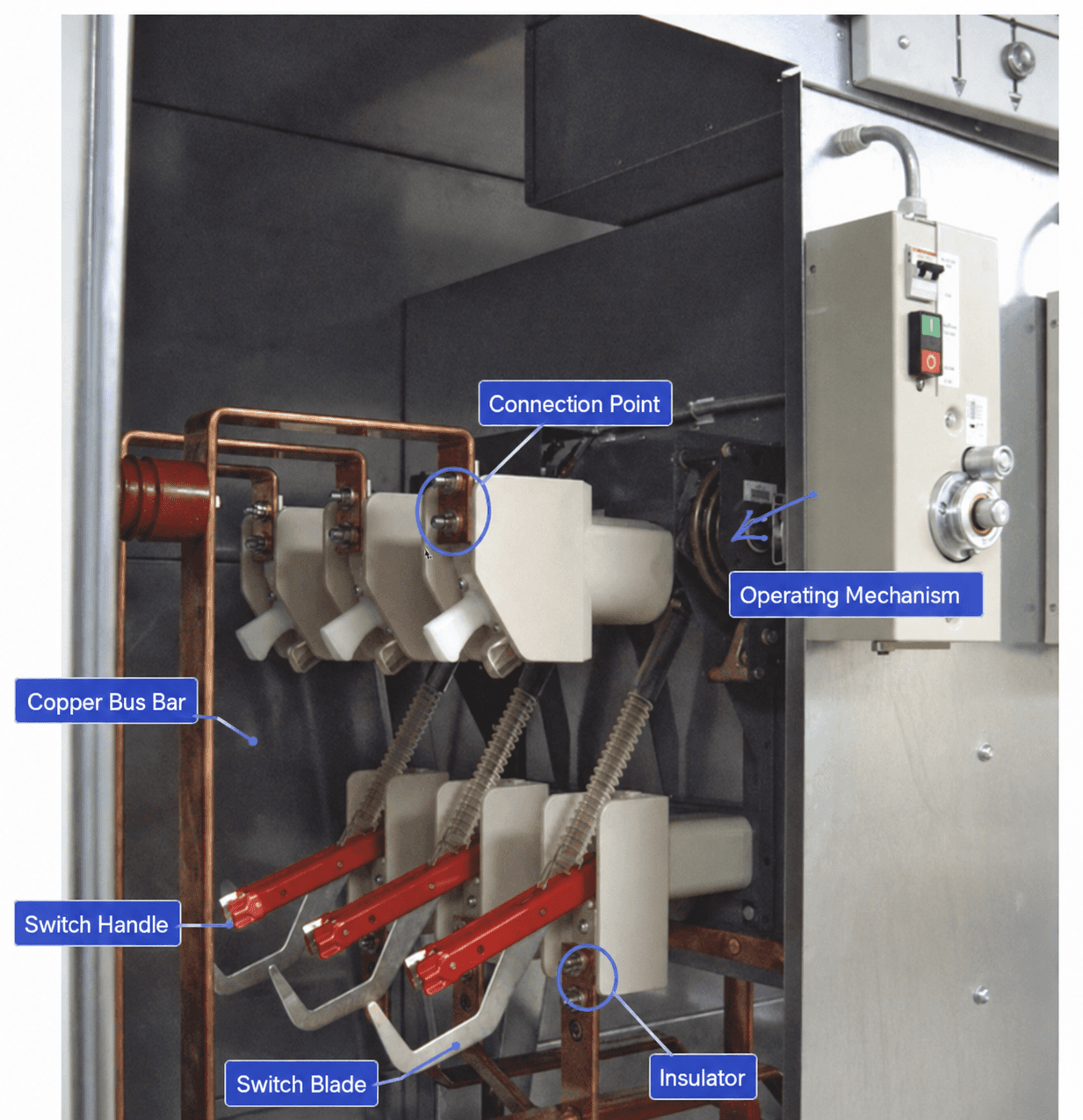
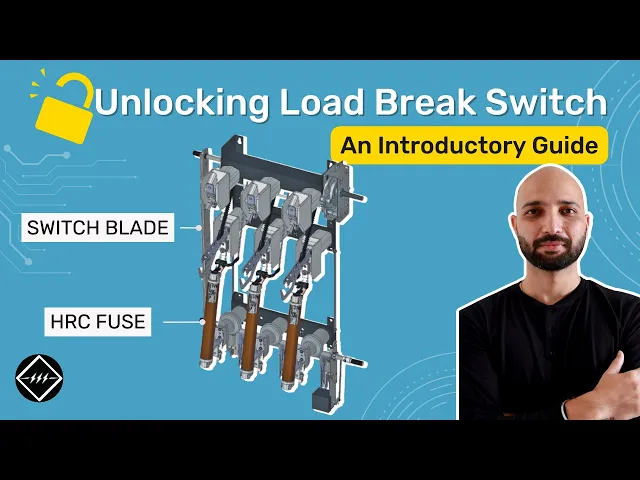
A load break switch is built from three main components: a switching blade, an arc-extinguishing enclosure, and an operating mechanism, typically spring-based for fast, controlled operation.
Switching blade — the primary contact element that opens and closes the circuit.
Arc-extinguishing chamber — not a separate dedicated device in most designs, but rather the sheet-metal enclosure the switch is mounted in, which contains and extinguishes the arc during switching.
Operating mechanism — since switching normal (and sometimes abnormal) current must happen at a specific, controlled speed, unlike the slow manual opening of a typical disconnector, a dedicated mechanism, most often spring-operated, is used.
What Types of Load Break Switches Are Available?
Load break switches come in two main insulation types: air-insulated (also called air-blast) and SF6 gas-insulated, with SF6 designs being significantly more compact due to the gas's superior dielectric properties.
Air-insulated load break switches are larger and typically panel-mounted, with visible open switch blades for each phase. They can also include an HRC (High Rupturing Capacity) fuse to provide transformer protection, blowing to isolate the transformer when a fault occurs, though the fuse needs replacement afterward.
SF6 gas-insulated load break switches are considerably more compact than their air-insulated counterparts, and are commonly available as line-mounted units that connect directly to a distribution pole or tower, saving dedicated installation space.
How Does a Load Break Switch Compare to a Disconnector and a Circuit Breaker?
Capability | Disconnector | Load Break Switch | Circuit Breaker |
Make/break normal current | No | Yes | Yes |
Provide isolating distance when open | Yes | Yes | No (needs a dedicated disconnector) |
Carry short-circuit current for a set time | Yes | Yes | Yes |
Break short-circuit current | No | No | Yes |
Typical voltage range | MV, HV, EHV | Up to ~52 kV (distribution) | LV to EHV |
Where is a Load Break Switch Commonly Used?
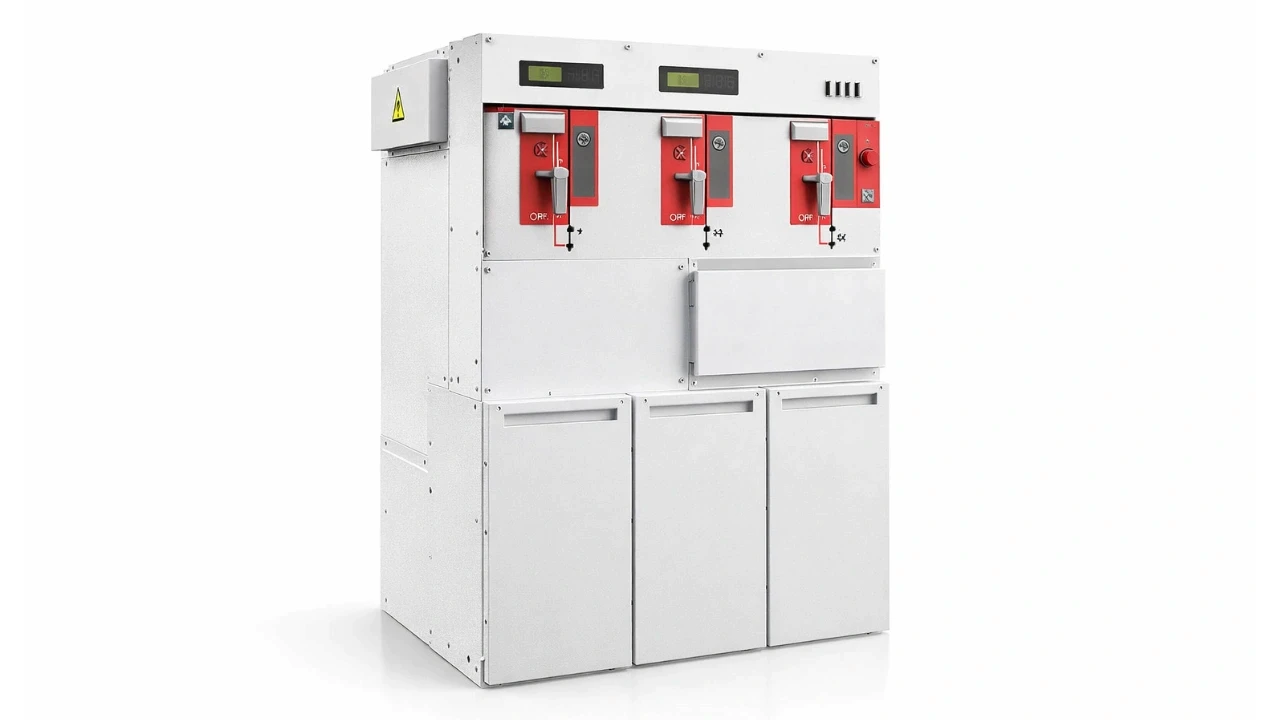
Load break switches are most commonly used in ring main units (RMUs), where they're often called ring switches, and for distribution transformer protection in apartment complexes, commercial buildings, and shopping malls.
If you check the panel next to a transformer in most residential or commercial buildings, it's more often a load break switch than a full circuit breaker, since LBS units are simpler, more compact, and sufficient for typical distribution protection needs.
FAQ
Is a load break switch the same as a switch disconnector or ring switch?
Yes, load break switch, switch disconnector, and ring switch (when used inside a ring main unit) all refer to the same device.
Can a load break switch interrupt a short-circuit fault?
No. A load break switch can carry short-circuit current for a specified time, but it cannot break or interrupt that fault current. Only a dedicated circuit breaker can do that.
What's the maximum voltage level for a load break switch?
Load break switch applications are generally limited to around 52 kV, placing them firmly in the distribution voltage range rather than high or extra-high voltage.
Why does a load break switch need to interrupt capacitive and inductive currents?
Because switching unloaded overhead lines, cables, or transformers still involves small capacitive or inductive currents from trapped charge, and safely interrupting these is a required capability distinct from interrupting full load or fault current.
What's the difference between air-insulated and SF6 load break switches?
Air-insulated units are larger since air has lower dielectric strength, while SF6 gas-insulated units are far more compact due to SF6's superior insulating properties, often allowing direct, space-saving mounting on a distribution pole.
Conclusion
A load break switch sits precisely between a disconnector and a circuit breaker: it can make, break, and carry normal system current like a switch, and it provides proper isolating distance like a disconnector, but it cannot break short-circuit current the way a circuit breaker can. That single limitation, along with its typical ~52 kV voltage ceiling, defines exactly where it belongs in a distribution network, most commonly inside ring main units and for transformer protection.
For the full visual walkthrough of construction and both insulation types, watch the complete video on the TheElectricalGuy YouTube channel.
Watch the Youtube Video

About Author
Gaurav Joshi
Gaurav started his career on the floor of the electrical industry — not in a classroom. Working across Siemens and Schneider Electric, he saw firsthand how wide the gap was between what colleges teach and what the industry actually needs.
So he did something about it.
Today, he's built a global community of 300,000+ engineers and professionals across YouTube and beyond — and TheElectricalGuy Academy is where that knowledge lives in its most structured, practical form.