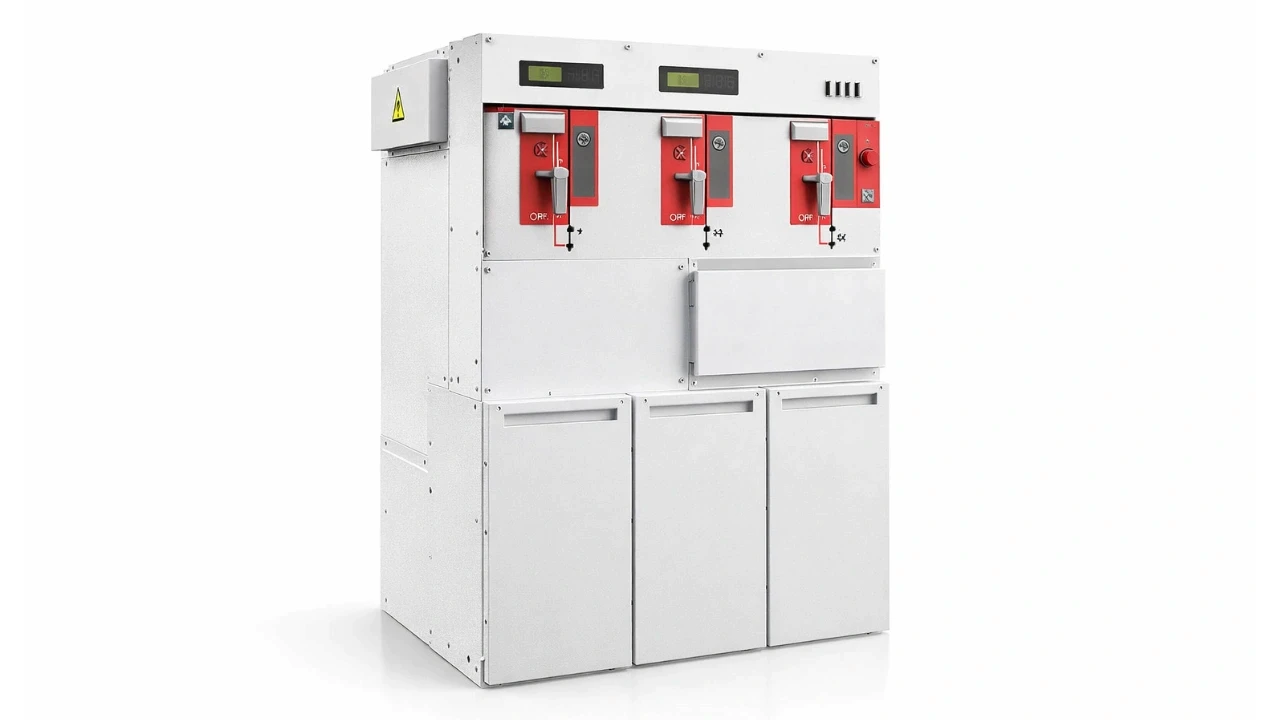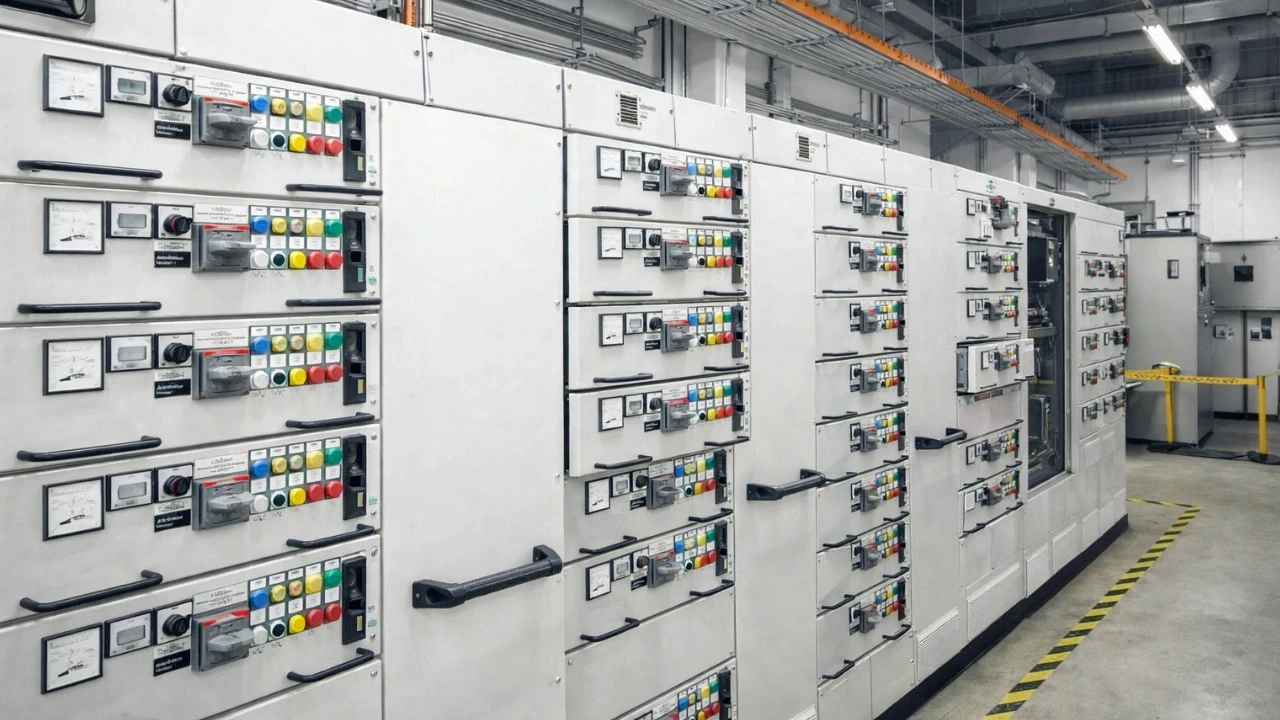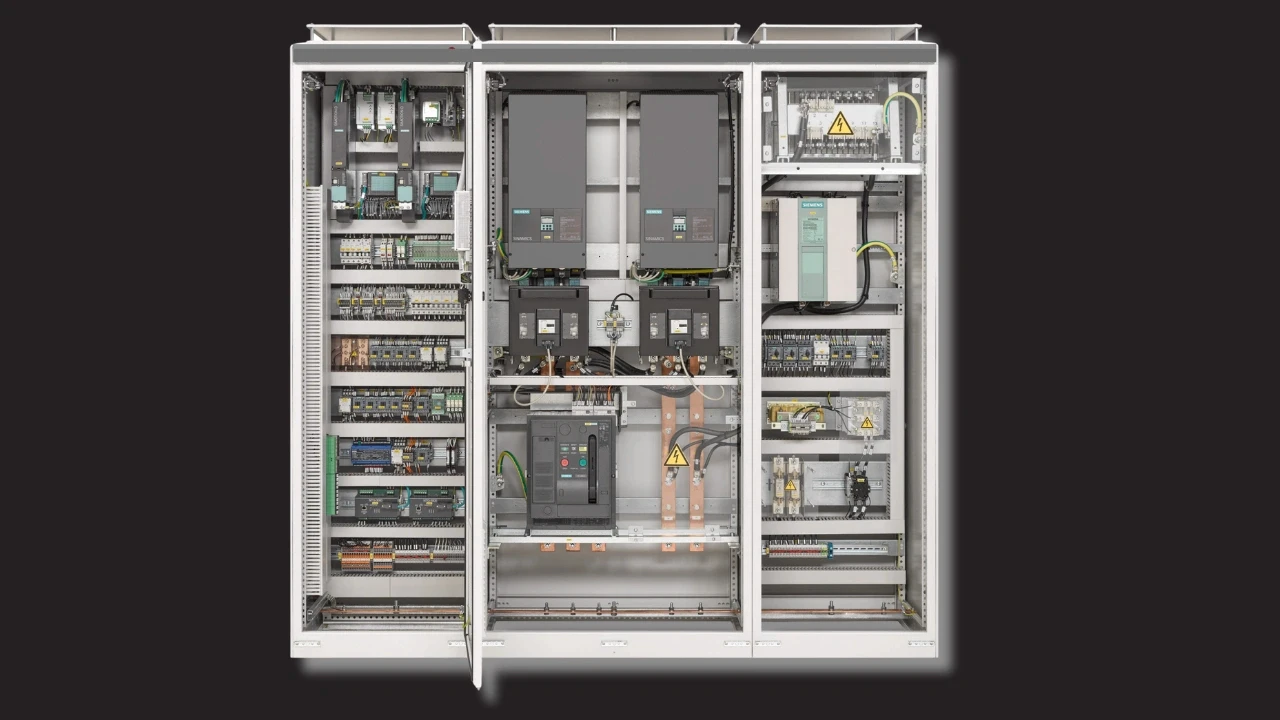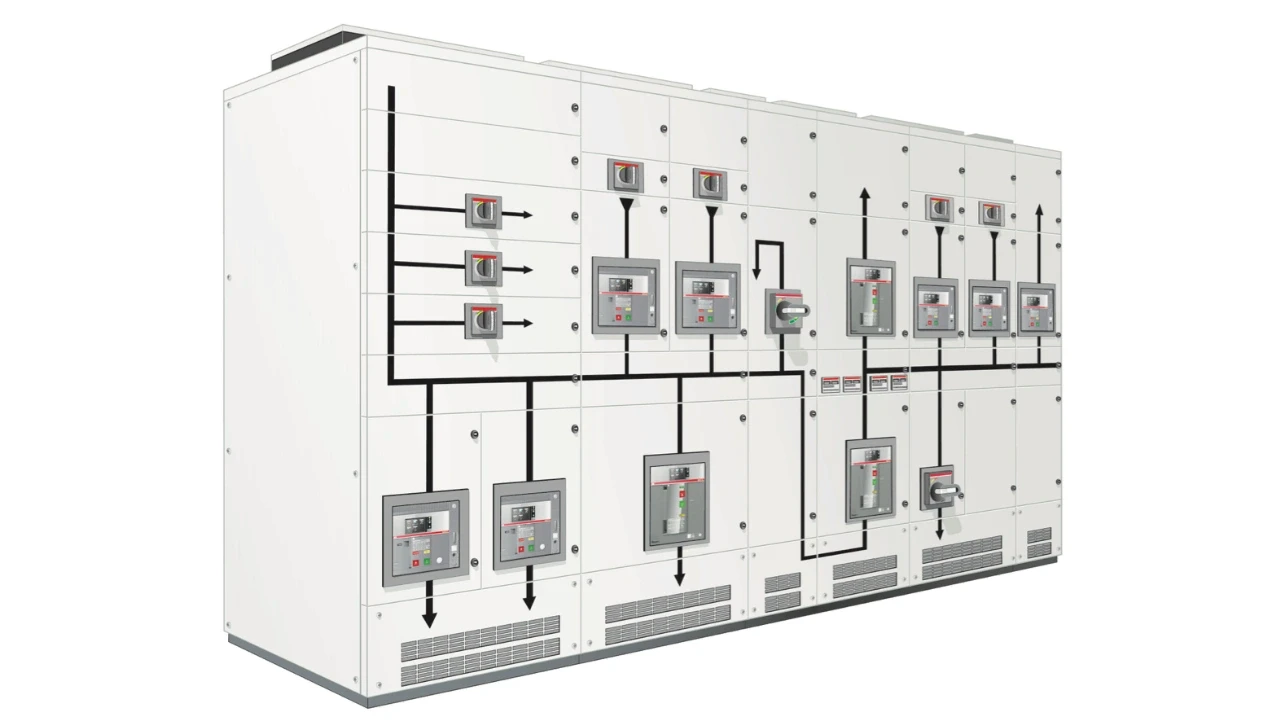

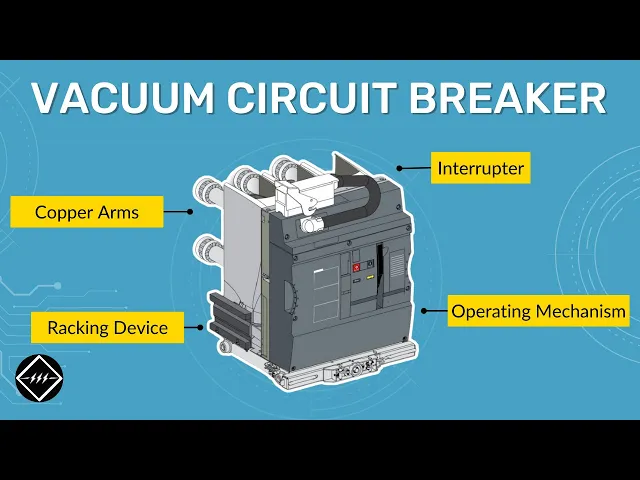
A vacuum circuit breaker, the most commonly used breaker at 52 kV and below, is built from a vacuum interrupter (with fixed and moving contacts inside a vacuum bottle), an operating mechanism, and, for outdoor designs, a support insulator, base frame, and support structure. Indoor units also come in fixed or withdrawable variants, distinguished by a racking device that lets the breaker be pulled out for maintenance.
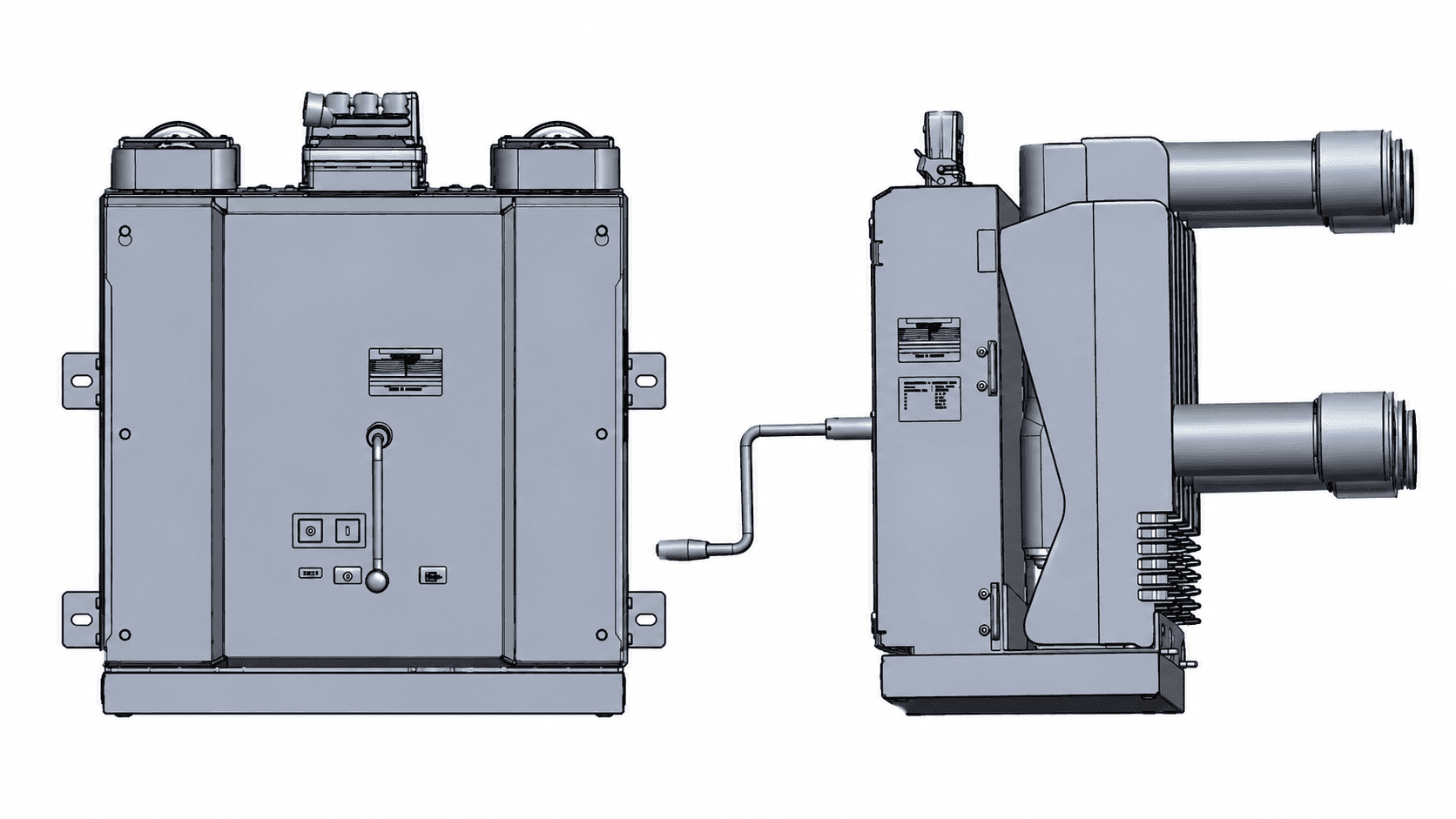
At 52 kV and below, medium voltage territory, the vacuum circuit breaker is the most widely used design in switchgear. Its components differ in a few key ways from the SF6 breakers used at higher voltage, most notably in how the interrupter itself is built.
What is Inside a Vacuum Interrupter?
A vacuum interrupter contains just two contacts, a fixed contact and a moving contact, sealed inside a vacuum bottle, and unlike an SF6 breaker, both normal and fault current pass through the same pair of contacts rather than separate main and arcing contacts.
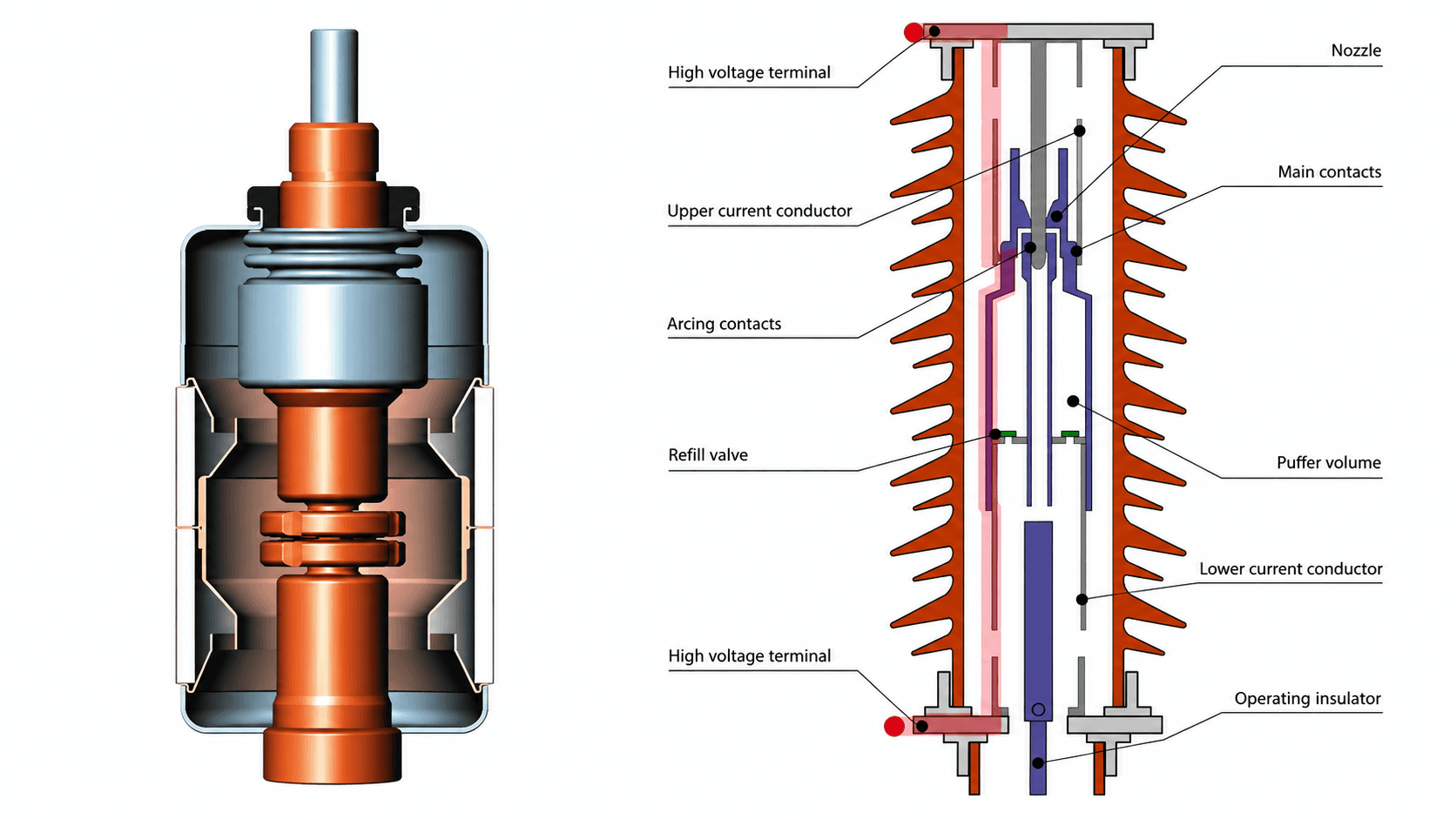
(fig - left side vacuum interrupter, right side SF6 interrupter)
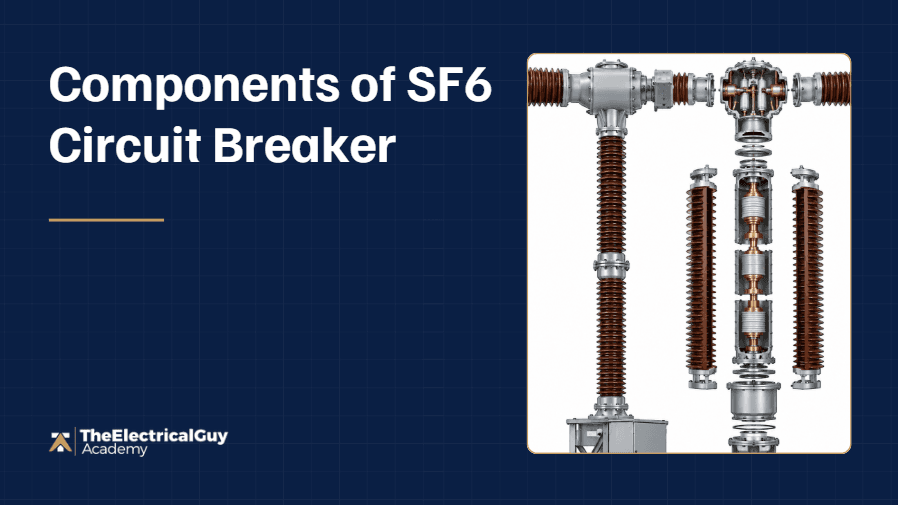
In SF6 circuit breakers, the interrupter uses dedicated main contacts for normal current and separate arcing contacts for fault current. A vacuum interrupter simplifies this: there's no separate arcing contact, just the fixed and moving contact, both handling normal and abnormal current inside the sealed vacuum bottle.
Each phase (R, Y, B) is called one pole, and each pole has its own vacuum bottle housed inside an insulation sheet. Terminal pads on the interrupter connect the incoming and outgoing supply, wiring the breaker in series with the circuit.
What's the Difference Between Fixed and Withdrawable Vacuum Circuit Breakers?
A fixed-type vacuum circuit breaker stays permanently mounted in its panel position, while a withdrawable-type breaker can be physically rolled out of the panel for maintenance using a dedicated racking device.
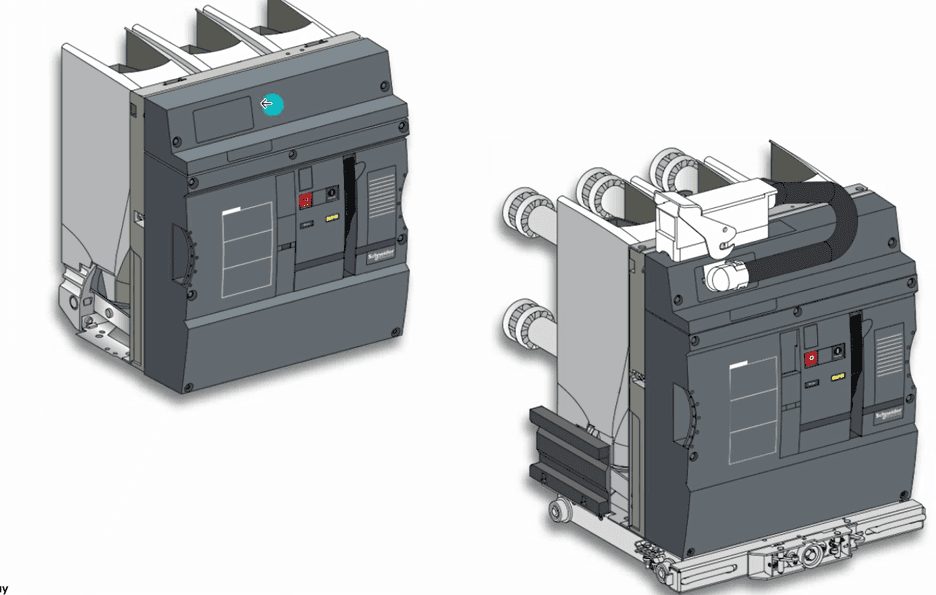
Visually, withdrawable-type breakers are identifiable by their longer arms, a feature not present on fixed-type designs. This longer-arm design is required to interface with the racking mechanism that lets the breaker slide in and out of the panel.
What is a Racking Device and Why Does It Matter?
A racking device, or racking trolley, is the component that lets a withdrawable circuit breaker be rolled into or out of its panel, and it comes with dedicated safety interlocks to control that movement safely.
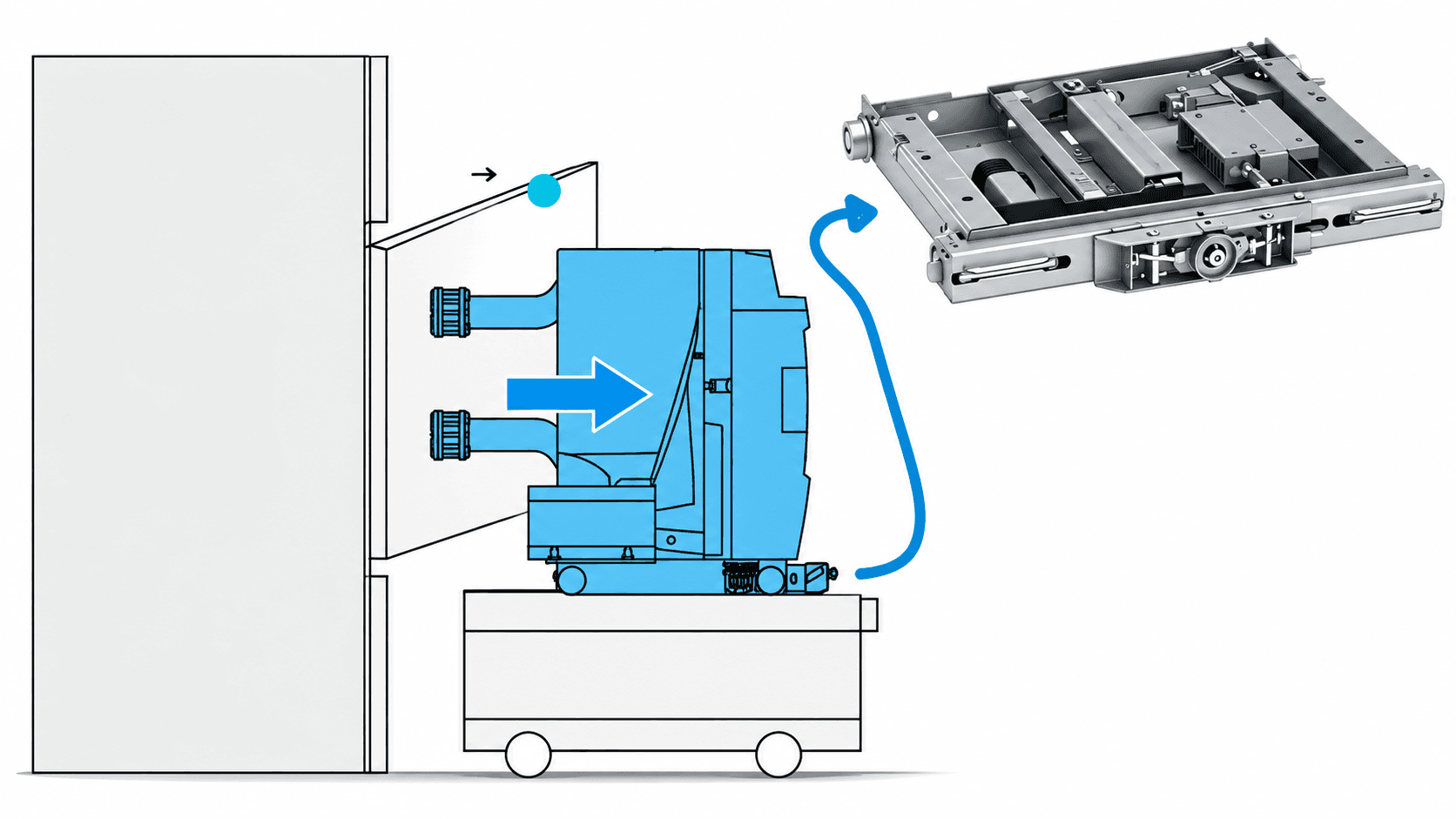
The circuit breaker sits on the racking device and can be rolled back into the panel for normal operation or pulled out for maintenance access, all without needing to physically lift or disconnect the breaker assembly itself.
What is the Operating Mechanism on a Vacuum Circuit Breaker?
The operating mechanism is the complete mechanical and control assembly, typically spring-operated, mounted at the front of the breaker, responsible for opening and closing the contacts.
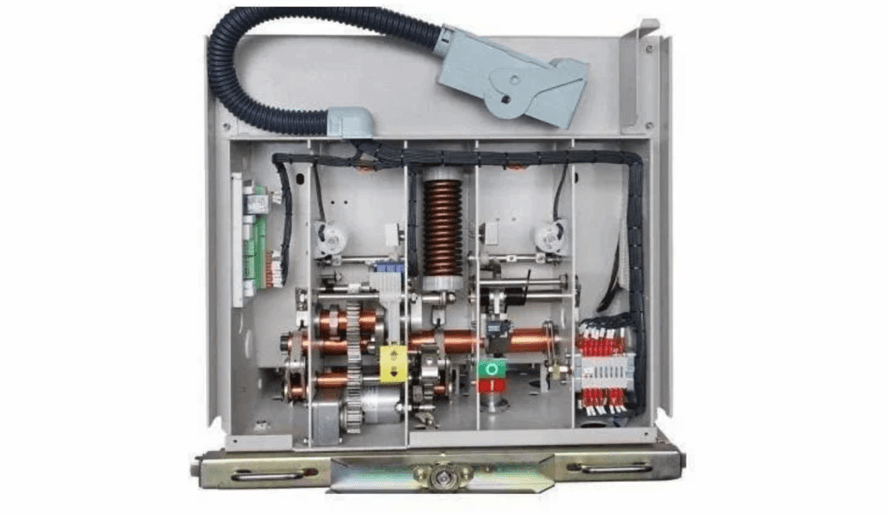
Similar to the mechanism used in high and extra-high voltage circuit breakers, it houses the spring assembly along with all the control circuitry: closing coils, tripping coils, and various MCBs needed to execute open and close commands correctly. A charging handle is also provided, since the spring can be charged either manually or with a motor, depending on the installation.
How Do the Components of an Outdoor Vacuum Circuit Breaker Differ?
An outdoor vacuum circuit breaker uses the same core vacuum interrupter but adds a support insulator, base frame, and support structure, closely mirroring the outdoor SF6 breaker design.
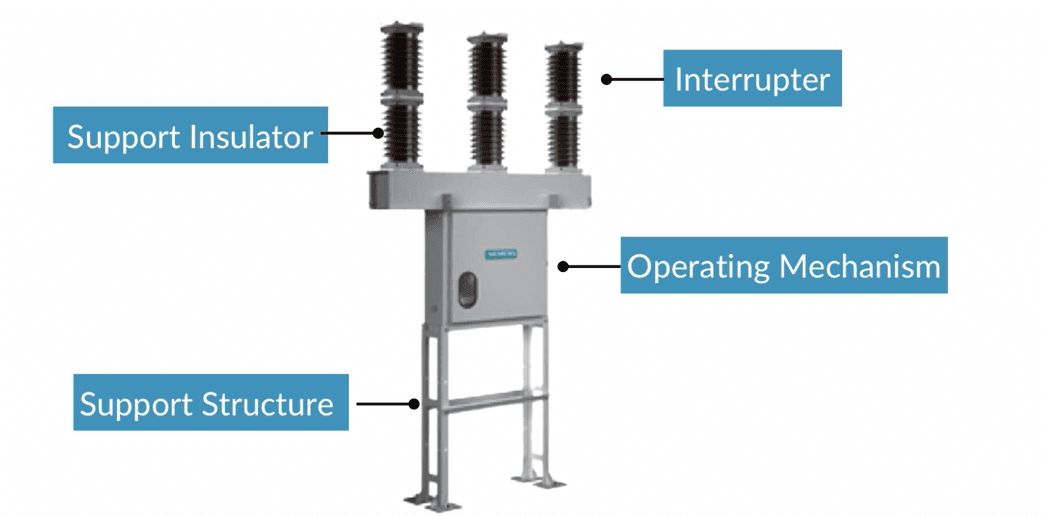
Vacuum interrupter — the same fixed and moving contact design, housed in a porcelain enclosure with the vacuum bottle inside.
Support insulator — maintains ground clearance, just as in an outdoor SF6 breaker.
Base frame — supports all three poles of the breaker assembly.
Operating mechanism — houses the spring mechanism and control circuitry, same core function as the indoor version.
Support structure — holds the complete assembly at a safe height above ground.
Indoor vs Outdoor Vacuum Circuit Breaker — Quick Comparison
Component | Indoor (AIS) | Outdoor |
Vacuum interrupter | Yes, with insulation sheet per pole | Yes, housed in porcelain enclosure |
Support insulator | Not typically required | Yes, for ground clearance |
Base frame | Panel-mounted instead | Yes, supports all three poles |
Operating mechanism | Yes, spring-based, front-mounted | Yes, spring-based |
Support structure | Panel housing serves this role | Yes, dedicated steel structure |
Fixed or withdrawable option | Both available | Typically fixed |
FAQ
Why doesn't a vacuum circuit breaker have separate arcing contacts like an SF6 breaker?
A vacuum interrupter's sealed environment allows the same fixed and moving contact pair to safely handle both normal and fault current, unlike SF6 breakers, which need dedicated arcing contacts built from different material to handle the much higher fault current separately.
How can you visually tell a withdrawable vacuum circuit breaker from a fixed one?
Withdrawable-type breakers have noticeably longer arms, a design feature needed to interface with the racking device, which fixed-type breakers don't have at all.
What voltage range typically uses vacuum circuit breakers?
Vacuum circuit breakers are the most commonly used design at 52 kV and below, medium voltage territory, while SF6 breakers dominate higher voltage applications.
What does a racking device actually do?
It allows a withdrawable circuit breaker to be safely rolled into or out of its panel for maintenance access, complete with interlocks that control this movement safely.
Are outdoor vacuum circuit breaker components the same as indoor ones?
The core vacuum interrupter design is the same, but outdoor units add a support insulator, base frame, and dedicated support structure to maintain ground clearance and hold the assembly at a safe height, components not typically needed indoors where the panel housing serves that role.
Conclusion
A vacuum circuit breaker's simplicity, just a fixed and moving contact sealed inside a vacuum bottle, is what makes it the standard choice at 52 kV and below. Indoor units add the choice of fixed or withdrawable mounting, with a racking device enabling the latter, while outdoor units mirror the SF6 breaker's support insulator, base frame, and support structure to maintain safe ground clearance. Understanding both variants is essential for anyone working with medium voltage switchgear.
For the full 3D model walkthrough, watch the complete video on the TheElectricalGuy YouTube channel.
Watch the Youtube Video

About Author
Gaurav Joshi
Gaurav started his career on the floor of the electrical industry — not in a classroom. Working across Siemens and Schneider Electric, he saw firsthand how wide the gap was between what colleges teach and what the industry actually needs.
So he did something about it.
Today, he's built a global community of 300,000+ engineers and professionals across YouTube and beyond — and TheElectricalGuy Academy is where that knowledge lives in its most structured, practical form.