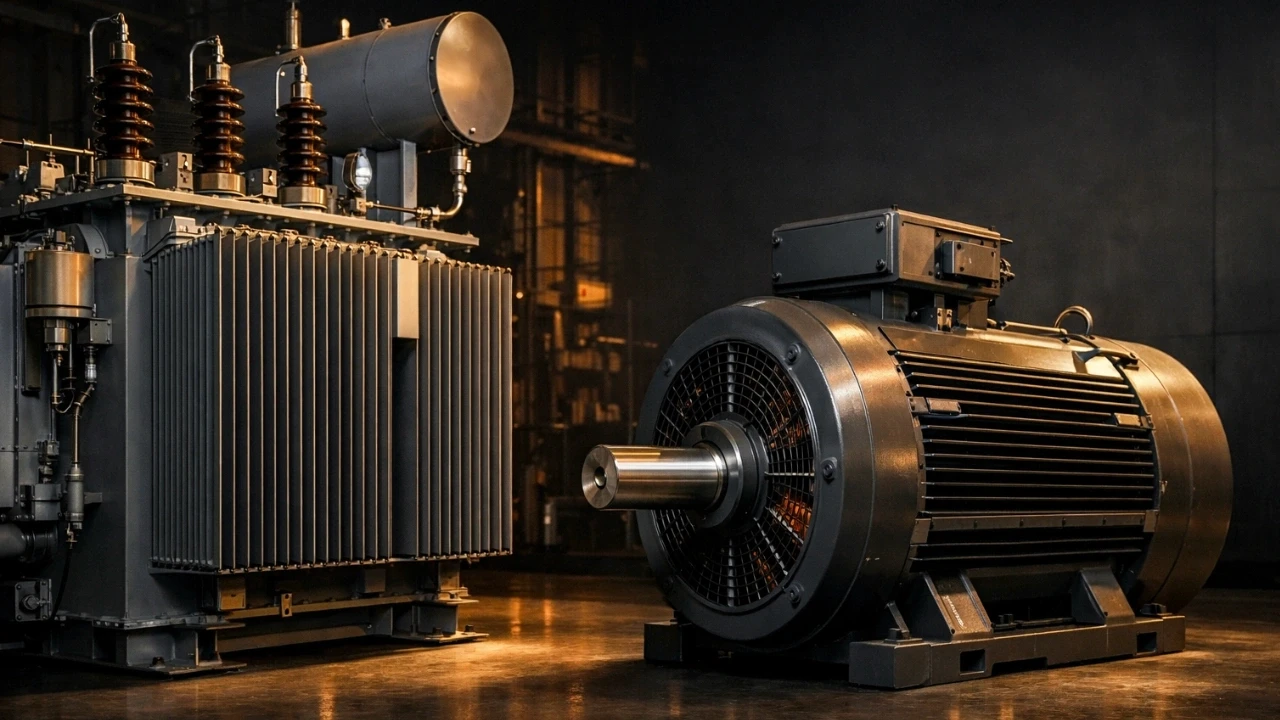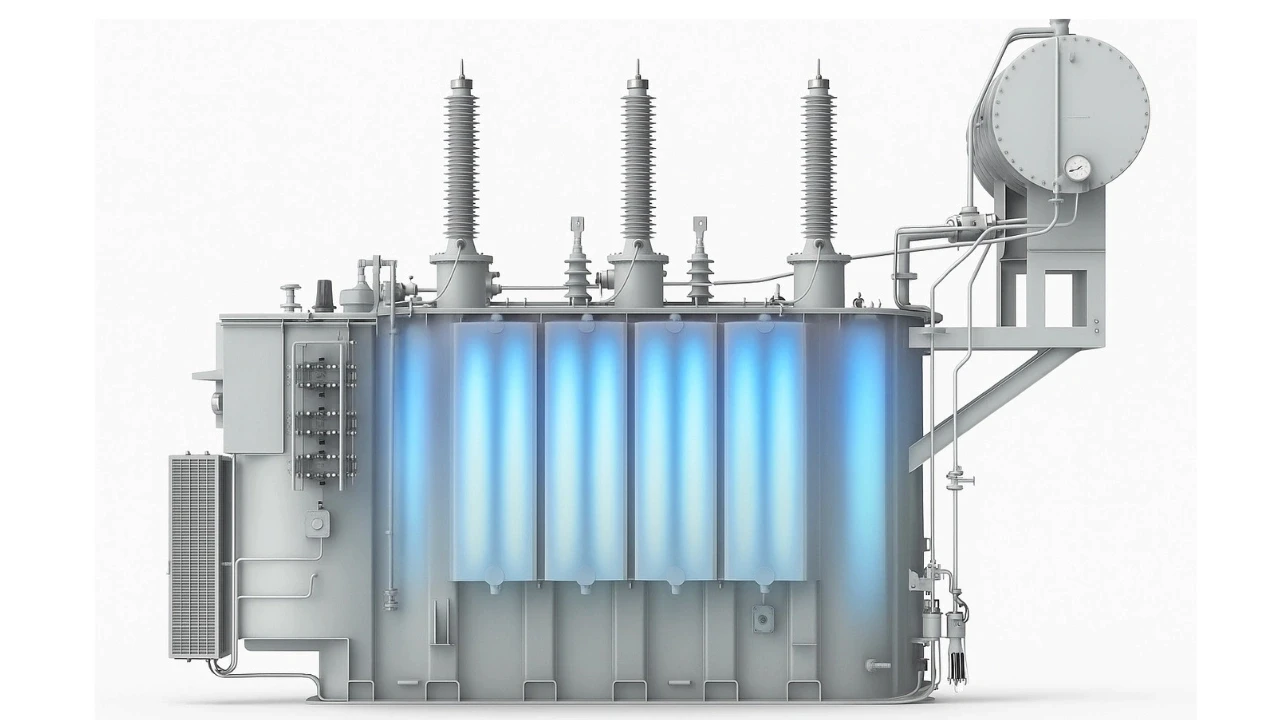

An oil-filled power transformer works as four functional systems: the core, winding, and insulation that transfer power; the tank, oil, conservator, and breather that keep the insulation dry; the bushings and tap changer that connect and control voltage; and the radiators, fans, and protection devices that remove heat and respond to faults. Understanding which system a component belongs to explains why it exists and what fails when it is neglected.

Open any video on transformer parts and you get the same list: tank, conservator, breather, bushings. Yet two transformers with identical parts can live very different lives. One runs clean for 25 years. The other keeps tripping and keeps giving gas alarms.
The difference is rarely a single part. It is how well each system behind those parts is looked after. This article groups the components of a typical oil-filled power transformer into four systems, so you can see why each one exists and what fails when it is ignored.
Why Group Transformer Components Into Systems?
Grouping components into systems shows the job each part does, and a transformer has four jobs to do at once.
Take a 10 MVA, 33/11 kV power transformer in a switchyard. Its job sounds simple: take power in at one voltage and deliver it at another. Doing that safely for years means four things happen together:
Transfer power without overheating.
Keep the insulation clean and dry.
Connect to live lines and control voltage.
Survive faults and heat without bursting.
Think of a human body: the heart pumps, the lungs breathe, the hands connect to the outside world, and the skin and immune system protect. When one system weakens, another starts paying for it.
System 1: What Do the Core, Winding, and Insulation Do?
The core, winding, and insulation are the heart of the transformer. They transfer power from one voltage level to another through electromagnetic induction.
Laminated core — carries the magnetic flux.
Copper or aluminium windings — carry the current.
Solid and liquid insulation — keeps the windings apart. If it fails, a short circuit can follow.
This system also creates losses. Core loss continues as long as the transformer is energised, and winding loss rises with load current. All of that heat goes straight into the oil and the surrounding insulation.

Insulation does not fail suddenly. It ages with heat and moisture over the years. Keep this system cool and dry, and the transformer lasts. Let it run hot, and its life shortens.
System 2: How Does the Breathing System Protect Transformer Oil?
The tank, oil, conservator, and breather form the breathing system. It gives the oil room to expand and keeps moisture out of the insulation.
The main tank holds the active part in oil, and the oil does two jobs: it insulates and it carries heat away. When load rises, the oil heats and expands. When load drops, it cools and contracts. The conservator provides the space for that movement, so the oil level rises and falls inside it.

There is one catch. In a free-breathing conservator, incoming air can bring moisture, which is harmful to insulation. So the air passes through a breather containing silica gel, which absorbs the moisture first. Many modern power transformers use a bladder or diaphragm inside the conservator to separate the oil from outside air. The objective is the same either way: keep moisture away from the insulation.
What Happens If the Breathing System Is Ignored?
If the breathing system is neglected, moisture gets an easier path into the insulation and the risk of internal discharge or breakdown rises.

Picture a breather with saturated silica gel that nobody has changed, a damaged bladder or diaphragm, or a low oil level that nobody has investigated.

Moisture lowers the dielectric strength of the insulation and speeds up ageing of the paper. With the insulation margin weakened, an internal fault or overheating can generate gas, which the Buchholz relay may eventually detect.
System 3: What Do Bushings and the Tap Changer Do?
Bushings and the tap changer form the connection and control system. Bushings bring high voltage into the tank, and the tap changer keeps the output voltage within its band.
What is a Transformer Bushing?
A bushing is the insulated path that lets high voltage enter the tank without touching the earthed tank wall. It has a conductor at the centre, insulation around it, and sheds on the outside for rain and pollution.

Think of a pipe passing through a house wall. If the hole around the pipe is not sealed, rain gets in. The bushing is that sealed entry for high voltage. A cracked seal, a dirty and wet surface, or an abnormal oil level in an oil-filled bushing can make it the weakest point. During inspection, look at the bushing surface for tracking marks, oil leaks, and uneven heating, because this is where the outside world meets the inside insulation.
What Does an On-Load Tap Changer (OLTC) Do?
An on-load tap changer regulates voltage by changing the number of active winding turns while the transformer keeps carrying load, with no outage needed.
Grid voltage and load keep changing, but the secondary voltage must stay in a defined band. An off-load tap changer needs the supply cut before the tap can change. An OLTC does not.

Every tap change moves load current from one tap position to another, so this is an electromechanical system on an electrical asset. In conventional designs, the switching contacts operate in insulating oil, and that oil can deteriorate faster, while the drive mechanism can jam.
Modern OLTCs may use vacuum interrupters instead. The exact maintenance depends on the design, but conventional oil-switching OLTCs need attention to oil condition, contacts, the drive mechanism, and operation count.
System 4: How Does a Transformer Stay Cool and Protected?
Radiators, fans, and pumps remove heat, while the Buchholz relay and pressure devices respond when an abnormal internal condition develops.
How is a Power Transformer Cooled?
A transformer is cooled in stages that cut in as load rises. Small distribution transformers may need only radiators, where hot oil rises, flows through the radiator fins, and cools. Many large power transformers also run part of their rating on natural oil and air circulation. As load increases, fans switch on to push more air across the radiators, and some large designs add pumps to circulate the oil.
If half the fans are dead, radiator valves are left closed after maintenance, or the fins are choked with dust, the transformer may keep running. But it runs hotter, and hotter means faster ageing of the same insulation described in System 1.
How Do the Buchholz Relay and Pressure Devices Protect the Transformer?
The Buchholz relay is the last line of defence. It sits in the pipe between the conservator and the main tank and responds to gas and oil movement.
Slow gas accumulation — Incipient faults or local overheating decompose oil or insulation and create gas. Bubbles rise and collect in the relay, and the alarm element operates.
Sudden oil surge — A severe internal fault pushes oil rapidly toward the conservator, and the trip element operates.
Depending on the design, a transformer may also have a sudden pressure relay, which detects an abnormal rapid rise in tank pressure and sends a protection signal, and a pressure relief device, which physically releases excess pressure to help prevent tank damage.
How Do the Four Systems Affect Each Other?
The four systems are linked, so a weakness in one shows up as a problem in another.
Poor moisture control weakens the insulation. Weak insulation raises the risk of discharge or breakdown. Internal discharge or overheating generates gas, and that gas triggers a Buchholz alarm. The alarm appears in the protection system, but the cause started in the breathing system. That is why these parts should never be studied in isolation.
The 4 Power Transformer Systems at a Glance
System | Main Components | Job | What Fails if Ignored |
1. Core, winding, and insulation | Laminated core, windings, solid and liquid insulation | Transfer power between voltage levels | Overheating and insulation ageing, leading to short circuits |
2. Breathing system | Tank, oil, conservator, breather | Let oil expand and keep moisture out | Moisture weakens insulation and speeds up paper ageing |
3. Connection and control | Bushings, on-load tap changer | Connect to the grid and regulate voltage | Bushing tracking or leaks, OLTC contact wear or jamming |
4. Cooling and survival | Radiators, fans, pumps, Buchholz relay, pressure devices | Remove heat and respond to internal faults | Hotter running, faster ageing, delayed fault response |
FAQ
What are the four systems of an oil-filled power transformer?
They are the core, winding, and insulation system; the breathing system of tank, oil, conservator, and breather; the connection and control system of bushings and tap changer; and the cooling and protection system of radiators, fans, pumps, and relays.
Why does a transformer need a breather?
Air entering the conservator can carry moisture, which damages insulation. The breather passes that air through silica gel, which absorbs the moisture before it reaches the oil.
What is the difference between an on-load and an off-load tap changer?
An off-load tap changer needs the supply cut before the tap position can change. An on-load tap changer changes the active turns while the transformer is energised and carrying load.
What does a Buchholz relay detect?
It detects gas collecting from incipient faults or local overheating, which gives an alarm, and a sudden oil surge from a severe internal fault, which gives a trip.
Why can a transformer with working protection still age quickly?
Protection responds to abnormal conditions, but it does not stop slow ageing. Moisture, poor cooling, and sustained heat shorten insulation life long before a relay operates.
Conclusion
A power transformer is four systems working together. The core, winding, and insulation transfer power, the breathing system keeps the insulation dry, the bushings and tap changer connect and control voltage, and the cooling and protection system removes heat and responds to faults. Because the systems depend on each other, a small neglect in one, such as a saturated breather or a choked radiator, can show up later as a gas alarm somewhere else.
To see these four systems explained on a real transformer, watch the complete video on the TheElectricalGuy YouTube channel.
Watch the Youtube Video

About Author
Gaurav Joshi
Gaurav started his career on the floor of the electrical industry — not in a classroom. Working across Siemens and Schneider Electric, he saw firsthand how wide the gap was between what colleges teach and what the industry actually needs.
So he did something about it.
Today, he's built a global community of 300,000+ engineers and professionals across YouTube and beyond — and TheElectricalGuy Academy is where that knowledge lives in its most structured, practical form.