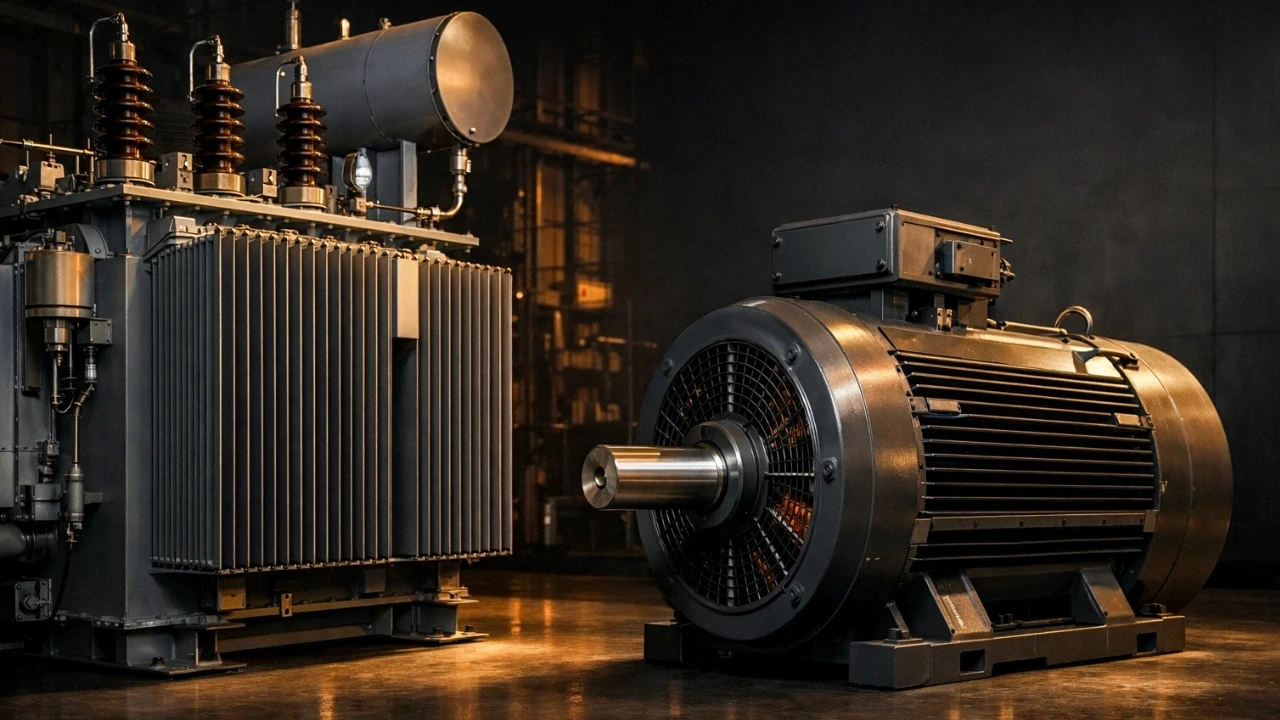

Oil-Filled vs Dry-Type Transformers: Which Should You Use?
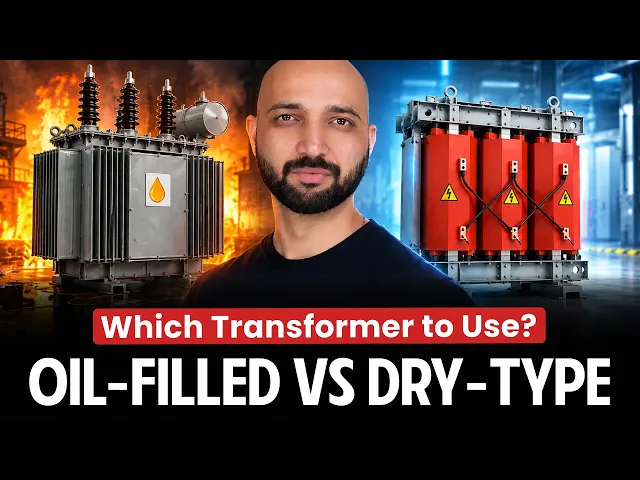
Oil-filled transformers use mineral oil for insulation, heat dissipation, and arc suppression, and hold more than 70–80% of the market, but carry a real fire and environmental risk. Dry-type transformers use solid epoxy insulation instead of oil, eliminating that fire risk entirely, which is why they're preferred for hospitals, data centers, ships, and other critical infrastructure, despite being currently limited to lower voltage and MVA ratings.

Oil-filled transformers are the industry standard, but there are specific environments, hospitals, data centers, ships, where they're simply not compatible or preferred at all. Understanding why starts with what the oil inside a transformer actually does, and what happens when you remove it entirely.
Why Do Transformers Need Insulation at All?

A transformer's windings and core, mounted inside a tank, can't operate safely or correctly without proper insulation; without it, the transformer would develop faults and fail to perform its basic function.
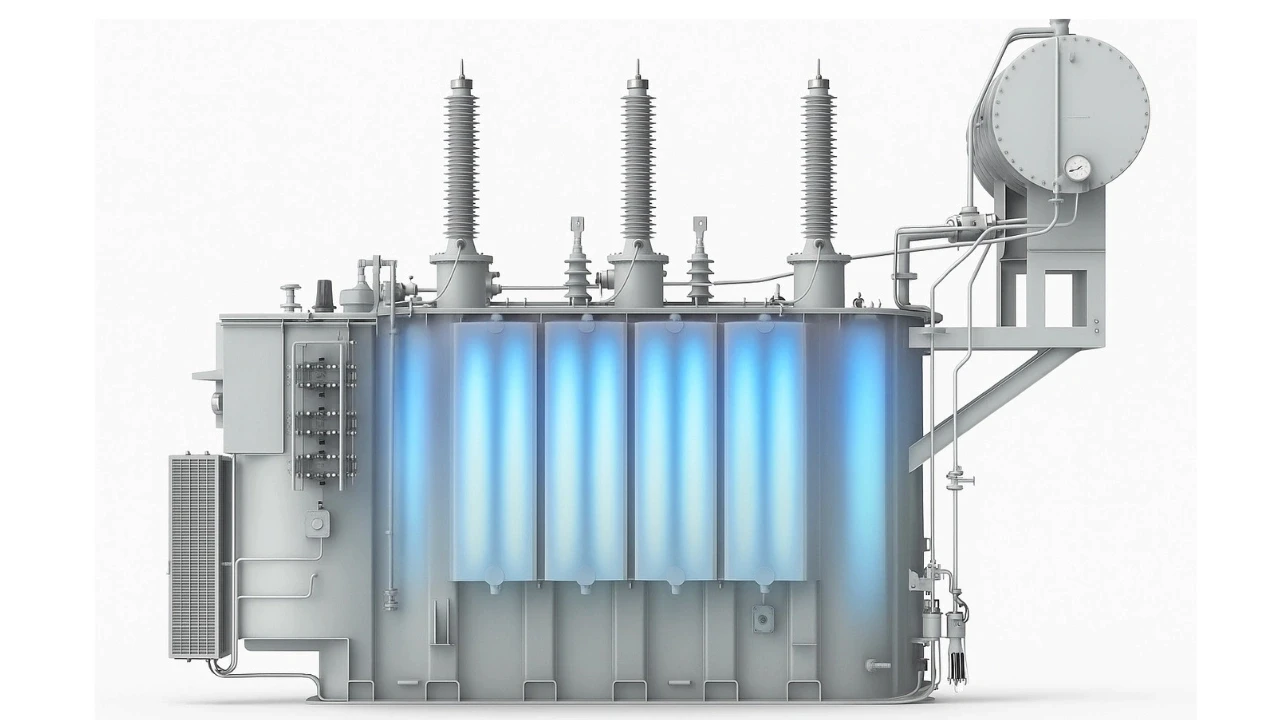
What Does Oil Do Inside an Oil-Filled Transformer?
Oil-filled transformers use specially engineered mineral oil to provide electrical insulation, dissipate heat, and help suppress internal arcing, which is why oil-filled transformers hold more than 70–80% of the global transformer market.
Electrical insulation — oil insulates winding-to-winding, winding-to-core, and turn-to-turn connections, working alongside paper insulation.
Heat dissipation — current flow generates I²R losses as heat, and oil helps dissipate that heat, keeping the transformer cool.
Arc suppression — as a dielectric medium, oil helps suppress and safeguard against internal arcing if a fault occurs.
What Are the Risks of Oil-Filled Transformers?
Oil-filled transformers carry three main risks: fire and catastrophic failure from flammable oil, environmental contamination from oil leaks, and the need for regular maintenance to manage oil degradation.
Fire risk — if internal temperature rises beyond a certain limit, the oil vaporizes, pressure builds inside the tank, and the tank can rupture, resulting in fire. Dedicated fire suppression systems and firewalls between adjacent transformers are standard mitigations, reflecting how real this risk is taken to be.
Environmental hazard — oil leaks can contaminate soil and nearby water sources, creating health hazards.
Maintenance demand — oil forms sludge and dissolves gases over time, requiring regular DGA (Dissolved Gas Analysis) testing and maintenance to operate safely.
These risks are exactly why oil-filled transformers aren't suitable for certain critical environments: a hospital, a ship constantly exposed to vibration, or a data center simply can't absorb the consequences of an oil-related fire the way a less sensitive facility might.
What is a Dry-Type Transformer?

A dry-type transformer, also called an epoxy-insulated transformer, eliminates oil entirely and instead uses solid epoxy insulation around the windings, removing the fire risk associated with flammable oil.
What are the Advantages of a Dry-Type Transformer?
Dry-type transformers offer three main advantages over oil-filled designs: no fire risk, effectively maintenance-free operation, and better environmental compatibility.
No fire risk — removing oil entirely eliminates the fire and explosion risk inherent to oil-filled designs, making dry-type transformers significantly safer in sensitive environments.
Maintenance-free operation — without oil, there's no sludge formation, no contamination, and no need for regular oil-related maintenance like DGA testing.
Eco-friendly materials — the solid insulation materials used are generally more environmentally benign than mineral oil.
With fire risk eliminated, dry-type installations can also often skip the dedicated fire suppression systems required for oil-filled transformers, an added practical benefit.
Where are Dry-Type Transformers Used?
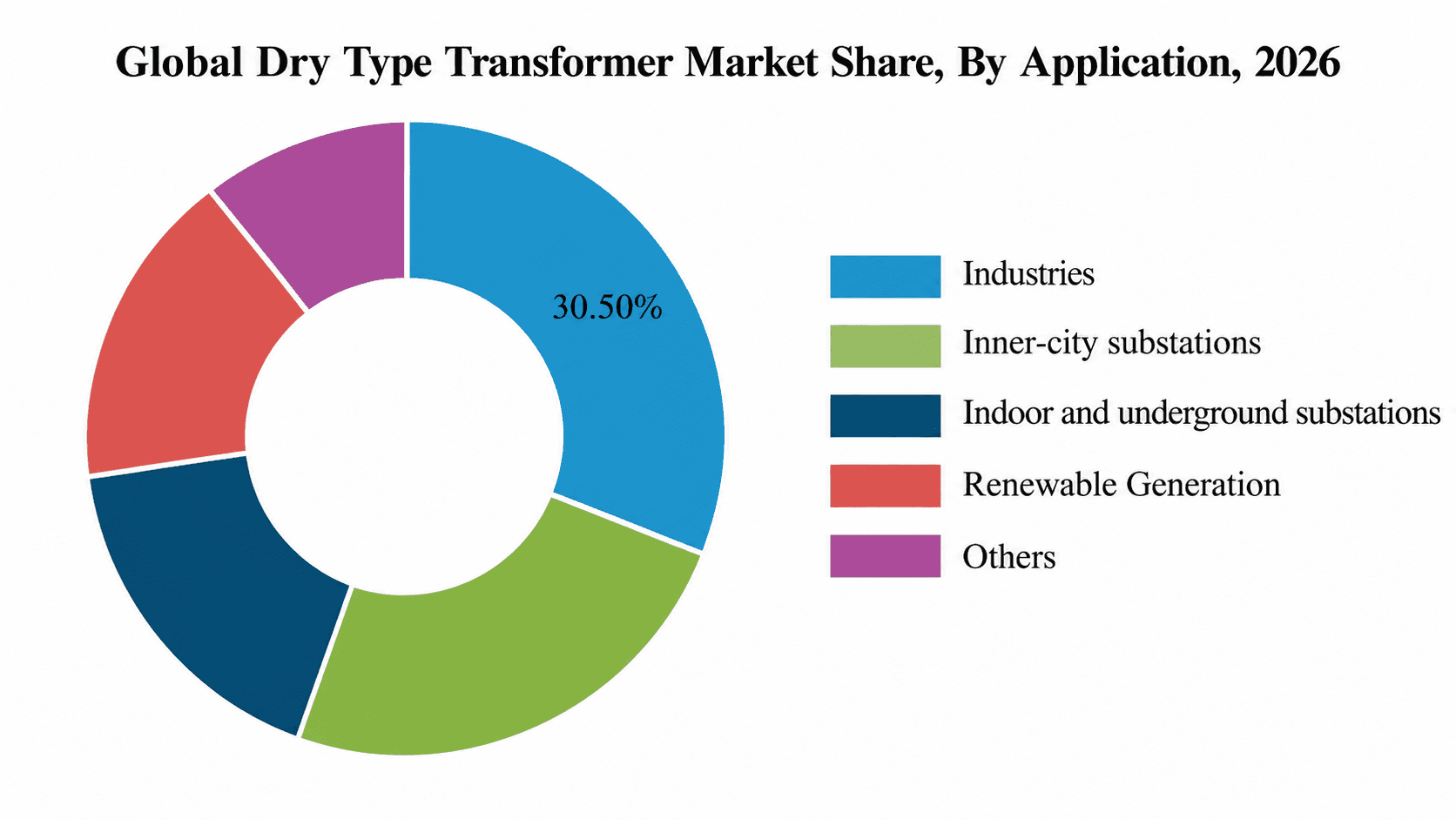
Dry-type transformers are used wherever fire risk is unacceptable or space is constrained: hospitals, data centers, ships, inner-city and underground substations, renewable energy installations, and alongside Battery Energy Storage Systems (BESS).
According to a Fortune Business Insights industry report, roughly 30% of industries now prefer dry-type transformers, driven by applications including:
Hospitals and critical infrastructure — where a fire risk simply isn't tolerable given what's at stake.
Inner-city and underground substations — compact, populated areas where oil-related fire risk compounds the consequences of a failure.
Ships — constant vibration and limited escape routes make oil-related fire risk especially dangerous.
Renewable energy and BESS installations — BESS already carries significant fire risk on its own; pairing it with an oil-filled transformer compounds that risk rather than mitigating it.
What are the Limitations of a Dry-Type Transformer?
Dry-type transformers face two main limitations: restricted rating availability (currently up to around 52 kV and 50 MVA, with some manufacturers now offering 72.5 kV and 63 MVA), and an increased risk of partial discharge from the solid insulation.
Why Does Rating Availability Limit Dry-Type Use?
Because current dry-type ratings top out well below what's needed for transmission-level applications, dry-type transformers are currently most common on the distribution side of the power system, not transmission, though that ceiling may rise as the technology matures.
Why Does Partial Discharge Risk Matter for Dry-Type Transformers?
Solid epoxy insulation can develop partial discharge from manufacturing impurities or trapped air pockets, and because partial discharge typically develops slowly and silently before a sudden failure, regular partial discharge testing or monitoring is essential for dry-type transformers.
Oil-Filled vs Dry-Type Transformer — Quick Comparison
Parameter | Oil-Filled Transformer | Dry-Type Transformer |
Insulation medium | Mineral oil | Solid epoxy |
Market share | ~70–80% | Growing, ~30% of industries now prefer it |
Fire risk | Significant | Eliminated |
Maintenance | Regular (DGA analysis, sludge management) | Effectively maintenance-free |
Environmental risk | Oil leak contamination | Minimal, eco-friendly materials |
Rating availability | High (used in transmission and distribution) | Currently up to ~52 kV / 50 MVA (some up to 72.5 kV / 63 MVA) |
Key limitation | Fire and environmental risk | Limited rating range, partial discharge risk |
Best suited for | General transmission and distribution | Hospitals, data centers, ships, underground/inner-city substations, BESS pairing |
FAQ
Why can't oil-filled transformers be used in hospitals or data centers?
Because the fire and explosion risk from flammable oil is unacceptable in environments where the consequences of a fire would be catastrophic, both for critical operations and human safety.
What does the oil inside a transformer actually do?
It serves three roles: electrical insulation between windings and core, heat dissipation to manage losses generated by current flow, and arc suppression if an internal fault occurs.
Is a dry-type transformer really maintenance-free?
Effectively, yes, compared to oil-filled transformers. Without oil, there's no sludge formation or contamination to manage, though regular partial discharge testing is still recommended given the solid insulation's own specific risk.
Why aren't dry-type transformers used on the transmission side of the power system?
Current dry-type ratings are limited to roughly 52 kV and 50 MVA, with a few manufacturers reaching 72.5 kV and 63 MVA, well below typical transmission-level requirements, which keeps them largely confined to distribution-side applications for now.
Why do dry-type transformers need partial discharge testing?
Solid epoxy insulation can develop partial discharge from manufacturing impurities or trapped air pockets, and this degradation often progresses silently before a sudden failure, making regular testing essential to catch problems early.
Conclusion
Oil-filled transformers remain the dominant choice for general transmission and distribution, offering strong insulation, cooling, and arc suppression at a lower cost, but with real fire and environmental risk attached.
Dry-type transformers remove that risk entirely by eliminating oil, making them the clear choice for hospitals, data centers, ships, and other environments where fire risk simply isn't acceptable, even though current rating limitations keep them largely on the distribution side of the power system for now.
If you want to go deeper on testing dry-type transformers and other equipment for partial discharge specifically, explore the Partial Discharge Testing course, which is CPD accredited.
Watch the Youtube Video

About Author
Gaurav Joshi
Gaurav started his career on the floor of the electrical industry — not in a classroom. Working across Siemens and Schneider Electric, he saw firsthand how wide the gap was between what colleges teach and what the industry actually needs.
So he did something about it.
Today, he's built a global community of 300,000+ engineers and professionals across YouTube and beyond — and TheElectricalGuy Academy is where that knowledge lives in its most structured, practical form.