Quick answer The main disadvantages of HVDC transmission are: it needs expensive converter stations at both ends, it causes power-quality problems (reactive power absorption and harmonics with current source converters), its converters depend on a stable input voltage, its converter transformers are noisy, the stations need large land areas, they require skilled manpower and constant maintenance with a large spares inventory, the initial cost is very high, HVDC circuit breakers are hard to build because DC has no natural current zero, and HVDC assets have a shorter service life than HVAC. In short, HVDC only makes sense once the route is long enough to justify these costs.
HVDC transmission has real technical strengths, but on shorter or simpler routes those strengths do not pay for the drawbacks. The disadvantages cluster around four themes: cost, power quality, complexity, and maintenance. Anyone doing a break-even study needs to weigh them before choosing HVDC.
Below I go through each disadvantage, why it happens, and what it means for a project.
The Disadvantages at a Glance
Disadvantage | Why it happens | Impact on a project |
|---|---|---|
Converter stations needed | AC grids cannot use DC directly | High cost and complexity at both ends |
Power-quality issues | Current source converters draw reactive power and make harmonics | Extra filters and compensation equipment |
Voltage dependency | CSC output follows input voltage | Needs tight voltage control; risk if input dips |
Converter transformer noise | Special transformers for the converters | Noise-control measures in some sites |
Large land requirement | Indoor and outdoor gear plus filters | Hard, costly land acquisition near cities |
Skilled manpower and upkeep | Complex, sensitive equipment | Higher operating cost, large spares inventory |
High initial cost | All of the above combined | Limits feasibility on shorter routes |
Difficult HVDC switchgear | DC has no natural current zero | Expensive, complex DC circuit breakers |
Shorter service life | Converter electronics age faster than lines | Refurbishment costs in project planning |
Why Does HVDC Need Converter Stations?
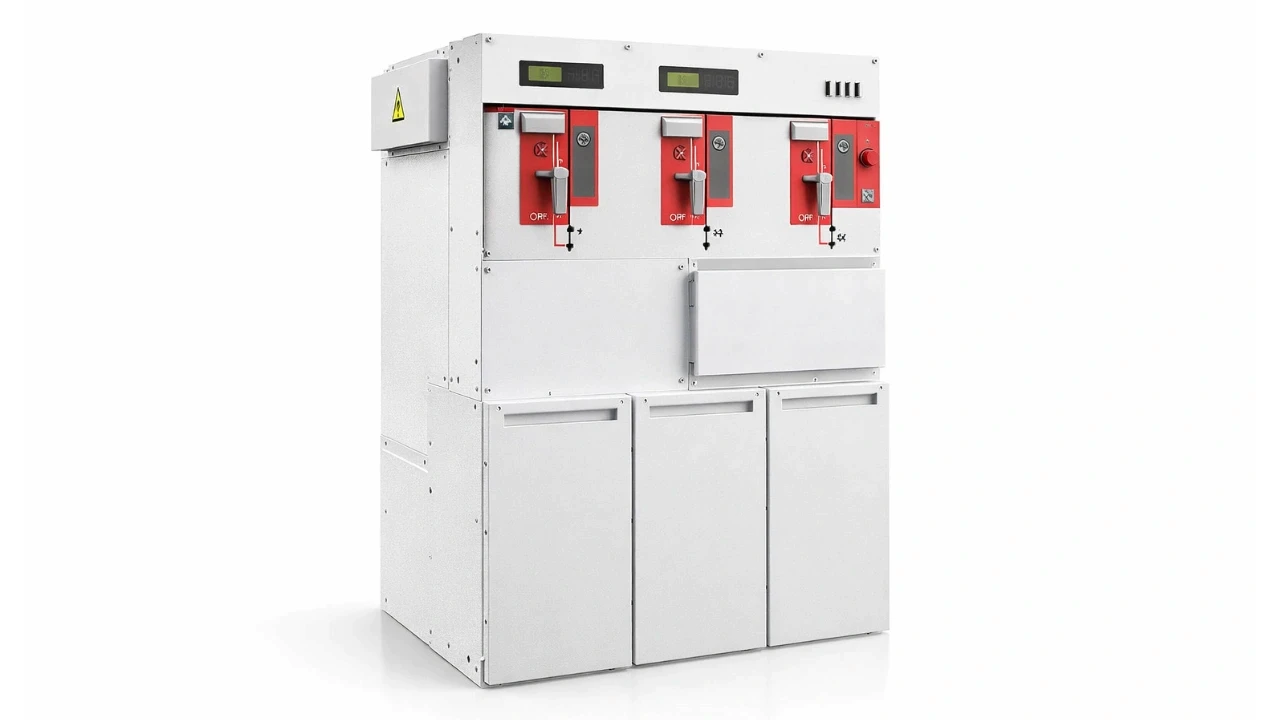
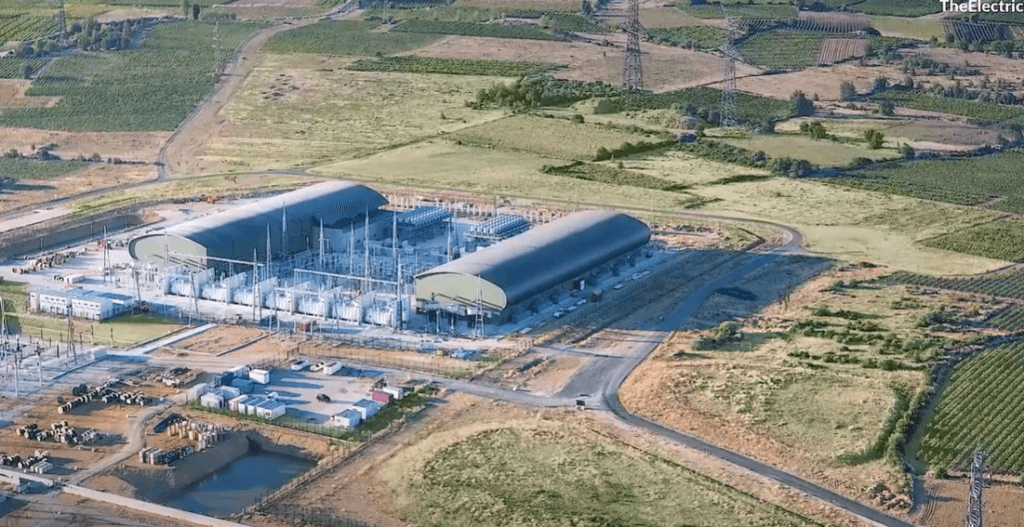
HVDC needs converter stations because AC grids cannot connect to a DC line directly: incoming AC must be converted to DC at the sending end and back to AC at the receiving end. These stations are not optional; without them the link cannot function.
Building a converter station at each end adds significant complexity and raises the initial project cost sharply. This single requirement is the root of several other disadvantages on this list.
What Power-Quality Problems Do HVDC Converters Cause?
HVDC systems that use current source converters absorb reactive power from the AC network and generate harmonic currents, both of which degrade power quality. Poor power quality affects voltage stability and overall performance, which is unacceptable on a real network.
To correct it, the station needs extra equipment, mainly:
Reactive power compensation devices
AC harmonic filters
These are essential for stable operation, but they add size and cost to the project.
Why Is Voltage Dependency a Risk in HVDC?
With current source converters, the DC output depends directly on the incoming AC voltage, so if the input voltage fluctuates the output changes too. That creates operational risk: voltage dips can cause incorrect converter operation, and in some cases the converter may fail to function.
Avoiding this means keeping the input voltage stable and applying tight system control. Voltage source converters reduce this dependency, and they are increasingly common on new projects, but many installed systems still rely on current source converters, so voltage dependency remains a live concern.
Why Are HVDC Converter Transformers a Drawback?
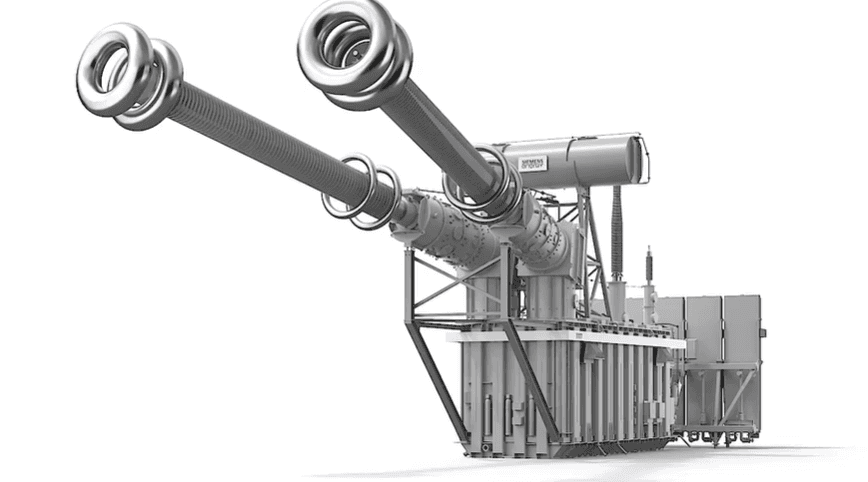
HVDC converter transformers adjust voltage to the level the converters need and shift the phase angle to feed the converter bridges, but they generate significant noise during operation. That noise can create environmental and operational challenges, and some sites need noise-control measures, which adds cost.
How Much Land Does an HVDC Station Need?
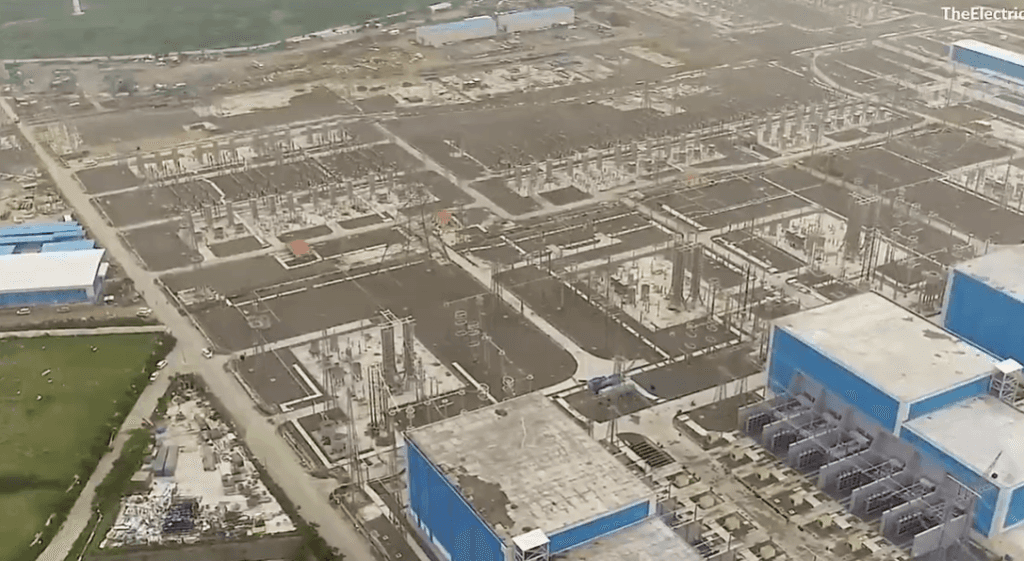
HVDC converter stations need a large land area because they house both indoor and outdoor equipment plus reactive-power compensation units and harmonic filters. Taken together, the footprint is high.
Finding suitable land is difficult near urban areas, and acquisition raises cost and can delay execution. The spatial requirement is a clear disadvantage compared with a simple AC line.
Why Do HVDC Systems Need Skilled Manpower and Heavy Maintenance?
HVDC converter stations are complex and sensitive, so they need trained specialists for installation, operation, and maintenance, plus a large inventory of critical spares. Unlike more robust HVAC systems, HVDC cannot run with minimal supervision.
Skilled personnel cost more, maintenance must be regular and careful, and holding critical spares adds storage and management cost. If a critical component fails, immediate replacement is necessary, so the spares inventory is not optional. All of this raises the total project expense.
Why Is HVDC So Expensive to Build?
HVDC has a very high initial cost because converter stations, converter transformers, filters, compensation devices, skilled manpower, and maintenance infrastructure all stack up. HVDC can become economical over long distances, but the upfront investment stays high.
This is why a detailed break-even analysis is essential: below the break-even distance the high upfront cost makes HVDC hard to justify against HVAC.
Why Are HVDC Circuit Breakers Difficult?
HVDC circuit breakers are difficult because DC current never falls to zero on its own, so the breaker has to force an artificial current zero to interrupt the arc. In HVAC, current naturally passes through zero every half cycle, and breakers use that instant to clear the fault.
DC has no such moment. Forcing the current to zero needs advanced technology, which makes HVDC circuit breakers expensive and technically demanding. They exist and are improving, but their cost and complexity add to the overall system expense.
Do HVDC Systems Have a Shorter Life Than HVAC?
HVDC converter equipment generally has a shorter service life than HVAC lines, and some converter-station components need refurbishment part-way through the project life. HVAC overhead lines are commonly cited as lasting several decades with minimal refurbishment, while HVDC converter stations are typically planned around a shorter life, with some electronic components replaced earlier.
These refurbishment costs must be built into project planning, because over time they raise the total cost of ownership.
Frequently Asked Questions
What is the single biggest disadvantage of HVDC transmission? The high initial cost, driven mainly by the converter stations at both ends. Every other drawback (filters, transformers, land, skilled upkeep) feeds into that cost, which is why HVDC only pays off over long distances.
Why can't HVDC connect directly to an AC grid? Because the grid runs on AC and the line carries DC. The incoming AC must be converted to DC at the sending end and converted back to AC at the receiving end, and that conversion needs dedicated converter stations.
Why are HVDC circuit breakers harder to make than AC breakers? AC current passes through zero every half cycle, and breakers use that natural zero to interrupt the arc. DC current does not reach zero on its own, so an HVDC breaker must force an artificial current zero, which needs advanced and costly technology.
Does HVDC really have a shorter life than HVAC? The line itself can be long-lived, but the converter-station electronics generally age faster than HVAC equipment and need refurbishment earlier. That refurbishment is a real cost of ownership that planners have to budget for. (Confirm specific lifespan figures against a CIGRE source.)
If HVDC has all these disadvantages, why is it still used? Because on long routes, subsea cables, and links between grids of different frequencies, its advantages outweigh these costs. See the advantages article for the other side of the trade-off.
Conclusion
HVDC is a powerful tool, but not a default. The converter stations, power-quality equipment, land, skilled upkeep, difficult DC switchgear, and shorter converter life all add cost and complexity that a simple AC line avoids. The right call comes from a break-even study: choose HVDC only where distance, cable routing, or frequency mismatch make its advantages worth the price.
Watch the Youtube Video

About Author
Gaurav Joshi
Gaurav started his career on the floor of the electrical industry — not in a classroom. Working across Siemens and Schneider Electric, he saw firsthand how wide the gap was between what colleges teach and what the industry actually needs.
So he did something about it.
Today, he's built a global community of 300,000+ engineers and professionals across YouTube and beyond — and TheElectricalGuy Academy is where that knowledge lives in its most structured, practical form.