
Quick answer An HVDC transmission system is built from these components, in the order power flows through them: an incoming AC supply and AC switchyard (with AC filters), a converter transformer, a converter station with a cooling arrangement, a smoothing reactor, a DC switchyard, and the HVDC transmission line. At the receiving end, the same components appear in reverse, converting the DC back to AC and feeding it into the grid.
Most people picture HVDC as a simple three-step idea: AC goes in, converts to DC, and converts back to AC at the other end. That picture is correct, but it hides the supporting equipment that actually makes the link work safely. On a real project, each stage has a defined job in converting, protecting, smoothing, and transmitting the power.
The clearest way to understand the system is to follow the power flow from the incoming AC supply to the receiving-end grid. That is how I have laid it out below.
The Components at a Glance
Component | Role in the system |
|---|---|
Incoming AC supply and AC switchyard | Feeds the station and protects it; isolates faults, controls and disconnects supply |
AC filters | Reduce harmonics and help balance reactive power |
Converter transformer | Steps the voltage to the converter level and shifts phase for conversion |
Converter station (with cooling) | Converts AC to DC (rectifier); cooling removes the heat generated |
Smoothing reactor | Smooths DC ripple, limits DC fault current, reduces DC-side harmonics |
DC switchyard | Protects and isolates the DC side (DC switchgear, disconnectors, arresters) |
HVDC transmission line | Carries DC over long distances with lower losses than AC |
Receiving-end components | The same chain in reverse, converting DC back to AC for the grid |
What Starts an HVDC System: the AC Switchyard
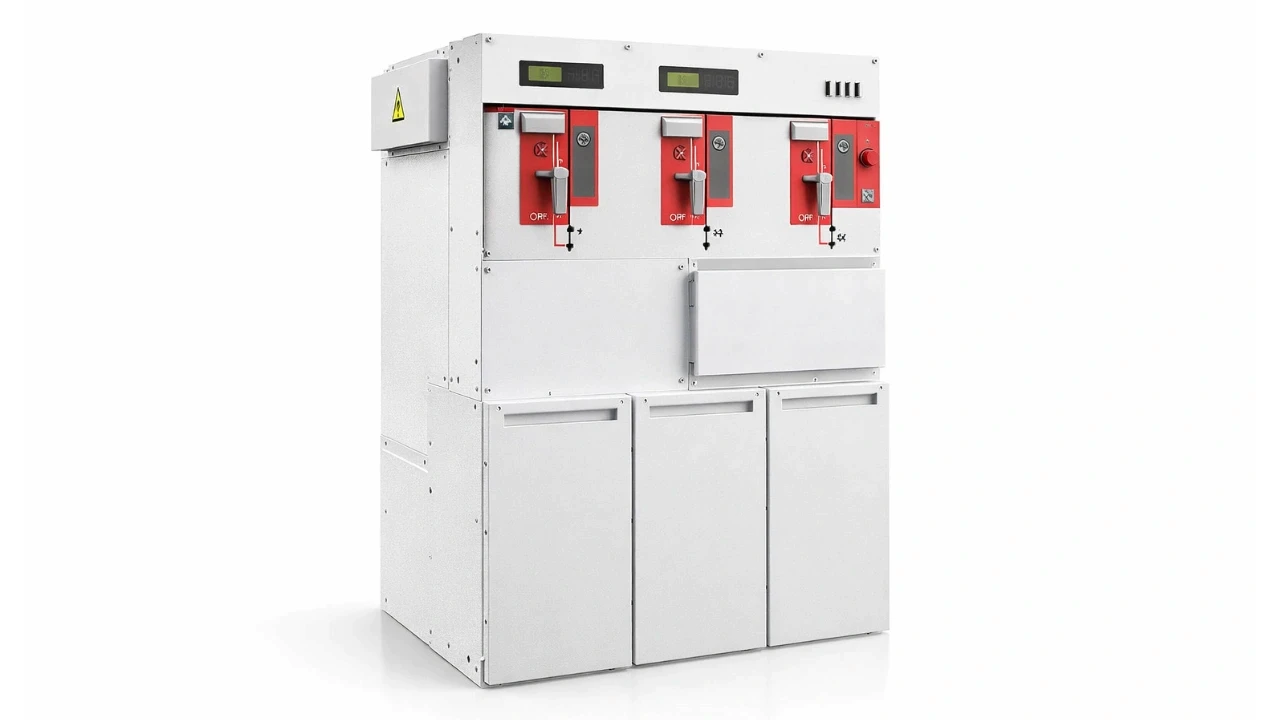
Every HVDC link begins with an incoming AC supply that passes through an AC switchyard, which protects the station and isolates faults before power reaches the converters. The supply usually comes from an existing AC network, and a fault there can drive current very high, so protection comes first.
The AC switchyard holds standard substation equipment: circuit breakers, disconnectors, current transformers, voltage transformers, and lightning arresters. These keep the system safe in normal and fault conditions, and let operators disconnect the supply when needed.
Power quality is handled here too. The incoming AC can carry harmonics that reduce efficiency, so AC filters in the switchyard cut the harmonic content and help balance reactive power. The cleaner AC then moves to the conversion stage.
Why Does an HVDC System Need a Converter Transformer?
The converter transformer steps the high incoming AC voltage down to the level the converter needs, and shifts the phase angle so the AC is compatible with the conversion process. Even after filtering, the incoming voltage is at a high transmission level (for example, 420 kV class), which cannot feed the converter directly.
The converter transformer is one of the largest and most expensive parts of an HVDC system. It is bulky, heavy, and noisy in operation, which is why it needs strong protection from the AC switchyard upstream. The exact phase adjustment it provides depends on the converter technology used.
What Happens Inside the Converter Station?
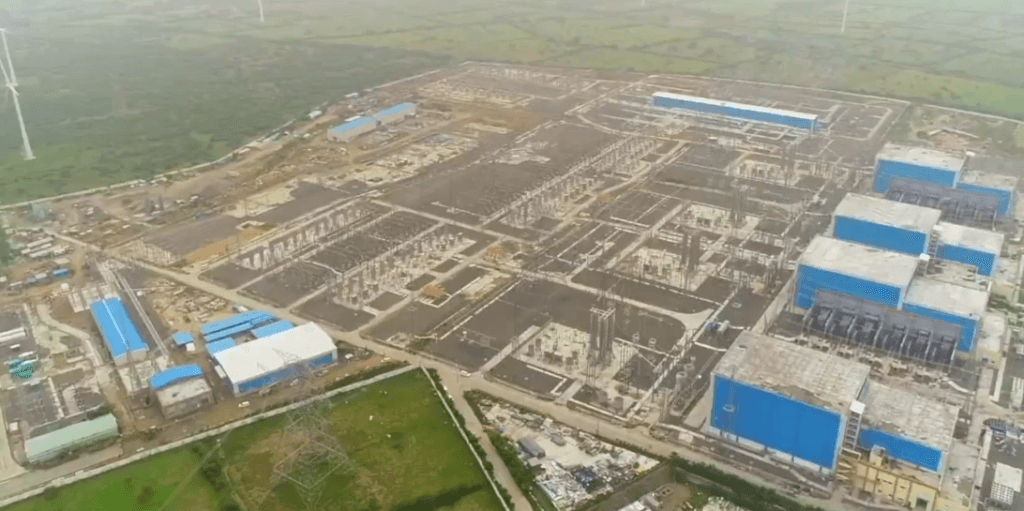
The converter station is where AC is converted to DC (rectification), using power-electronic converters such as thyristor-based converters, and it always includes a cooling arrangement to remove the heat this generates. This is the heart of the sending end.
Conversion produces significant heat, and heat buildup damages components, so dedicated cooling systems keep temperatures safe. The type of cooling depends on the converter technology, but some form of cooling is always required. For safety and environmental reasons, the converter station is housed indoors rather than outdoors. Once conversion is complete, the DC moves on.
What Does the Smoothing Reactor Do?
The smoothing reactor cleans up the converter's DC output by reducing ripple, limiting DC fault current, and cutting DC-side harmonics. Raw DC from the converter is not perfectly smooth, and that ripple stresses the transmission system and lowers efficiency.
Smoothing reactors come in different designs, commonly oil-immersed or air-core, but the function is the same regardless of design. After the reactor, the DC is stable enough for long-distance transmission.
Why Is a DC Switchyard Needed?
The DC switchyard protects and isolates the DC side of the system, using DC switchgear, disconnectors, instrument transformers, and lightning arresters. Faults can occur on the DC side, and maintenance needs isolation, so the DC side gets its own protection just like the AC side.
As on the AC side, both air-insulated and gas-insulated switchgear options exist for DC. From the DC switchyard, power enters the HVDC transmission line, which carries it over long distances with lower losses than AC. That completes the sending-end process.
How Is the Power Converted Back to AC at the Receiving End?
At the receiving end the same components appear in reverse: the DC line meets a DC switchyard and smoothing reactor, a converter station inverts DC back to AC, a converter transformer matches the grid voltage, and an AC switchyard feeds the network. The structure mirrors the sending end.
The DC line first connects to a receiving-end DC switchyard, which protects the equipment, and a smoothing reactor may further stabilise the supply. The converter station then inverts DC to AC indoors, using the same converter technology. The converter transformer adjusts voltage and phase to align with the receiving grid. Finally the AC switchyard provides protection, control, and isolation, with AC filters added if harmonic reduction is needed. From there, power flows into the AC network and on to consumers as normal AC.
Overall Flow of the HVDC System
In sequence: AC enters, is protected and filtered, is converted to DC, travels over the DC line, then is converted back to AC and fed to the grid. Each stage uses specific components for safety, efficiency, and reliability. The main components are:
Incoming AC supply and AC switchyard
AC filters
Converter transformer
Converter station with cooling
Smoothing reactor
DC switchyard
HVDC transmission line
Receiving-end components in reverse order
Designs vary by technology, but this general structure stays consistent.
Frequently Asked Questions
What are the main components of an HVDC transmission system?
In power-flow order: an AC switchyard with AC filters, a converter transformer, a converter station with cooling, a smoothing reactor, a DC switchyard, and the HVDC line. The same components repeat in reverse at the receiving end to convert DC back to AC.
What is the role of the converter transformer in HVDC?
It steps the incoming AC voltage down to the level the converter needs and shifts the phase angle so the AC suits the conversion process. It is one of the largest, heaviest, and most expensive components in the system.
Why does an HVDC converter station need cooling?
Converting AC to DC generates a large amount of heat, and heat buildup can degrade performance and damage components. Dedicated cooling systems hold the station at a safe operating temperature, so cooling is always part of the design.
What does a smoothing reactor do in HVDC?
It smooths the ripple in the converter's DC output, limits the DC fault current, and reduces harmonics on the DC side. That makes the DC stable enough for long-distance transmission.
Is the receiving end different from the sending end?
No, it is the same chain in reverse. The DC line meets a DC switchyard and smoothing reactor, the converter station inverts DC back to AC, the converter transformer matches the grid, and the AC switchyard feeds the network.
Conclusion
An HVDC system looks complex, but it is really one logical chain: protect and clean the incoming AC, convert it to DC, smooth and protect the DC, send it down the line, then reverse every step at the far end. Once you can name each component and its job, the whole layout becomes easy to read on a single-line diagram.
For the 3D visual walkthrough of this layout, watch the full video below.
Watch the Youtube Video

About Author
Gaurav Joshi
Gaurav started his career on the floor of the electrical industry — not in a classroom. Working across Siemens and Schneider Electric, he saw firsthand how wide the gap was between what colleges teach and what the industry actually needs.
So he did something about it.
Today, he's built a global community of 300,000+ engineers and professionals across YouTube and beyond — and TheElectricalGuy Academy is where that knowledge lives in its most structured, practical form.