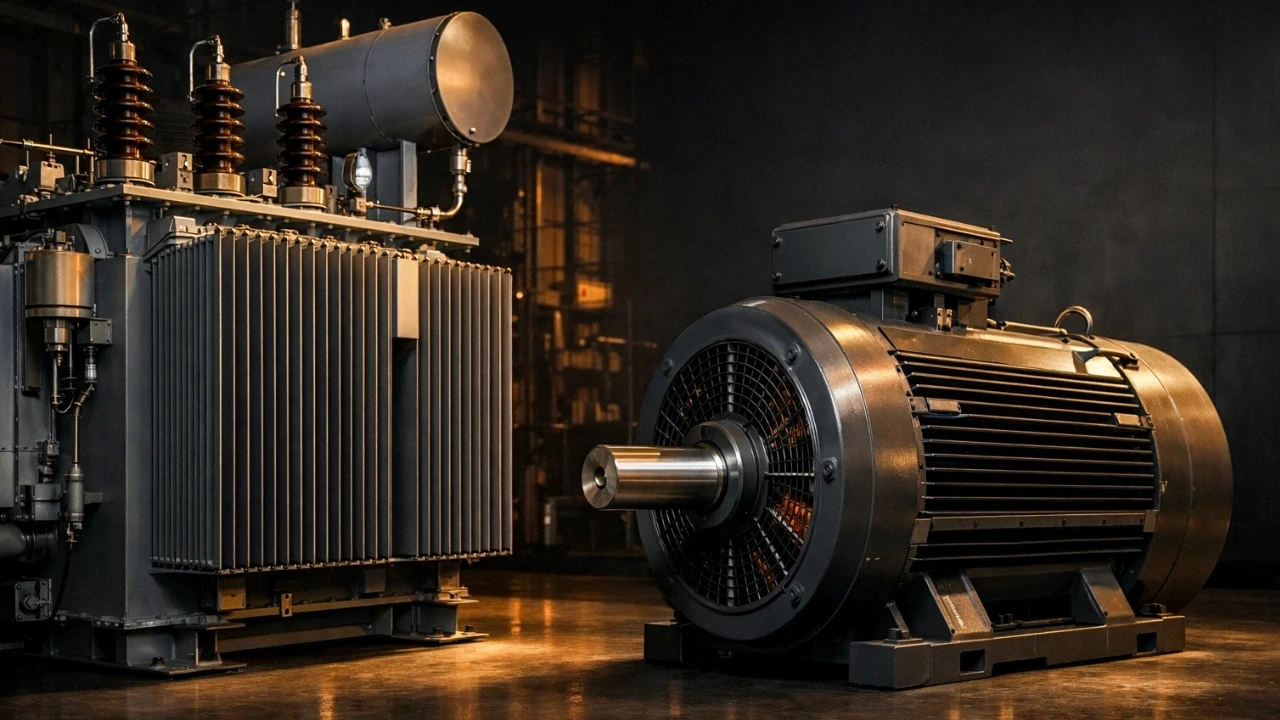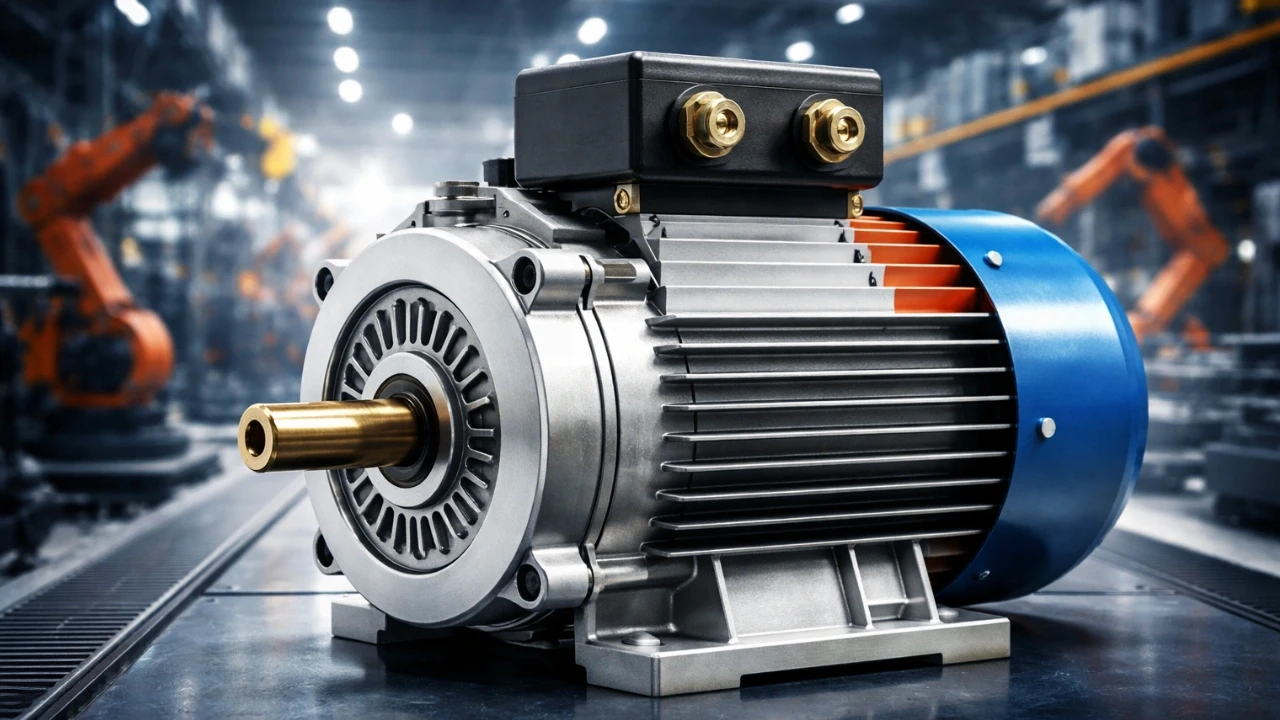

Induction motor drawbacks include high starting current, low starting torque, poor power factor, and difficult speed control. These issues can affect motor performance, equipment life, and operating costs. The good news is that each drawback has a practical solution, which is why induction motors remain the most widely used motors in the industry.
Almost 70% of the electricity used in industries is consumed by induction motors. That alone shows how important these machines are in modern plants. However, induction motor drawbacks should not be ignored. Every engineer should understand these limitations before selecting a motor for any application.
In this article, we will discuss the four major induction motor drawbacks one by one. We will also see why these problems occur and how industries overcome them in real applications.
Why is Starting Torque Low in Induction Motors?
Another important induction motor drawback is the low starting torque of a standard squirrel cage induction motor.
Many people assume a motor drawing high current should automatically produce high torque. In reality, that's not true for a regular squirrel cage induction motor. Some industrial applications need very high starting torque cranes, hoists, elevators, and crushers are common examples, since these machines must overcome heavy loads from the moment they start. A standard squirrel cage induction motor can't produce this high starting torque without additional support.
During starting, the rotor has high inductive reactance, which opposes the active current flowing through the rotor. As a result, the motor develops low starting torque even though the starting current is high. This characteristic is also linked to the motor's design: squirrel cage induction motors are mainly built for continuous operation, optimized for good efficiency during long running hours rather than maximum starting torque.
For light-duty applications such as fans, pumps, and blowers, this isn't a problem these machines don't need high torque during startup. Heavy-duty applications are different; they need a motor that generates strong torque from the beginning.
In such cases, industries often choose a slip ring induction motor, which uses an external resistor arrangement to improve starting torque, making it suitable for demanding applications that start under heavy load. Another widely used solution is connecting a Variable Frequency Drive to a squirrel cage induction motor the VFD controls both frequency and torque, letting the motor deliver better starting performance.
Selecting the right motor for the application is the real fix. If a standard squirrel cage induction motor is used where high starting torque is essential, it may struggle to accelerate, or in some cases, fail to start the load. Choosing the correct motor type or adding a VFD ensures the application gets the starting torque it needs while maintaining reliable operation.
Why Do Induction Motors Have a Poor Power Factor?
The third major drawback of an induction motor is its poor power factor.
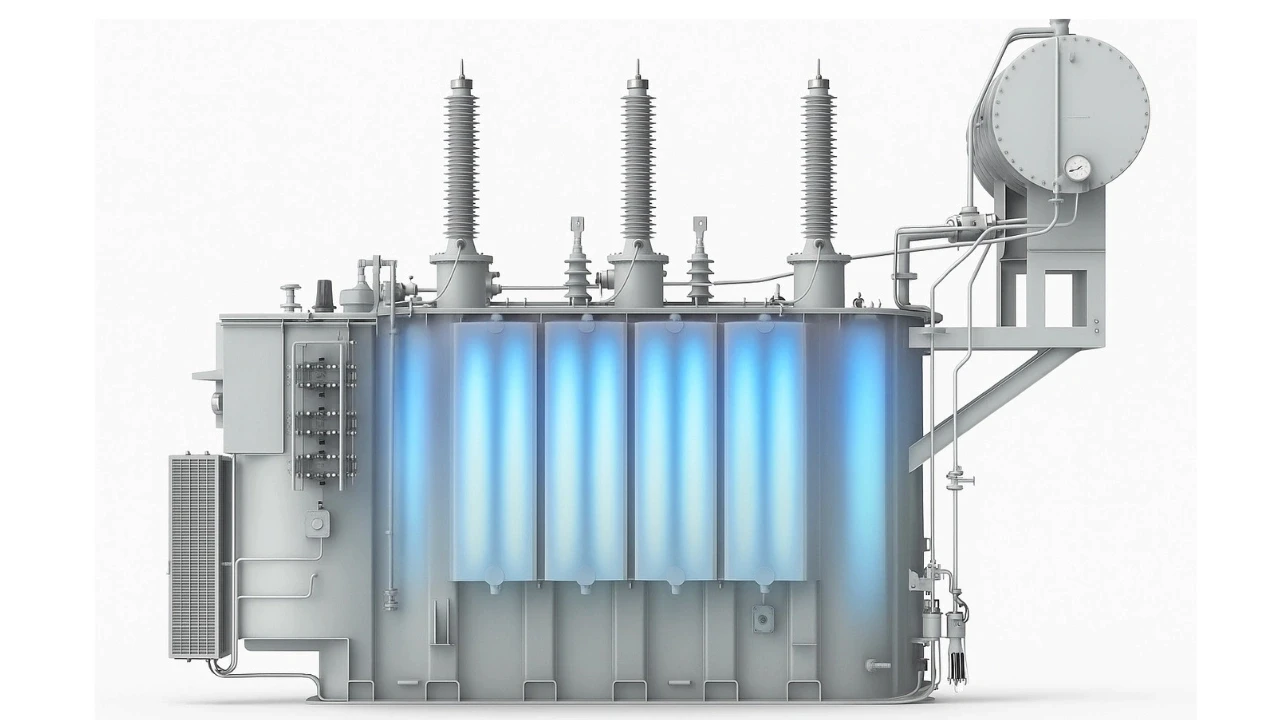
An induction motor is an inductive load. Just like a transformer, it needs magnetizing current to create the rotating magnetic field required for operation, so the motor continuously draws reactive power from the supply. Reactive power doesn't perform useful mechanical work, but it's necessary to maintain the magnetic field. Because of this, induction motors naturally operate with a lagging power factor.
At full load, manufacturers typically design induction motors to operate with a power factor between 0.8 and 0.9, where the active power component is high enough to maintain a reasonably good power factor. The situation changes as load decreases: the active power requirement falls, but the motor still needs nearly the same magnetizing current to maintain its magnetic field. Since reactive power stays relatively constant while active power drops, the power factor becomes poor.
Why is Poor Power Factor a Problem?
Poor power factor creates several operational challenges. The motor draws more current from the electrical system to deliver the same useful power, and higher current increases stress on cables and insulation while causing larger voltage drops across the system.
The biggest impact is on operating cost. Many electricity utilities charge penalties for maintaining a poor power factor because the system consumes unnecessary reactive power, and the electricity bill can increase significantly as a result. In many cases, the purchase price of an induction motor is only a small part of its total lifetime cost, the operating cost becomes much higher, and poor power factor is one of the reasons behind it.
How is Poor Power Factor Improved?
Industries commonly use power factor correction methods for large motors. For example, large industrial motors often have a dedicated power factor correction panel that supplies the required reactive power locally instead of drawing it from the utility. This approach:
Reduces electricity costs
Improves motor efficiency
Reduces unnecessary current flow
Helps improve motor life
Motor sizing also plays an important role. Suppose an application requires only a 20 kW load, but a 75 kW motor is installed, the motor will remain underloaded most of the time. An underloaded motor naturally operates at a poor power factor, increasing energy costs. Selecting the correct motor size is therefore one of the simplest ways to improve power factor and reduce operating expenses.
Why is Speed Control Difficult in Induction Motors?
The fourth major drawback is difficult speed control. Compared to DC motors, controlling the speed of an induction motor is more challenging.
The synchronous speed of an induction motor depends on the following equation:
Synchronous Speed = (120 × Frequency) ÷ Number of Poles
From this equation, only two parameters can change motor speed. The first is the number of poles once the motor is manufactured, the number of poles is fixed, and changing it isn't practical during normal operation. The second is the supply frequency: increasing the frequency increases motor speed, and reducing it decreases speed.
The challenge is that electrical supply frequency is fixed. If the supply is 50 Hz, it can't simply be changed at the generator whenever a different motor speed is required. This made induction motor speed control much more difficult than DC motors for many years.
How is Speed Control Achieved Today?
Modern industries solve this problem by using a Variable Frequency Drive (VFD). Instead of changing the generator frequency, the VFD adjusts the frequency supplied directly to the motor, allowing smooth speed control while also improving torque control.
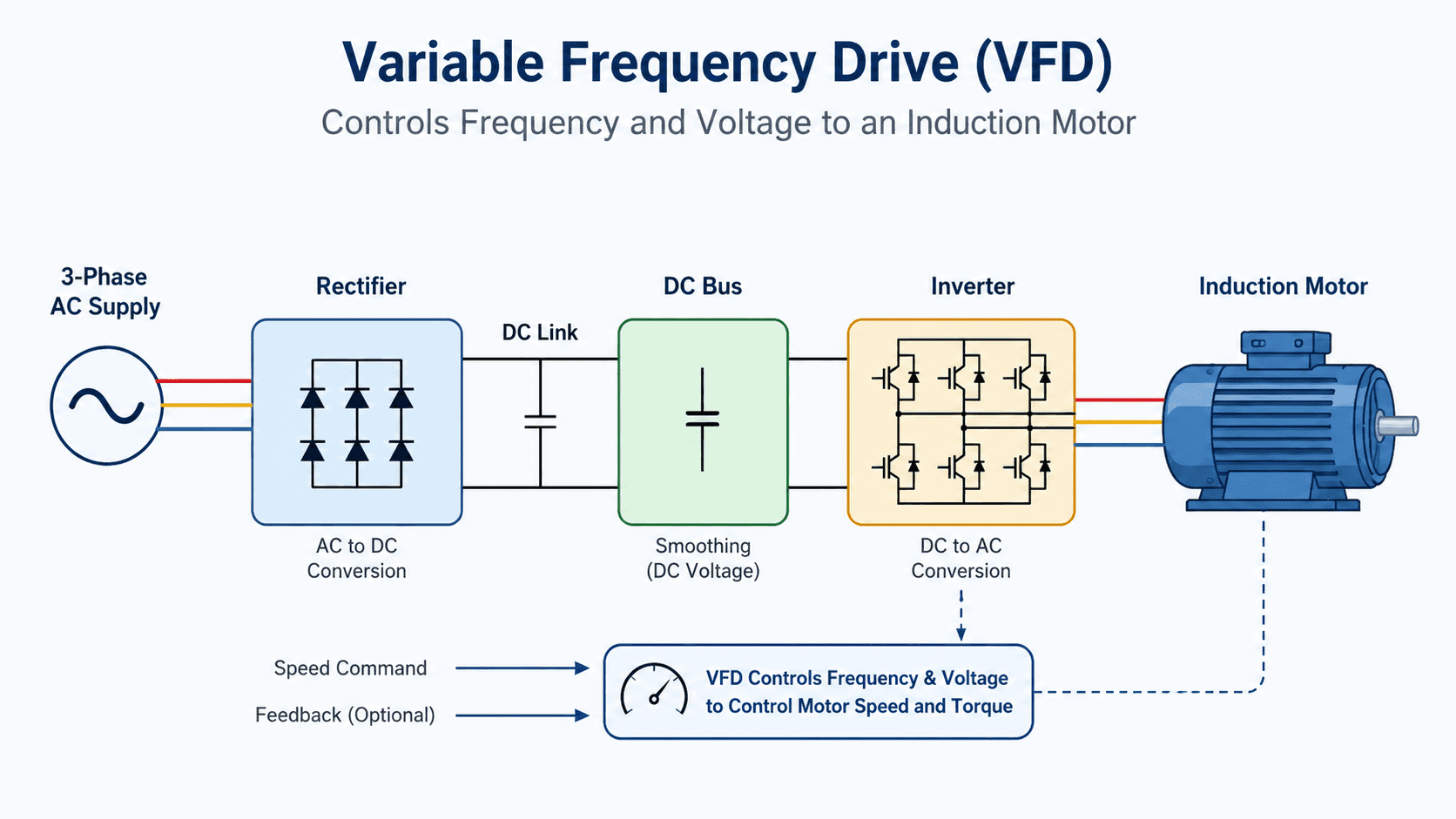
Introducing a VFD does bring its own challenge: since the drive modifies the supply frequency, it can create power quality issues, which must be managed properly in industrial installations.
What Other Limitations Do Induction Motors Have?
Apart from the four major drawbacks, a few additional limitations are worth understanding.
Why Do Frequent Start-Stop Cycles Shorten Motor Life?
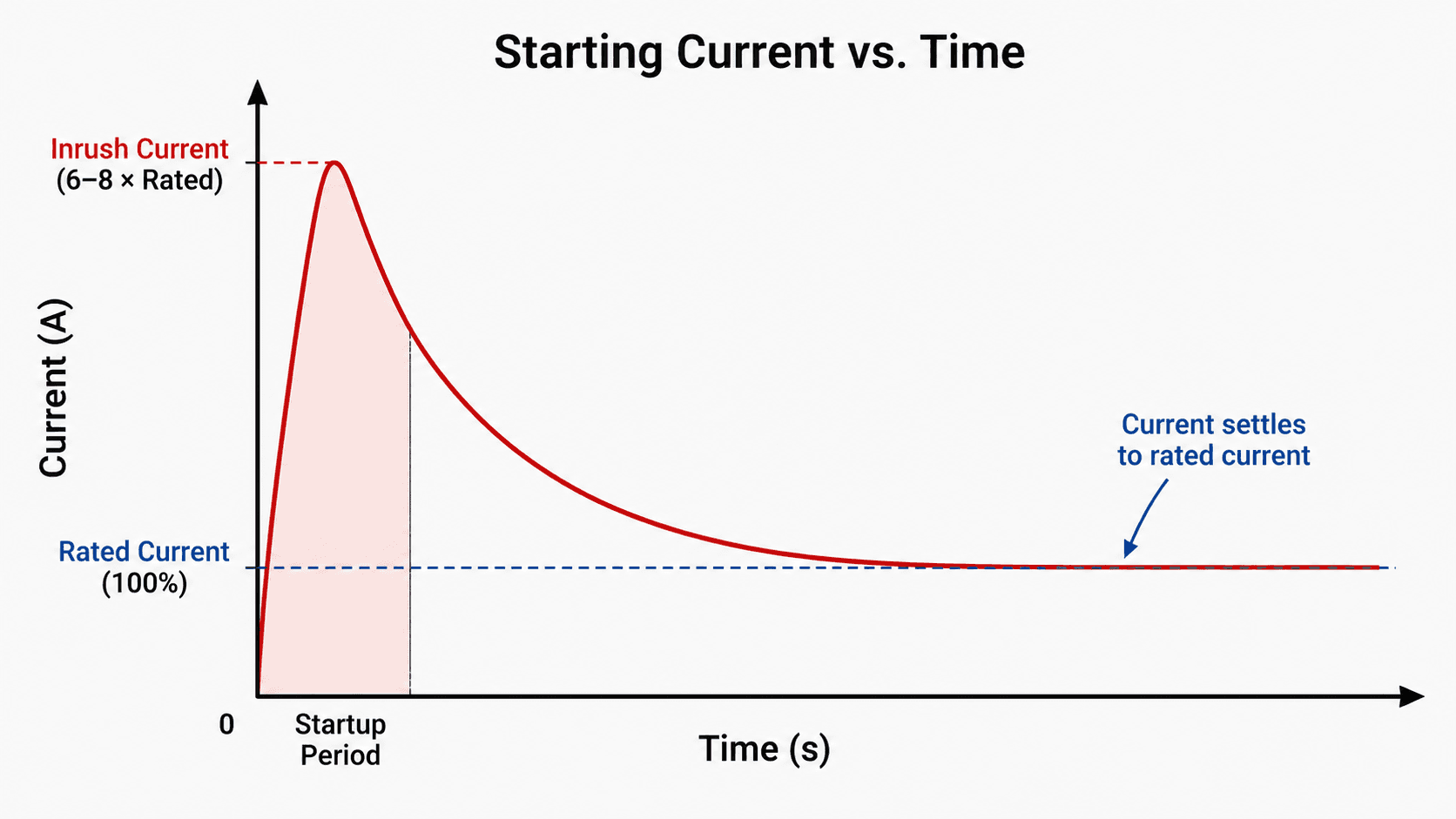
Every time an induction motor starts, it draws a high starting current. Applications that require frequent starting and stopping repeatedly expose the motor windings to this heavy current, and over time this increases heating and accelerates insulation ageing, reducing the motor's overall life. For applications involving frequent start, stop, or reversing operations, industries often choose motors specifically designed for those conditions.
Why Does Speed Drop as Load Increases?
Motor speed reduces slightly as the load increases because slip increases with load. For many applications, this small speed variation is acceptable, but applications requiring nearly constant speed under varying loads need additional control. A Variable Frequency Drive combined with a feedback system continuously monitors motor speed and adjusts the frequency to maintain the desired speed.
If Induction Motors Have So Many Drawbacks, Why Are They Still So Popular?
Every major induction motor drawback has a practical solution, which is exactly why induction motors continue to dominate industrial applications despite their limitations.
High starting current can be reduced using starters or Variable Frequency Drives. Low starting torque can be addressed by selecting a slip ring induction motor or pairing a VFD with a squirrel cage motor. Poor power factor can be improved through proper motor sizing and correction methods such as capacitor banks. Speed control becomes much easier with Variable Frequency Drives.
In other words, while induction motors do have limitations, industries already have proven methods to overcome them.
FAQ
What are the four major drawbacks of an induction motor?
The four major drawbacks are high starting current, low starting torque, poor power factor, and difficult speed control.
Why do induction motors draw high starting current?
At startup, the rotor is stationary while the stator produces a rotating magnetic field. This creates maximum induced EMF in the rotor, resulting in very high starting current.
Why is starting torque low in squirrel cage induction motors?
The rotor's high inductive reactance during startup limits active current flow, resulting in low starting torque despite high starting current.
How can poor power factor be improved in induction motors?
Poor power factor can be improved by selecting the correct motor size and using power factor correction methods such as capacitor banks or dedicated correction panels.
How is speed controlled in modern induction motors?
Modern systems use Variable Frequency Drives (VFDs) to adjust the frequency supplied to the motor, allowing smooth speed and torque control.
Conclusion
Induction motors are reliable, efficient, and widely used, but they are not without limitations. High starting current, low starting torque, poor power factor, and difficult speed control are the four major drawbacks engineers must understand before selecting a motor.
The good news is that each of these challenges has an effective solution. By choosing the right motor, using proper starting methods, correcting power factor, and applying Variable Frequency Drives where needed, industries can achieve reliable and efficient motor performance.
To understand these concepts in greater detail, watch the complete video and explore the full induction motor playlist for practical explanations and real industrial examples.
Watch the Youtube Video

About Author
Gaurav Joshi
Gaurav started his career on the floor of the electrical industry — not in a classroom. Working across Siemens and Schneider Electric, he saw firsthand how wide the gap was between what colleges teach and what the industry actually needs.
So he did something about it.
Today, he's built a global community of 300,000+ engineers and professionals across YouTube and beyond — and TheElectricalGuy Academy is where that knowledge lives in its most structured, practical form.