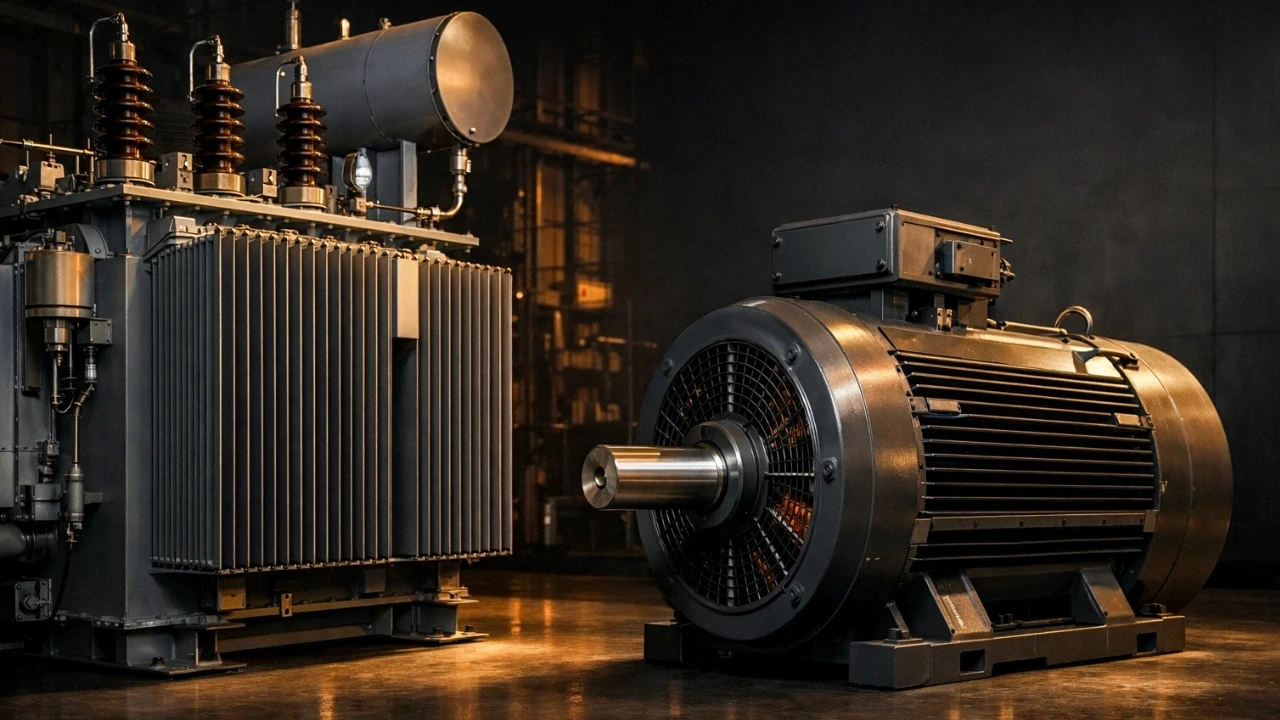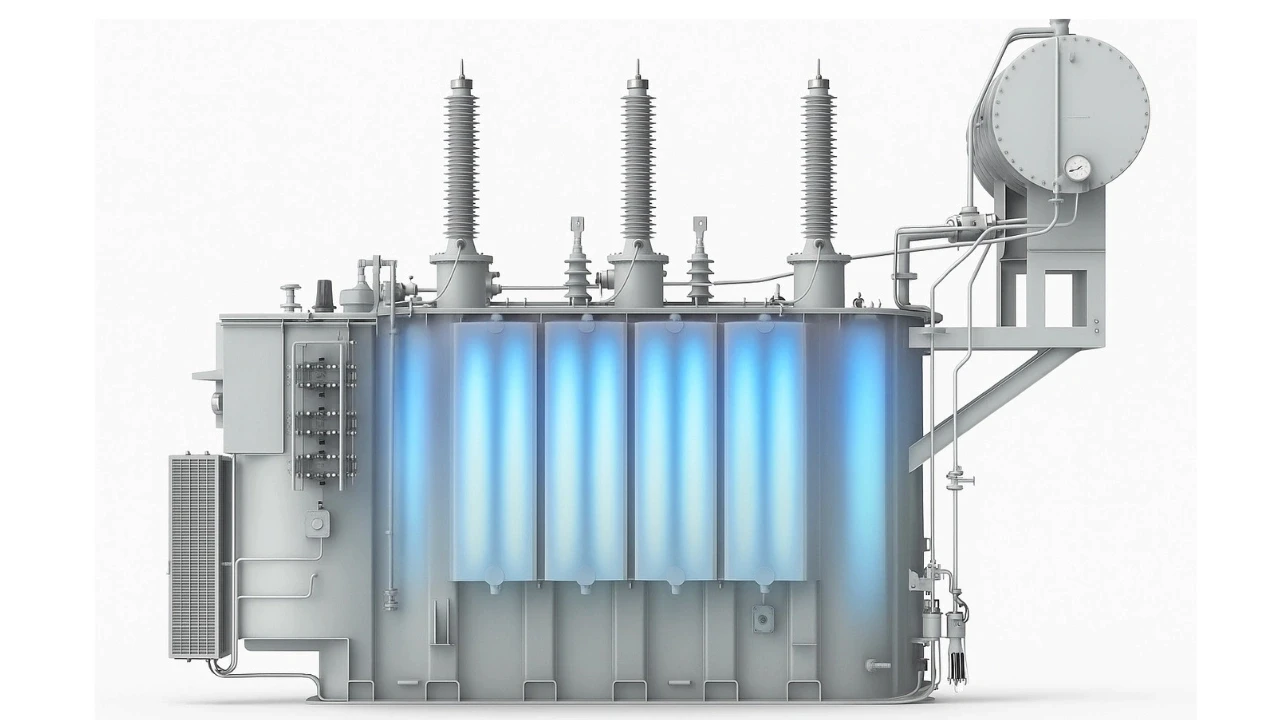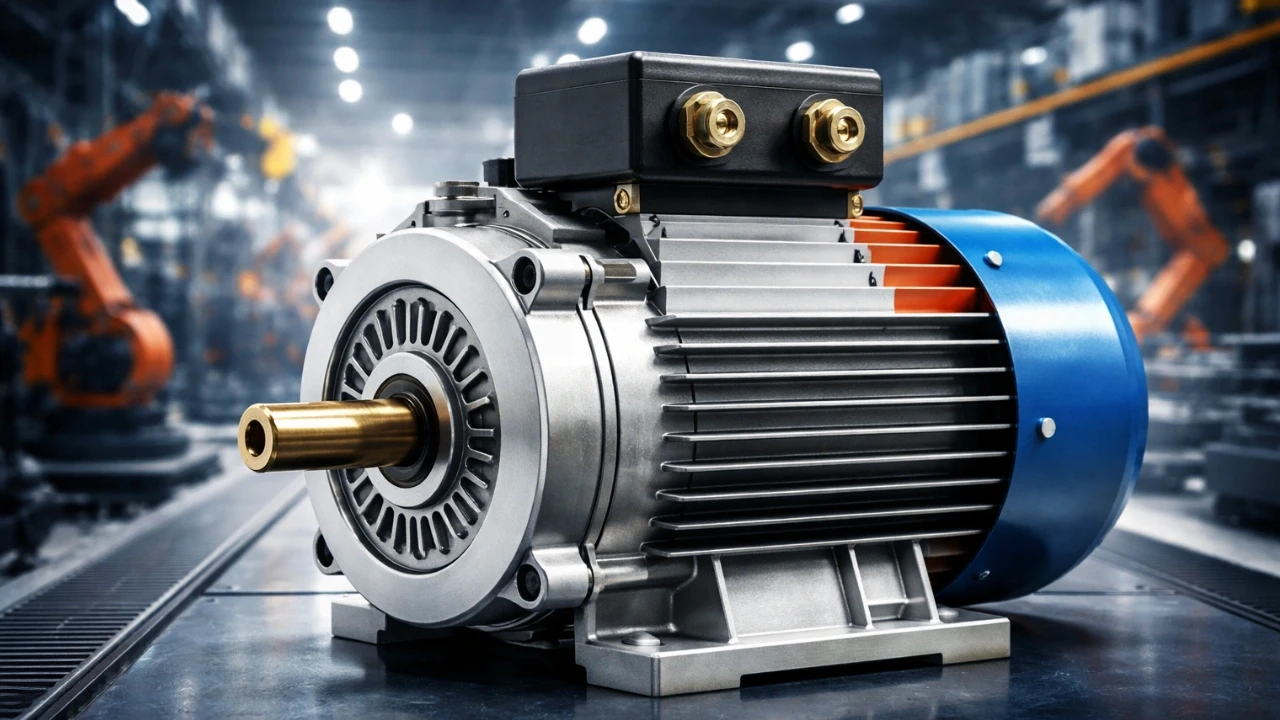
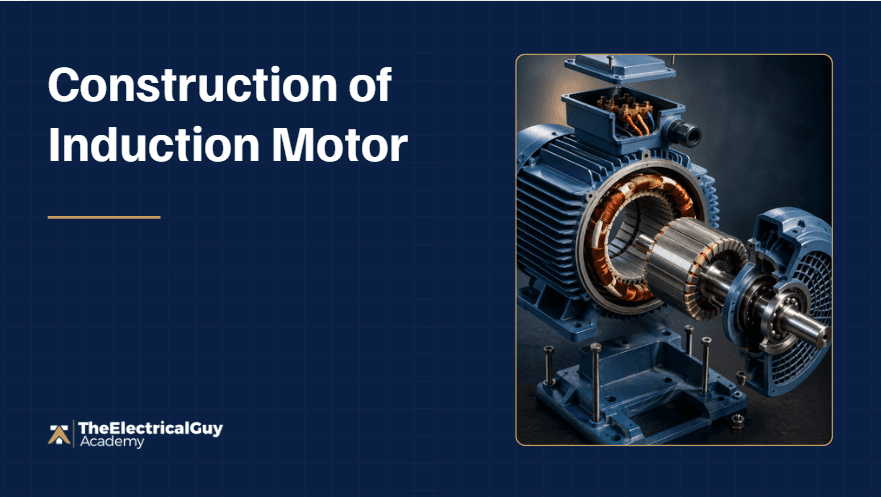
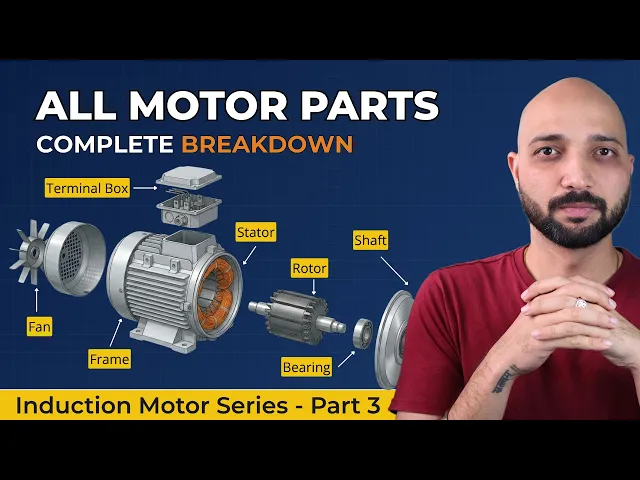
An induction motor is built from a stator that creates the rotating magnetic field, a rotor that develops torque, and supporting components including the shaft, bearings, end shields, cooling system, terminal box, enclosure, and insulation system. Each part plays a specific role, and most motor failures trace back to one of them.
Induction motors are often called the workhorses of industry, and across the plants I've worked in, from cement and textile units to water treatment facilities, I have rarely seen a site that doesn't lean on them. Their simple design, reliable operation, and low maintenance make them one of the most widely used electrical machines in the world.
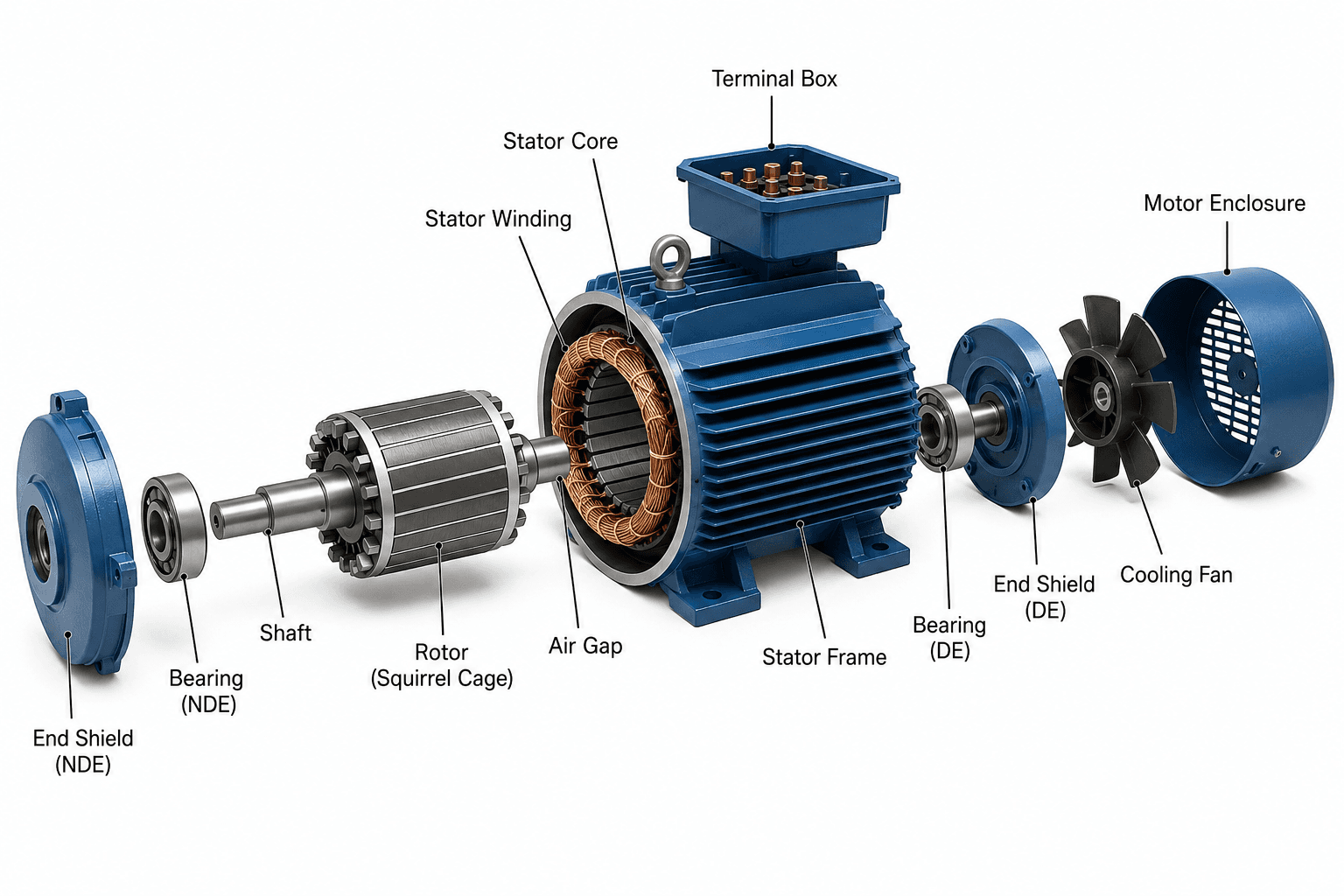
Despite looking simple from the outside, an induction motor contains several carefully designed electrical and mechanical components that work together to convert electrical energy into mechanical power. Understanding these components matters because many performance issues and failures I've seen on site trace directly back to one of them.
What is the Basic Structure of an Induction Motor?
An induction motor consists of two active parts: the stator, which is stationary and creates the rotating magnetic field, and the rotor, which rotates and delivers mechanical output through the shaft. Several supporting components are required to make this arrangement work reliably in industrial environments.
What Does the Stator Do?
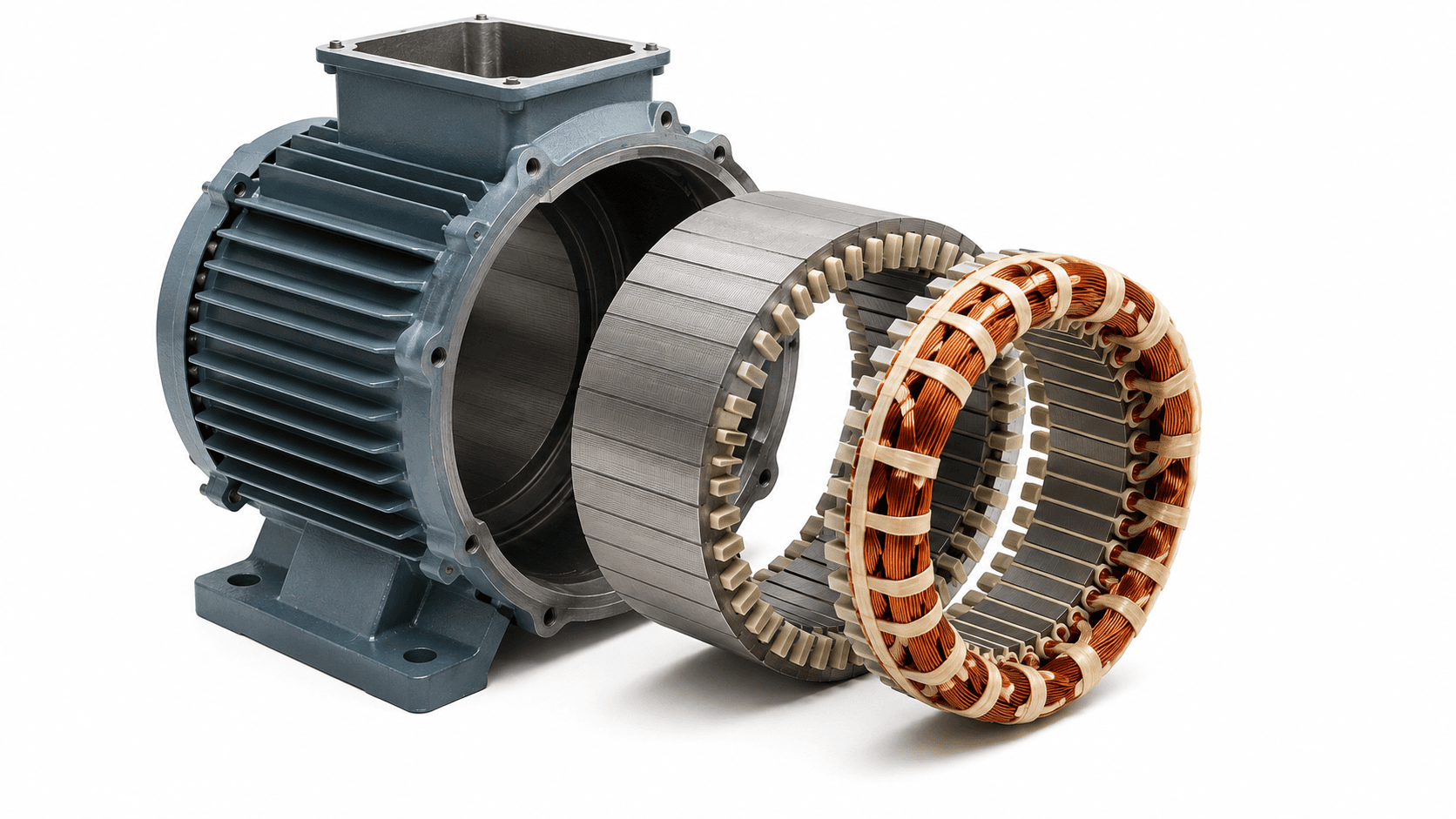
The stator is the outer stationary portion of the motor. It carries the stator winding, receives the three-phase AC supply, and consists of three parts: the frame, the core, and the winding.
What is the Stator Frame For?
The frame is the outer body of the motor. It provides mechanical strength, protects internal components, and supports the stator core. The visible outer body with cooling fins on an industrial motor is usually the frame, and those fins help remove heat generated during operation. Depending on the design, the frame may be cast iron, fabricated steel, or aluminium.
Why is the Stator Core Laminated?
The stator core is made from thin laminated steel sheets stacked together to reduce eddy current losses that would otherwise generate unnecessary heat and waste energy. This is the same principle used in transformers. The inner surface of the core contains slots where the stator winding sits.
What Does the Stator Winding Do?
The stator winding consists of insulated copper or aluminium conductors placed inside the stator slots. When three-phase supply is applied, the winding produces the rotating magnetic field required for motor operation. The winding arrangement also determines the number of poles, which is why motors on the same supply frequency can run at different speeds. It is one of the most critical parts of the motor, if it fails, the motor often needs rewinding or replacement.
What Does the Rotor Do?
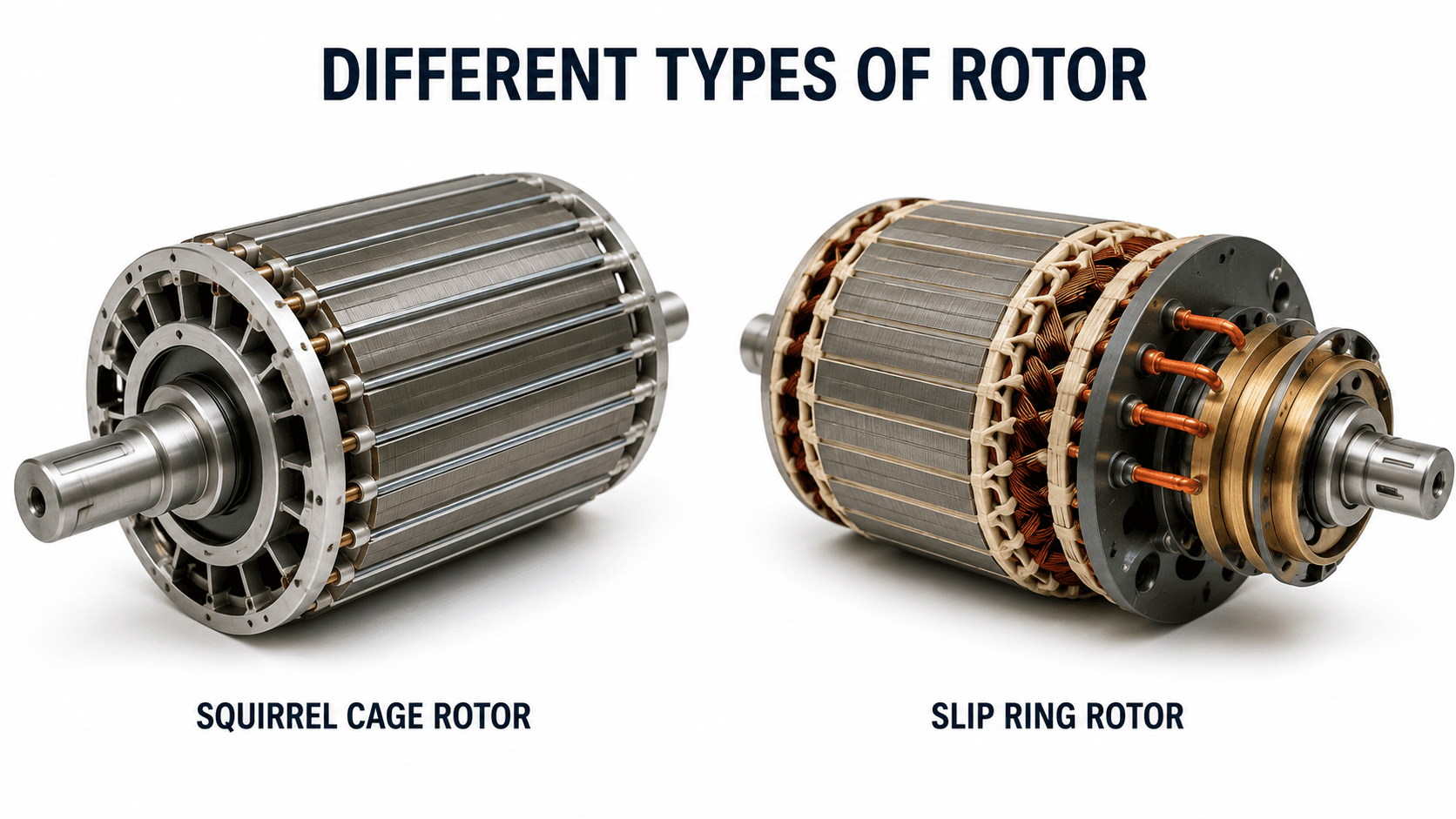
The rotor sits inside the stator and connects to the shaft. As torque develops, it rotates and transfers mechanical power to the connected load. Induction motors mainly use two rotor types: squirrel cage and slip ring.
What is a Squirrel Cage Rotor?
The squirrel cage rotor is the most commonly used rotor in industry. It consists of a laminated rotor core with conducting bars placed inside rotor slots, short-circuited at both ends using end rings the bars and rings together resemble a cage, which gives the design its name.
There are no brushes, no slip rings, no commutators, and no external electrical connections, which makes squirrel cage motors highly reliable and low-maintenance. That's why they are widely used in:
Pumps
Fans
Blowers
Compressors
Conveyors
HVAC systems
Why are Rotor Bars Skewed?
Rotor bars are often slightly angled instead of straight, a process called skewing. Skewing reduces noise, reduces vibration, minimises torque pulsations, and prevents magnetic locking between stator and rotor teeth, resulting in smoother operation.
What is a Slip Ring Rotor?
A slip ring rotor contains a three-phase winding similar to the stator winding. The winding ends connect to slip rings mounted on the shaft, and brushes connect external resistance, mainly to improve starting torque and control starting current. Because of this, slip ring motors are common in cranes, hoists, crushers, mills, and heavy-duty conveyors though they need more maintenance due to the brushes and slip rings.
Why Does the Air Gap Matter?
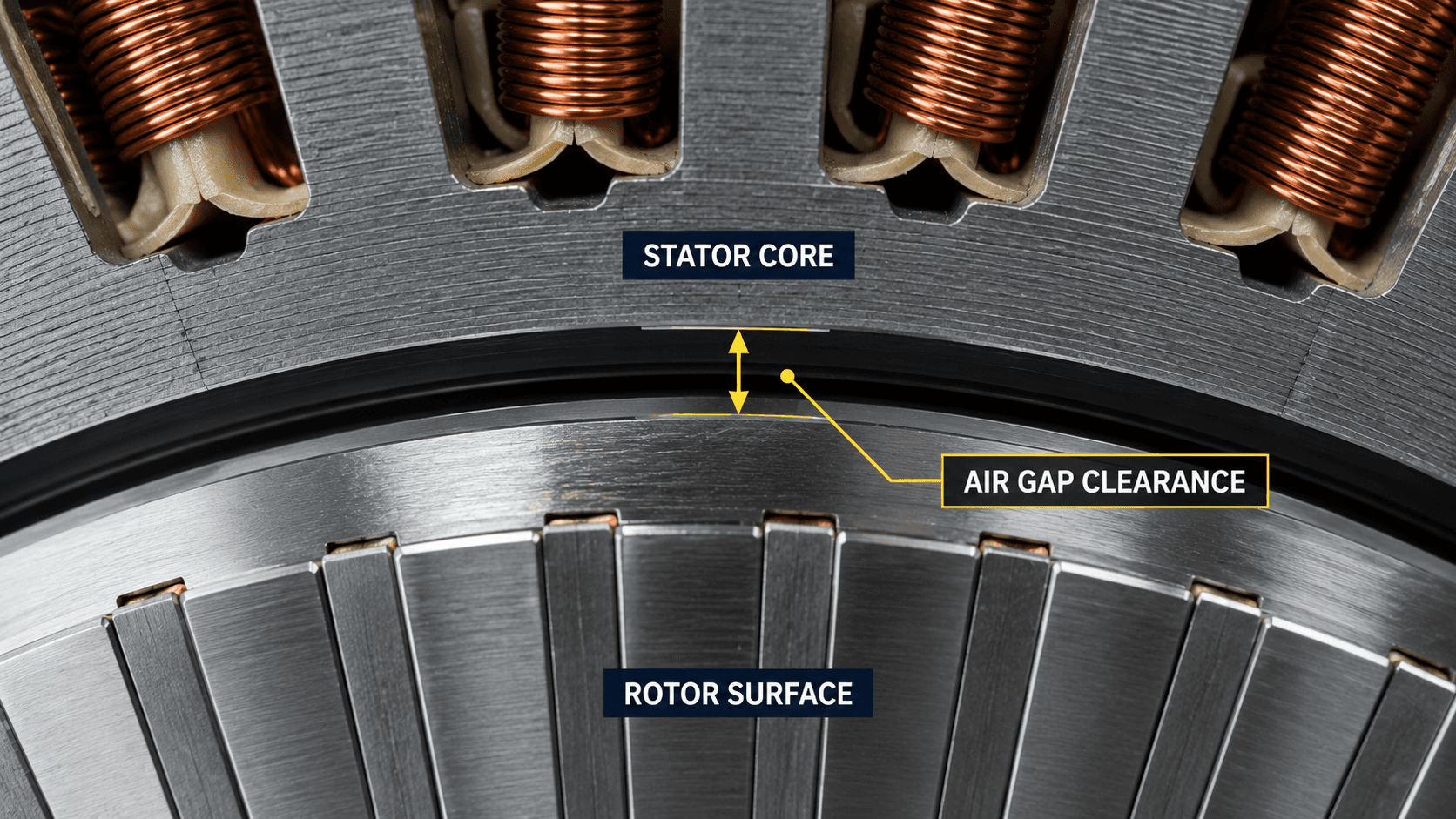
The air gap is the small clearance between stator and rotor, and it plays a major role in motor performance despite looking insignificant. If it's too large, the motor needs higher magnetising current and performance drops. If it's too small, there's a risk of rotor-stator rubbing from vibration, bearing failure, or misalignment. A properly maintained air gap ensures smooth operation and good efficiency.
What Does the Shaft Do?
The shaft delivers mechanical output from the motor to the connected load — a pump, fan, blower, conveyor, compressor, or gearbox. It must withstand continuous torque, vibration, and mechanical stress. The side connected to the load is the Drive End (DE); the opposite side is the Non-Drive End (NDE).
Why Do Bearings Matter in an Induction Motor?
Bearings support the rotating shaft, reduce friction, and help maintain alignment between rotor and stator as well as a uniform air gap. Many motor failures trace back to bearing issues, commonly from poor lubrication, over-greasing, contamination, misalignment, or excessive vibration making bearings one of the most important components from a maintenance perspective.
What Do End Shields Do?
End shields, also called end covers, are mounted on both sides of the motor to support the bearings and maintain alignment between rotor, shaft, and stator. Damaged or worn end shields, though often overlooked, can cause vibration problems and premature bearing failure.
How is an Induction Motor Cooled?
Every induction motor generates heat from copper losses, iron losses, friction losses, and other internal losses; if that heat isn't removed effectively, winding insulation life drops significantly. Most industrial motors use a shaft-mounted cooling fan that forces air over the body and cooling fins as the shaft rotates. Many use a TEFC (Totally Enclosed Fan Cooled) design for good protection with effective cooling. A blocked fan cover or poor ventilation can cause overheating even under normal load.
What is the Terminal Box For?
The terminal box is where external power cables connect to the motor winding. A standard three-phase motor usually has six terminals, allowing connection arrangements like star and delta. Loose connections here can cause heating, sparking, voltage imbalance, and winding damage.
What Does the Motor Enclosure Protect Against?
The enclosure protects the motor from dust, moisture, and water ingress, with the required protection level set by IP ratings. Industrial motors commonly use IP55 protection, suitable for most plant environments. Choosing the correct enclosure significantly improves reliability and service life.
Why Does the Insulation System Matter?
The winding conductors are protected by a full insulation system including slot insulation, phase insulation, varnishing, and protective coatings. Beyond preventing electrical faults, insulation improves mechanical strength and protects against moisture and dust.
Common insulation classes include Class B, Class F, and Class H higher classes tolerate higher temperatures, but lower operating temperatures generally mean longer motor life.
What Should You Check on the Nameplate?
The nameplate isn't a construction component, but it's one of the most important references before installing or replacing a motor. It lists voltage, current, power rating, frequency, speed, power factor, efficiency, insulation class, and IP rating. Many on-site mistakes happen simply because the nameplate was ignored.
How Do All These Components Work Together?
Three-phase supply enters through the terminal box and reaches the stator winding, which produces a rotating magnetic field inside the laminated stator core. That field crosses the air gap and cuts the rotor conductors, inducing current and developing torque. The rotor turns with the shaft, delivering mechanical power to the load, while bearings support smooth rotation, end shields maintain alignment, the cooling system removes heat, and the enclosure protects the motor from its environment.
FAQ
What's the difference between a squirrel cage rotor and a slip ring rotor?
A squirrel cage rotor has no brushes or slip rings and needs little maintenance, making it the default choice for most industrial loads. A slip ring rotor uses external resistance through brushes and slip rings to improve starting torque, which suits heavy starting loads like cranes and crushers but needs more upkeep.
Why is the air gap in an induction motor so critical?
Too large an air gap increases magnetising current and reduces performance; too small an air gap risks rotor-stator rubbing from vibration or misalignment. Keeping it within design tolerance is essential for efficiency and reliability.
What causes most induction motor bearing failures?
Poor lubrication, over-greasing, contamination, misalignment, and excessive vibration are the most common causes I've seen on site, which is why bearings are one of the first things to check during troubleshooting.
Why do rotor bars get skewed instead of running straight?
Skewing reduces noise, vibration, and torque pulsations, and prevents magnetic locking between stator and rotor teeth, giving smoother running overall.
What information should I check on a motor nameplate before installation?
Voltage, current, power rating, frequency, speed, power factor, efficiency, insulation class, and IP rating skipping this check is one of the most common on-site mistakes.
Conclusion
The construction of an induction motor may look simple from the outside, but internally it's a carefully engineered combination of electrical and mechanical components. The stator creates the rotating magnetic field, the rotor develops torque, the shaft transfers mechanical power, and the supporting components keep it running reliably.
For a closer look at each component, watch the detailed video.
Watch the Youtube Video

About Author
Gaurav Joshi
Gaurav started his career on the floor of the electrical industry — not in a classroom. Working across Siemens and Schneider Electric, he saw firsthand how wide the gap was between what colleges teach and what the industry actually needs.
So he did something about it.
Today, he's built a global community of 300,000+ engineers and professionals across YouTube and beyond — and TheElectricalGuy Academy is where that knowledge lives in its most structured, practical form.