
What Are the Different Types of Induction Motors?
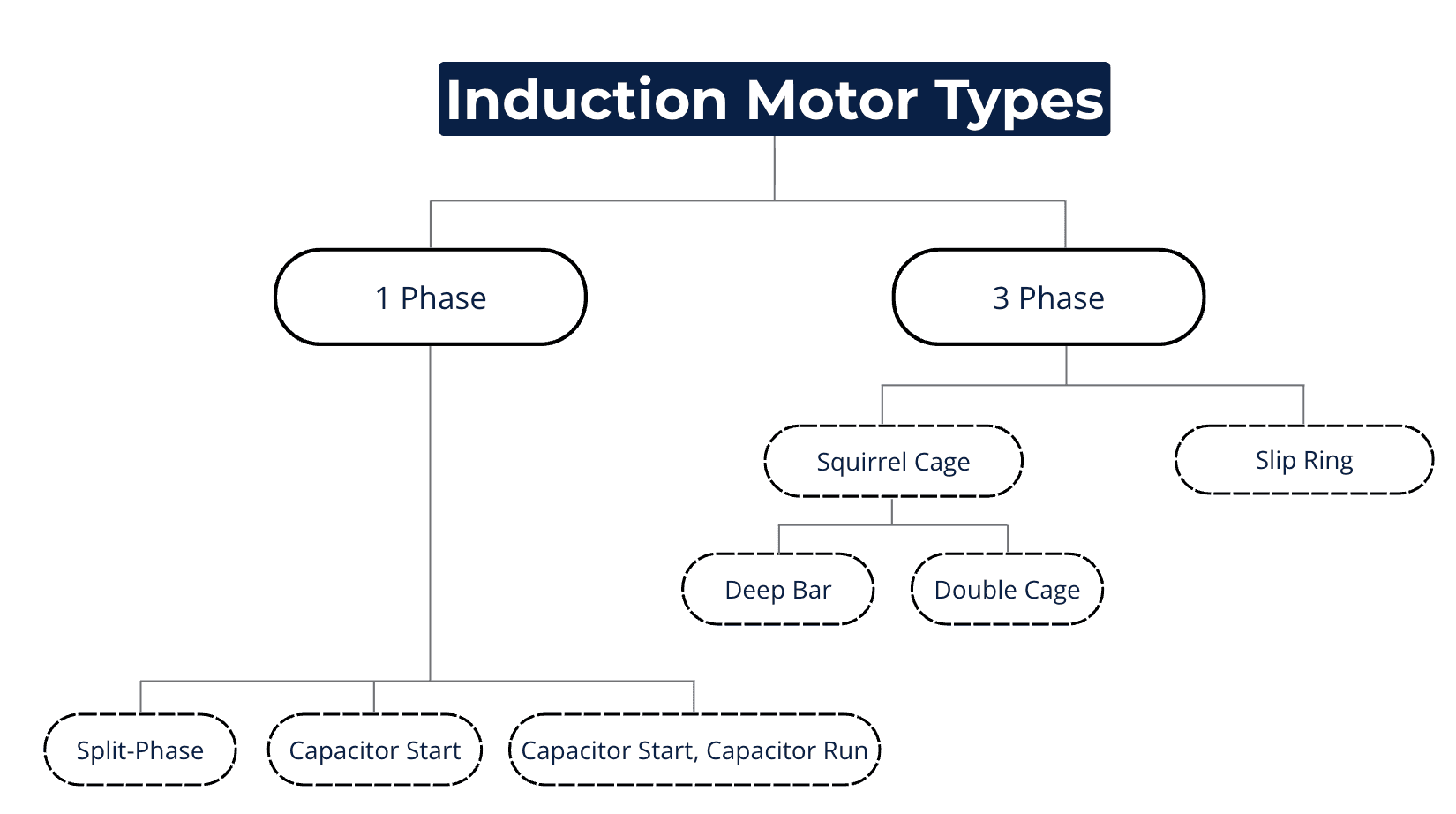
Induction motors are classified by supply type (single-phase or three-phase), rotor construction (squirrel cage or slip ring), starting method (split-phase, capacitor-start, and others for single-phase motors), and application (flameproof, brake, geared, submersible, and more). Knowing which category a motor falls into is what determines whether it's the right fit for a given job.
Induction motors power everything from ceiling fans and water pumps to large industrial crushers and conveyors. Although many motors look similar from the outside, their construction, starting characteristics, and applications can be very different.
This is why understanding the different types matters, it's what helps engineers, technicians, and maintenance professionals select the right motor for the right application, something I've had to get right many times on site.
Let's go through the major classifications used in industry.
What Types of Induction Motors Are Based on Supply?
The most basic classification depends on the type of electrical supply available: single-phase or three-phase.
What is a Single-Phase Induction Motor?
Single-phase induction motors run on single-phase AC supply and are used where power requirements are relatively small. Typical applications include:
Ceiling fans
Exhaust fans
Washing machines
Refrigerator compressors
Small water pumps
Workshop tools
One important limitation: a single-phase induction motor is not naturally self-starting, because a single-phase supply produces a pulsating magnetic field rather than a rotating one. To overcome this, manufacturers use starting arrangements such as capacitors or auxiliary windings. Because of their compact size and economical operation, these motors are widely used in domestic and light commercial settings.
What is a Three-Phase Induction Motor?
Three-phase induction motors run on three-phase AC supply and are the most widely used motors in industry. Unlike single-phase motors, they are self-starting, because a three-phase supply naturally creates a rotating magnetic field. This gives several advantages:
Better efficiency
Higher reliability
Greater power output
Smooth operation
These motors are commonly used in pumps, fans, compressors, conveyors, blowers, HVAC systems, and industrial machinery in general. When people talk about induction motors in industry, they're usually referring to three-phase induction motors.
What Types of Three-Phase Induction Motors Exist Based on Rotor Construction?
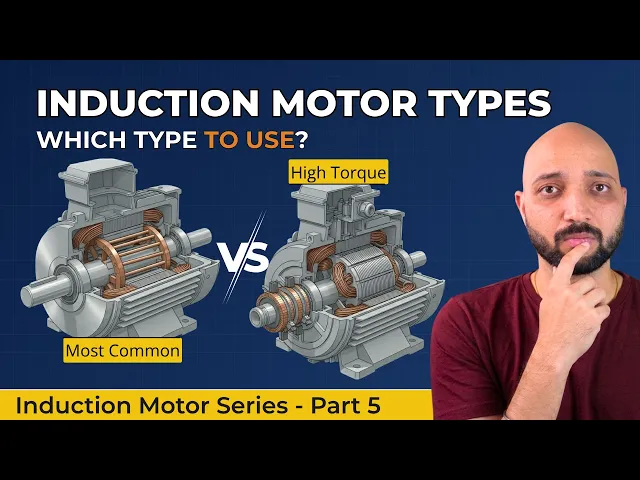
Once you move into industrial applications, rotor construction becomes the most important classification. Three-phase induction motors mainly split into two categories: squirrel cage and slip ring.

What is a Squirrel Cage Induction Motor?
The squirrel cage induction motor is the most commonly used induction motor in the world. Its rotor consists of conducting bars short-circuited by end rings at both ends, which together resemble a cage, hence the name. The biggest advantage is simplicity: no brushes, no slip rings, no commutator, and no external rotor connections.
As a result, it offers high reliability, low maintenance, rugged construction, and long service life, which is why it's widely used in pumps, fans, blowers, compressors, conveyors, and HVAC systems. If you inspect ten motors inside an industrial plant, most of them will likely be squirrel cage induction motors.
What is a Slip Ring Induction Motor?
A slip ring induction motor, also known as a wound rotor motor, uses a three-phase rotor winding connected to slip rings mounted on the shaft instead of rotor bars. External resistance can be connected through brushes, letting the motor develop high starting torque. This makes slip ring motors suitable for cranes, hoists, elevators, crushers, mills, and heavy conveyors. The drawback is that brushes and slip rings need regular maintenance, so slip ring motors are usually chosen only when high starting torque is essential.
What are the Types of Single-Phase Induction Motors?
Since single-phase motors aren't self-starting, different designs have been developed to solve the starting problem.

What is a Split-Phase Motor?
A split-phase motor uses a main winding and an auxiliary winding to create starting torque. It's commonly used in small pumps and workshop equipment.
What is a Capacitor-Start Motor?
A capacitor-start motor uses a capacitor during starting to improve starting torque. It's often found in compressors, pumps, and small industrial machines.
What is a Capacitor-Start Capacitor-Run Motor?
This design uses one capacitor for starting and another during normal operation, giving better starting and running performance.
What is a Permanent Capacitor Motor?
Also called a capacitor-run motor, this design is commonly used in ceiling fans, blowers, and small pumps.
What is a Shaded Pole Motor?
A shaded pole motor uses a shading coil to create a weak rotating magnetic field. These motors are simple and inexpensive but have low efficiency and low starting torque, and are common in small fans, refrigerator fans, and exhaust fans.
What Special Rotor Designs Are Used in Induction Motors?
Manufacturers often modify rotor construction to achieve better starting performance.

What is a Deep Bar Rotor Motor?
A deep bar rotor motor uses specially designed rotor bars that improve starting characteristics while maintaining good running performance.
What is a Double Cage Rotor Motor?
A double cage rotor motor contains two layers of rotor bars: the outer cage improves starting torque, and the inner cage improves running efficiency. These designs are used where both strong starting performance and efficient operation are required.
What are the Types of Induction Motors Based on Application?
Many induction motors are classified by the environment or duty they're designed for.

What is a General Purpose Motor?
A general purpose motor is used in normal industrial applications such as pumps, fans, and blowers.
What is a Flameproof Motor?
A flameproof motor is designed for hazardous locations where flammable gases or vapours may be present [source: IEC 60079 hazardous-area equipment standard]. It's common in refineries, oil and gas plants, and chemical industries.
What is a Brake Motor?
A brake motor includes an electromagnetic brake for quick stopping or load holding. It's used in cranes, hoists, elevators, and conveyors.
What is a Geared Motor?
A geared motor combines an induction motor with a gearbox to provide lower speed and higher torque. It's commonly used in conveyors and material handling systems.
What is a Crane Duty Motor?
A crane duty motor is designed for frequent starting, stopping, and reversing operations.
What is a Cooling Tower Motor?
A cooling tower motor is built specifically for humid outdoor environments.
What is a Submersible Motor?
A submersible motor is designed to operate underwater and is commonly used in borewells, drainage systems, and sewage pumping stations.
FAQ
Which type of induction motor is used in a ceiling fan?
Ceiling fans typically use a permanent capacitor (capacitor-run) motor, a type of single-phase induction motor, because it offers smooth, quiet running at low power without needing a separate starting capacitor.
Why can't a single-phase induction motor start on its own?
A single-phase supply produces a pulsating magnetic field rather than a rotating one, so there's no net torque at standstill. Starting arrangements like capacitors or auxiliary windings are needed to create the initial rotating field.
When would you choose a slip ring motor over a squirrel cage motor?
When the application needs high starting torque, such as cranes, hoists, or crushers, since external resistance through the slip rings allows the starting torque to be controlled directly.
What's the difference between a deep bar rotor and a double cage rotor?
A deep bar rotor uses specially shaped bars to improve starting performance in a single cage. A double cage rotor uses two separate bar layers: an outer cage for starting torque and an inner cage for running efficiency.
Why do flameproof motors need special certification?
They're built to prevent internal arcing or sparking from igniting flammable gases or vapours in the surrounding atmosphere, which is essential in refineries, oil and gas plants, and chemical facilities.
Conclusion
Induction motors can be classified in several ways: by supply system, rotor construction, starting method, or application. From an industrial perspective, the most important distinction is between squirrel cage and slip ring induction motors squirrel cage motors dominate most industrial applications for their simplicity and reliability, while slip ring motors are used where high starting torque is essential.
Understanding these classifications makes motor selection, maintenance, and troubleshooting much easier in real-world applications.
For a visual explanation of each motor type, watch my complete video on induction motor types.
Watch the Youtube Video

About Author
Gaurav Joshi
Gaurav started his career on the floor of the electrical industry — not in a classroom. Working across Siemens and Schneider Electric, he saw firsthand how wide the gap was between what colleges teach and what the industry actually needs.
So he did something about it.
Today, he's built a global community of 300,000+ engineers and professionals across YouTube and beyond — and TheElectricalGuy Academy is where that knowledge lives in its most structured, practical form.