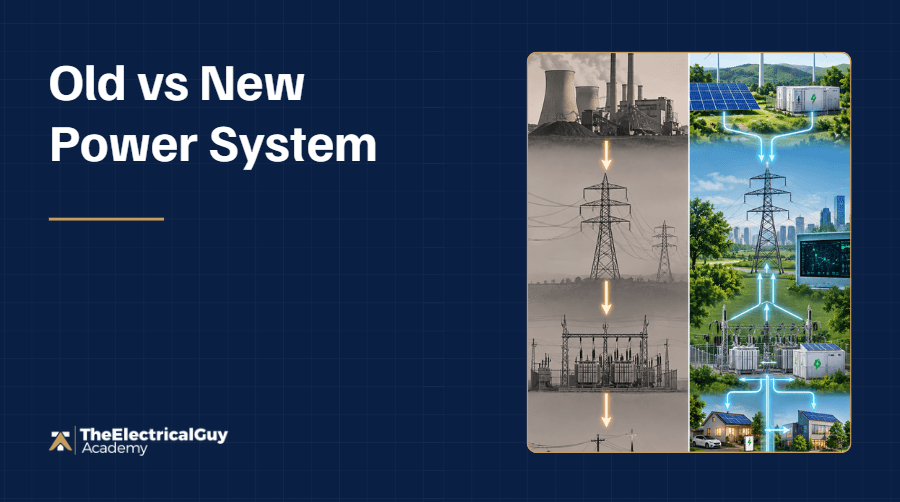

Managing power distribution is hard, especially when one feeder serves different types of users. These can include farms, homes, and factories. Each needs a different kind of power supply. This is where feeder segregation becomes very important. According to India’s Ministry of Power, nearly 20–25% of feeders still carry mixed loads, leading to frequent outages and inefficient energy use.
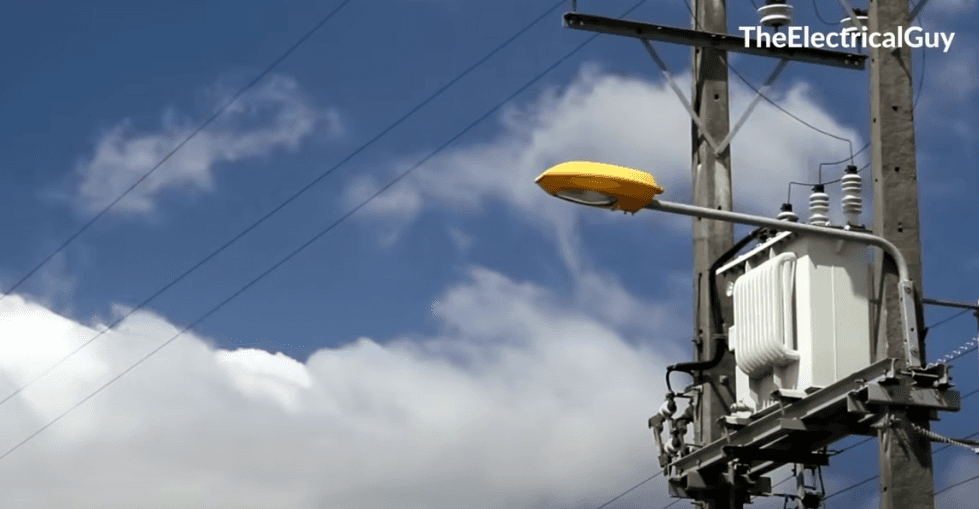
Agricultural consumers often get subsidized electricity, while urban and industrial users demand an uninterrupted 24/7 supply. Without segregation, balancing such diverse needs becomes nearly impossible for distribution utilities, impacting both service quality and system stability.
What Is Feeder Segregation?
Feeder segregation means dividing one power line into different parts. Each part serves a specific type of load. For example:
One part for residential users
One for industrial customers
One for agricultural users
This makes power delivery more efficient and reliable.
Why Mixed Load Feeders Cause Problems
Let’s take a common 11 or 12 kV feeder setup. Often, one line feeds homes, farms, and factories at the same time.
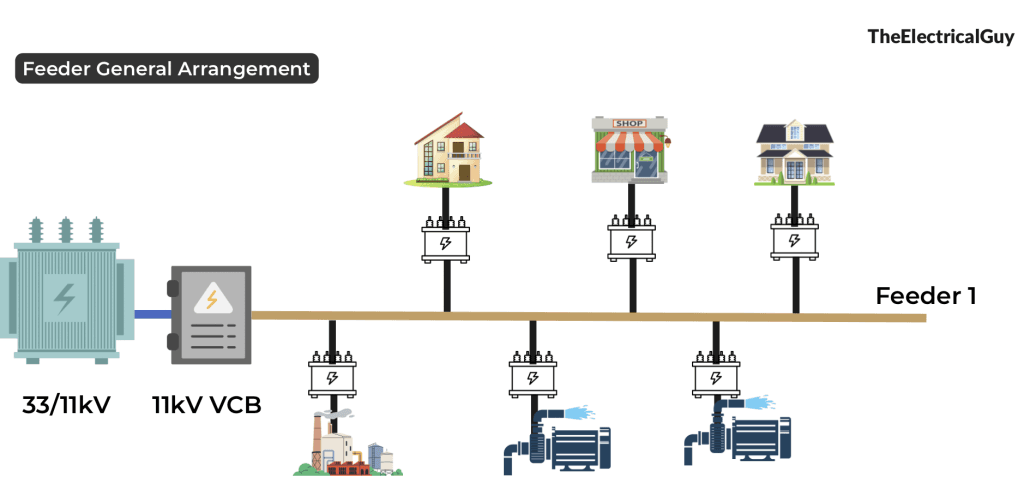
Now here’s the issue:
Farms usually get 4–5 hours of power a day (at a subsidized rate).
Homes and factories need power 24/7.
If you want to cut power to just farms, you can’t. You’ll have to shut down the whole feeder. That cuts power to everyone. Clearly, this causes frustration and poor service.
Main Problems:
Low reliability: One fault cuts power for all.
Manual work: Staff must find and fix issues manually.
Hard to trace faults: You can’t tell where the fault is.
High risk of power theft: Long feeders are hard to monitor.
Physical Feeder Segregation: The Traditional Approach
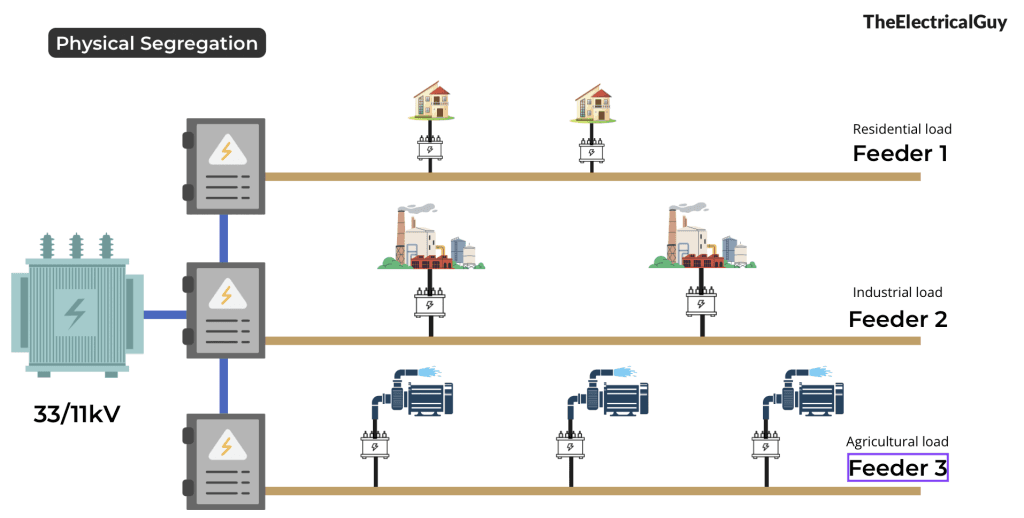
A basic solution is to physically separate each type of user. One feeder goes to homes. Another goes to the farms. A third goes to industries.
Benefits:
Easy to manage load
Reliable supply for each user type
But There’s a Catch:
This solution is costly and complex.
Why?
You need new poles, wires, and switchgear.
You need to buy land for installation.
Maintenance costs go up.
Still, faults are hard to find.
India’s power ministry estimated that feeder segregation across the country could cost thousands of crores and take years to finish.
Virtual Feeder Segregation: A Better, Smarter Solution
Virtual feeder segregation solves these problems. You don’t build new lines. Instead, you add smart devices that divide the existing feeder.
There are two ways to do it:
Low voltage (LV) side
High voltage (HV) side
1. Virtual Segregation at the LV Side
In this case, the setup stays the same. You use switches like air circuit breakers or contactors after the transformer.
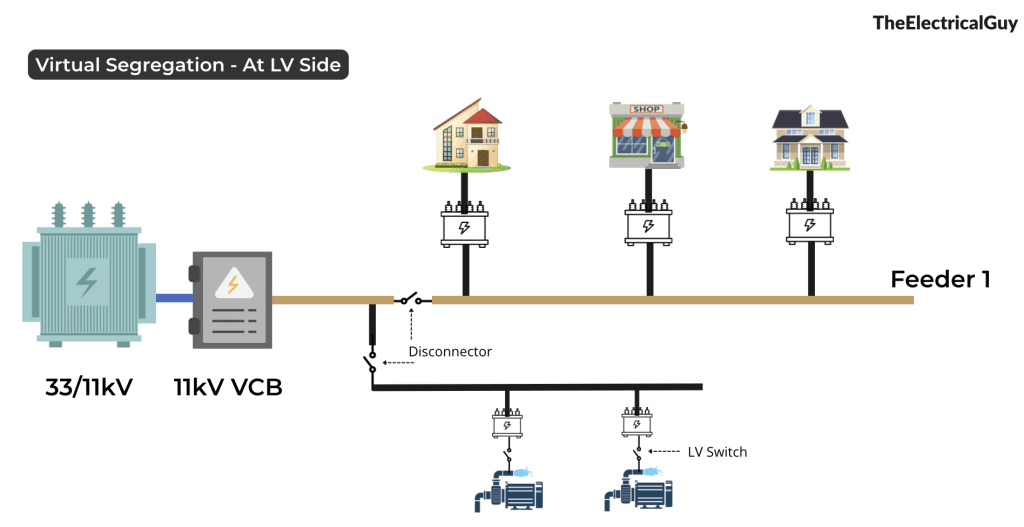
You add timers to these switches. For example, the agricultural section turns off after 5 hours, but the rest stays on.
Drawbacks:
Switches are off-load devices. You still need to shut down the main breaker for repairs.
If the transformer load is high, you’ll need costly breakers.
This setup works but is not perfect.
2. Virtual Segregation at the HV Side
This is the best option. You install devices like automatic reclosers or load break switches (LBS) on the high-voltage side.
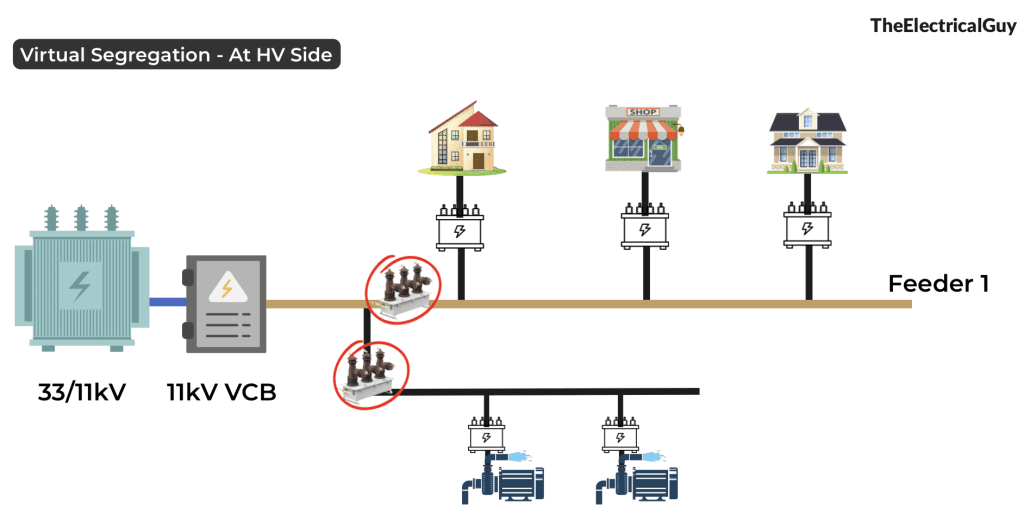
With these devices:
You can disconnect farm loads without affecting homes or factories.
The devices act like circuit breakers, so they protect the system.
They help find faults quickly.
Best of all, you don’t need to change the main feeder setup.
Summary: Why Feeder Segregation Is a Must
Key Benefits:
Reliable power supply
Better load management
Fewer outages
Lower maintenance
Physical vs Virtual Segregation:
Feature | Physical Segregation | Virtual Segregation |
|---|---|---|
Cost | High | Medium to Low |
Setup Time | Long | Short |
Maintenance | Complex | Simple |
Fault Detection | Manual | Automatic with FPI |
Flexibility | Rigid | Smart and scalable |
Final Thoughts
Feeder segregation is not just a technical upgrade. It’s a smarter, faster way to manage today’s diverse power needs. Virtual feeder segregation offers the perfect balance of cost, control, and convenience.
Would you like to see an expert discussion on this topic? Drop a comment, and we might bring in a guest speaker soon!
Want more?
Explore our videos on power distribution methods and smart grid technologies, linked below.
Watch the Youtube Video

About Author
Gaurav Joshi
Gaurav started his career on the floor of the electrical industry — not in a classroom. Working across Siemens and Schneider Electric, he saw firsthand how wide the gap was between what colleges teach and what the industry actually needs.
So he did something about it.
Today, he's built a global community of 300,000+ engineers and professionals across YouTube and beyond — and TheElectricalGuy Academy is where that knowledge lives in its most structured, practical form.