
Most transformer failures do not happen instantly. They build slowly over time. Weeks, months, or even years pass before failure occurs. Then suddenly, the transformer shuts down.
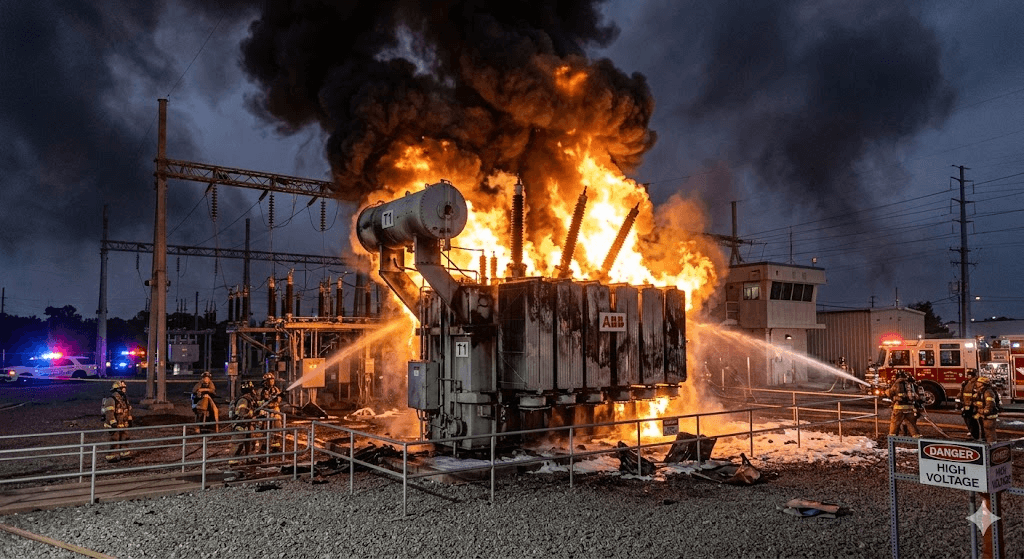
This is not just any equipment. In fact, a transformer is the most expensive asset in a substation. Therefore, when it fails, the impact is significant. Operations come to a halt, alarms start triggering, and losses increase rapidly.
In this article on the 5 Actual Reasons Why A Transformer Fails, we will break down the real causes behind these failures. Moreover, these reasons are based on industry data and actual case studies. By understanding them clearly, you can take timely action and prevent costly breakdowns.
1. Insulation Failure
Insulation failure is the most common cause of transformer failure. It develops slowly and often goes unnoticed.

A transformer has two types of insulation:
Solid insulation like paper or pressboard
Liquid insulation like oil or ester
Over time, this insulation weakens due to several factors:
Heat from overloading
Moisture from aging or leaks
Oxidation due to sludge or acidic oil
Contamination like carbon or metal particles
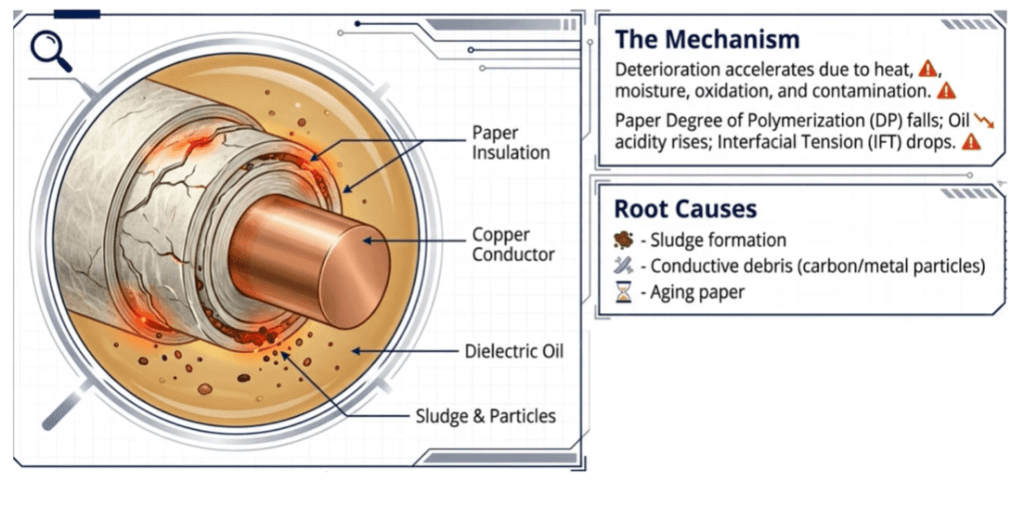
As degradation continues, oil quality drops and dielectric strength reduces. Eventually, the insulation cannot handle electrical stress.
Some warning signs may appear:
Increasing moisture in oil
Degrading oil condition
Hotspot temperature alarms
Repeated overload history
However, these signs are often ignored. Most failures are not bad luck. They result from missed monitoring and delayed action.
2. Winding Failure
Winding failure is the second major reason and, more importantly, it becomes dangerous because it escalates very quickly once it begins. Initially, the issue may seem minor, but it can rapidly turn into a serious fault if not addressed in time.
In general, winding faults can appear in several forms, such as:
Turn-to-turn short circuit
Phase-to-phase fault
Winding-to-ground fault
Now, if we look at the root causes, there are mainly two factors responsible for these failures. First, weak insulation plays a significant role, especially as it degrades over time. Secondly, mechanical damage can also lead to winding failure, often triggered by external fault forces or operational stress.
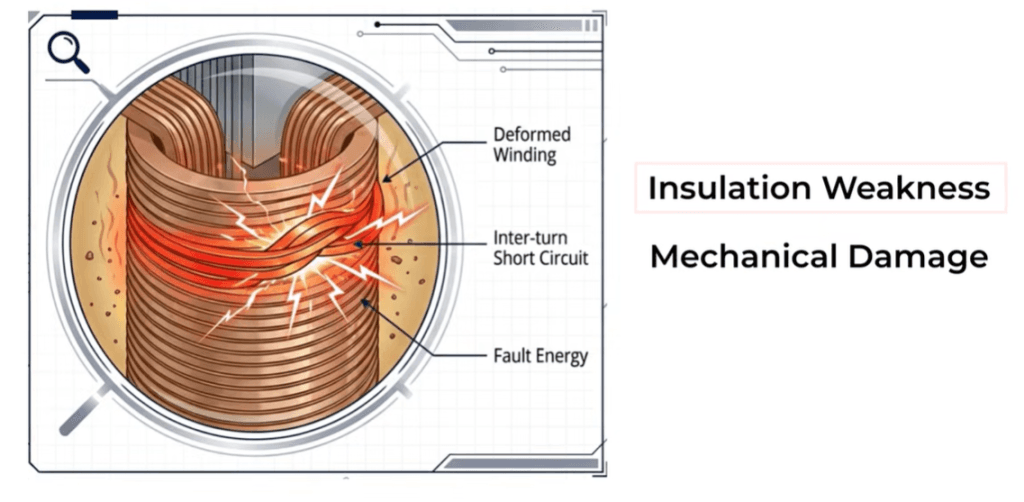
Mechanical damage usually happens during external faults. When a short circuit occurs, current increases sharply. This creates strong electromagnetic forces.
These forces try to move the winding. If the structure is weak or aged:
Winding deformation occurs
Insulation gets damaged
Failure follows soon after
Some signs may indicate winding issues:
Differential protection operation
Gas relay activation
Sudden impedance change
Abnormal excitation current
Failure databases show that winding faults are among the most common causes in real systems.
3. Bushing Failure
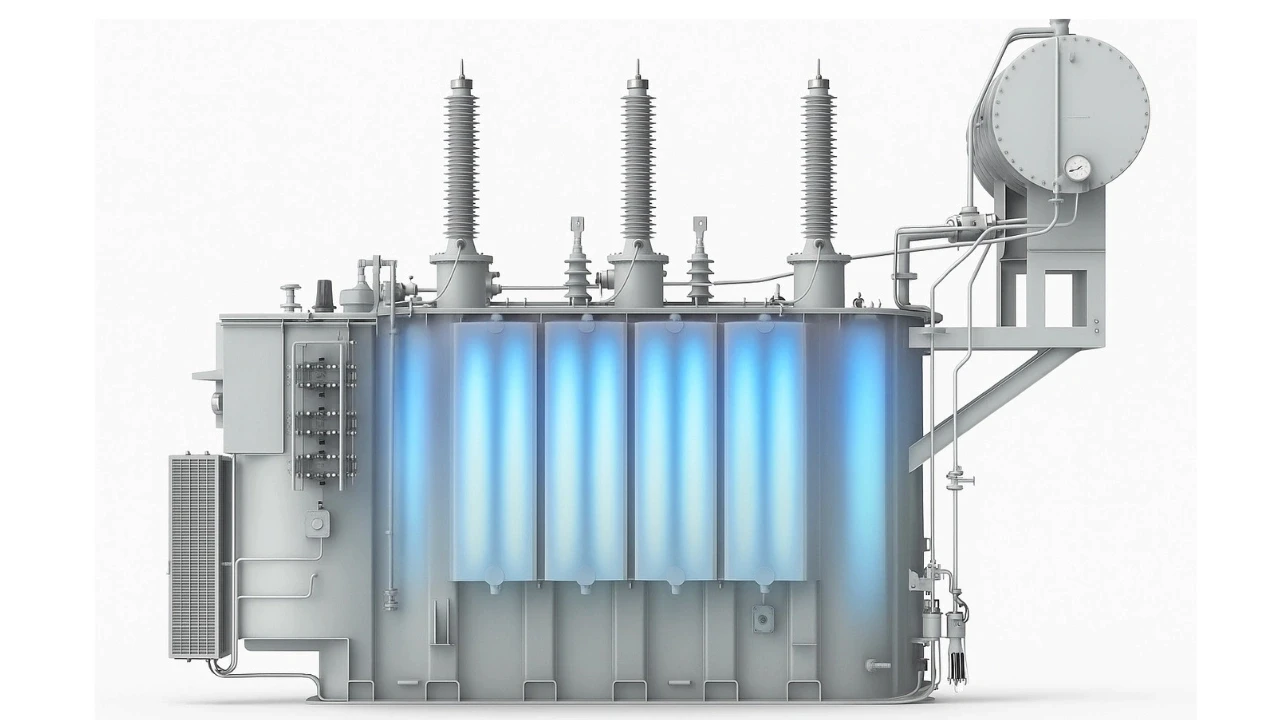
Bushing failure often looks sudden, but it develops over time. A bushing is a complex insulation system exposed to harsh conditions.
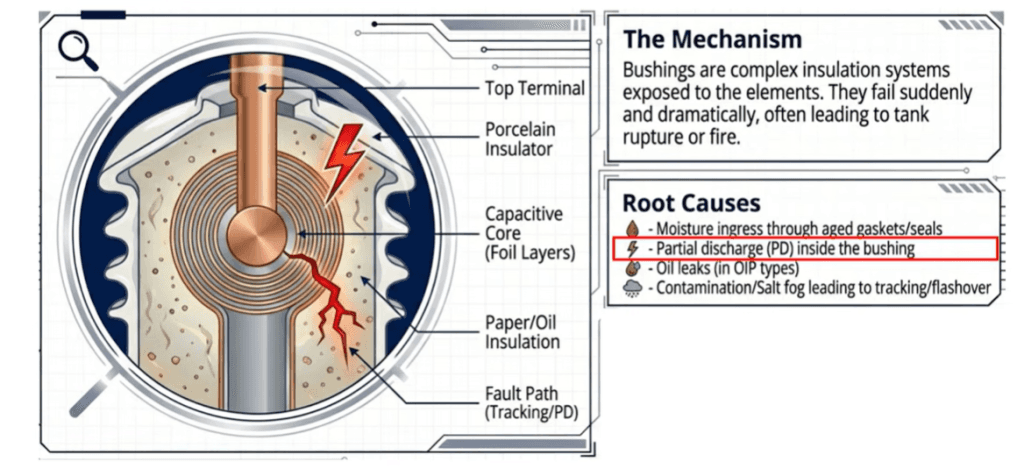
It faces:
Environmental stress
Thermal cycles
Electrical stress
Contamination
Common causes of bushing failure include:
Moisture ingress
Internal partial discharge
Oil leakage
Loose connections causing overheating
Surface contamination
As these issues grow, insulation weakens. Eventually, failure occurs.
Some early signs can help detect problems:
Increase in tan delta values
Hotspots visible in thermal scans
Audible noise
Surface tracking marks
In worst cases, failure may lead to:
Tank rupture
Fire hazards
Utility data shows that bushing failures are one of the leading causes in many cases.
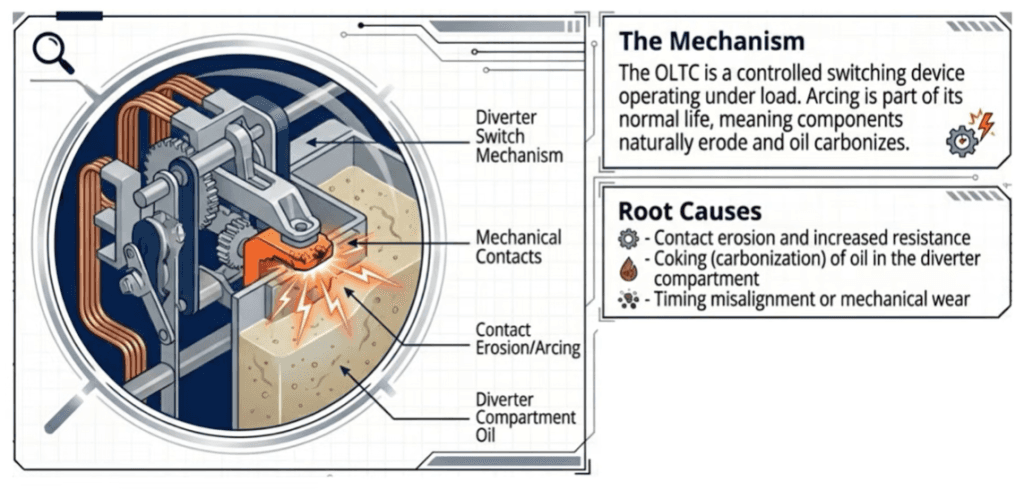
4. OLTC Failure
On-load tap changers (OLTC) are critical for voltage control. They operate while the transformer is energized.
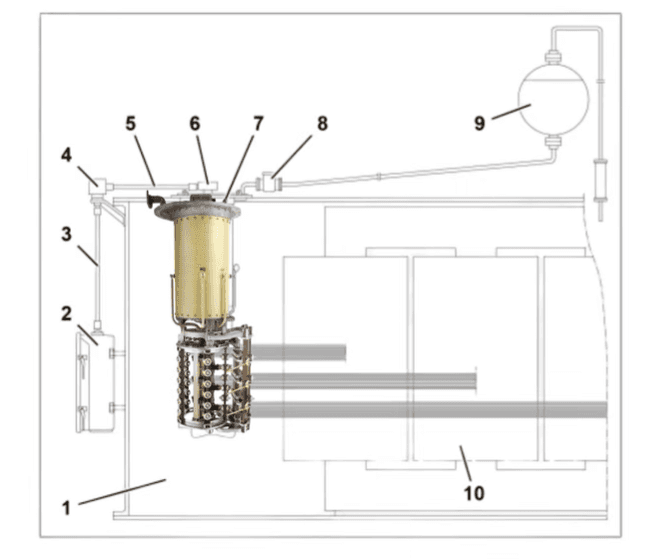
This operation involves switching under load. As a result, arcing is unavoidable. Over time, this causes wear and degradation.
Common reasons for OLTC failure include:
Contact erosion
Carbon deposits in oil
Mechanical misalignment
Poor maintenance
Improper oil handling
Since arcing is part of normal operation, regular maintenance is essential. Without it, failure becomes likely.
Some signs of OLTC issues are:
Voltage regulation problems
Irregular tap movement
Mechanical abnormalities
Temperature rise near tap selector
OLTC failures are frequently reported after winding and bushing issues.
5. Thermal Overload and Cooling Failure
Overheating is one of the most common and underestimated causes. Many failures start with small cooling issues.
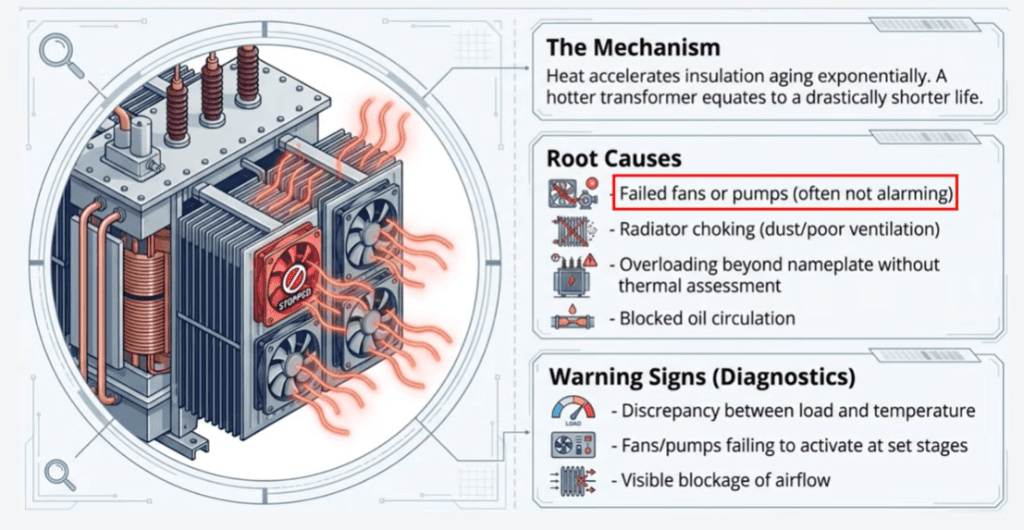
At first, the problem may seem minor. However, it gradually becomes serious.
Common triggers include:
Cooling fans not working
Pump failures
Blocked radiators
Poor ventilation
Incorrect control settings
Low oil levels
As temperature increases, insulation aging accelerates rapidly. Even a small rise in temperature can reduce insulation life significantly.
Real-world conditions that lead to overheating include:
Continuous overloading
Dust accumulation in cooling systems
Poor maintenance practices
In many failure records, overheating appears as a secondary cause. Still, it plays a major role in pushing insulation toward breakdown.
Conclusion
Transformer failure is rarely a sudden event. Instead, it usually develops over time due to continuous stress and overlooked maintenance. In most cases, multiple factors contribute gradually before the final breakdown occurs.
The five major reasons include:
Insulation degradation
Winding faults
Bushing issues
OLTC problems
Overheating
Therefore, if you monitor key parameters regularly, you can identify these issues early. As a result, you can take corrective action in time and avoid costly failures and unexpected downtime.
For a clearer and more practical understanding, it is highly recommended to watch the full video explanation.
Watch the Youtube Video

About Author
Gaurav Joshi
Gaurav started his career on the floor of the electrical industry — not in a classroom. Working across Siemens and Schneider Electric, he saw firsthand how wide the gap was between what colleges teach and what the industry actually needs.
So he did something about it.
Today, he's built a global community of 300,000+ engineers and professionals across YouTube and beyond — and TheElectricalGuy Academy is where that knowledge lives in its most structured, practical form.